Is Mushroom Coffee Good for Energy? A Field Guide
Table of Contents
- Mushroom Coffee Energy: What's Actually Happening in the Cup
- Caffeine Content in Mushroom Coffee vs. Standard Coffee
- Best Functional Mushrooms for Focus and Sustained Energy
- Dosage and Timing: Deploying Mushroom Coffee for Maximum Effect
- Mushroom Coffee Side Effects and Safety Considerations
- Sourcing and Quality: What Separates Field-Ready Blends From the Rest
- Is Mushroom Coffee Good for Energy? The Honest Field Assessment
- Conclusion
Last Updated: August 16, 2026
Mushroom Coffee Energy: What's Actually Happening in the Cup
Whether mushroom coffee delivers sustained energy comes down to understanding how medicinal mushrooms interact with caffeine. The short answer: yes, but not in the way most people expect.
Standard coffee delivers a caffeine spike followed by a crash. Mushroom coffee operates differently. The functional mushrooms work alongside caffeine rather than simply amplifying it, producing a steadier energy curve without the jitters and post-coffee crash that plague high-caffeine drinkers.
How Adaptogens Interact With Caffeine
Adaptogens are natural compounds that help the body maintain balance under stress. Mushroom species like reishi, lion's mane, and cordyceps modulate the body's stress response rather than simply stimulating it.
When adaptogens pair with caffeine, the combination smooths out the stimulant's sharper edges. Caffeine drives cortisol and adrenaline. Adaptogens, particularly reishi, regulate cortisol levels. The nervous system gets activated without being overwhelmed. That's the practical difference between a jittery cup of standard coffee and the focused calm that mushroom coffee drinkers report.
Adaptogens have been documented in traditional medicine for centuries, and modern research has begun examining their cortisol-regulating properties. According to National Center for Complementary and Integrative Health overview of adaptogens, interest in adaptogenic compounds has grown substantially as researchers examine their role in stress response modulation.
The Role of Beta-Glucans and Polysaccharides
The real workhorse compounds in medicinal mushrooms are beta-glucans and polysaccharides, complex carbohydrates found in fungal cell walls.
Beta-glucans don't produce energy directly. They support immune function and reduce systemic inflammation, which matters to energy levels in an important but less obvious way. Chronic low-grade inflammation is one of the most common causes of persistent fatigue. When the immune system is constantly firefighting, the body's energy resources get redirected. Beta-glucans help regulate that immune response, freeing up resources for cognitive function and physical endurance.
Polysaccharides also support the gut microbiome, and gut health has a documented relationship with energy metabolism. The bioavailability of these compounds depends heavily on the extraction process used, which is why sourcing matters so much in this category.
Caffeine Content in Mushroom Coffee vs. Standard Coffee
Mushroom coffee typically contains roughly half to two-thirds the caffeine of conventional drip coffee, depending on the coffee base and mushroom extract ratio.
This is a feature, not a bug. The lower caffeine load means the adaptogenic compounds have a more noticeable moderating effect. You're not fighting against a massive caffeine spike. The result is alertness and focus without the nervous system going into overdrive.
| Coffee Type | Approx. Caffeine per Serving | Energy Profile | Crash Risk |
|---|---|---|---|
| Standard drip coffee | High | Sharp spike, fast onset | High |
| Espresso | Very high | Intense, short duration | High |
| Mushroom coffee blend | Moderate | Gradual, sustained | Low to moderate |
| Decaf mushroom coffee | Very low | Mild, adaptogen-driven | Very low |
For people with caffeine sensitivity, mushroom coffee offers a way to stay engaged. For high-tolerance drinkers, the trade-off is a more functional energy state rather than raw caffeine volume.
Pro Tip
If you're transitioning from heavy standard coffee consumption, start with a mushroom coffee blend in the morning and keep one standard cup as your secondary. Most people find they need less total caffeine within two to three weeks.
Best Functional Mushrooms for Focus and Sustained Energy
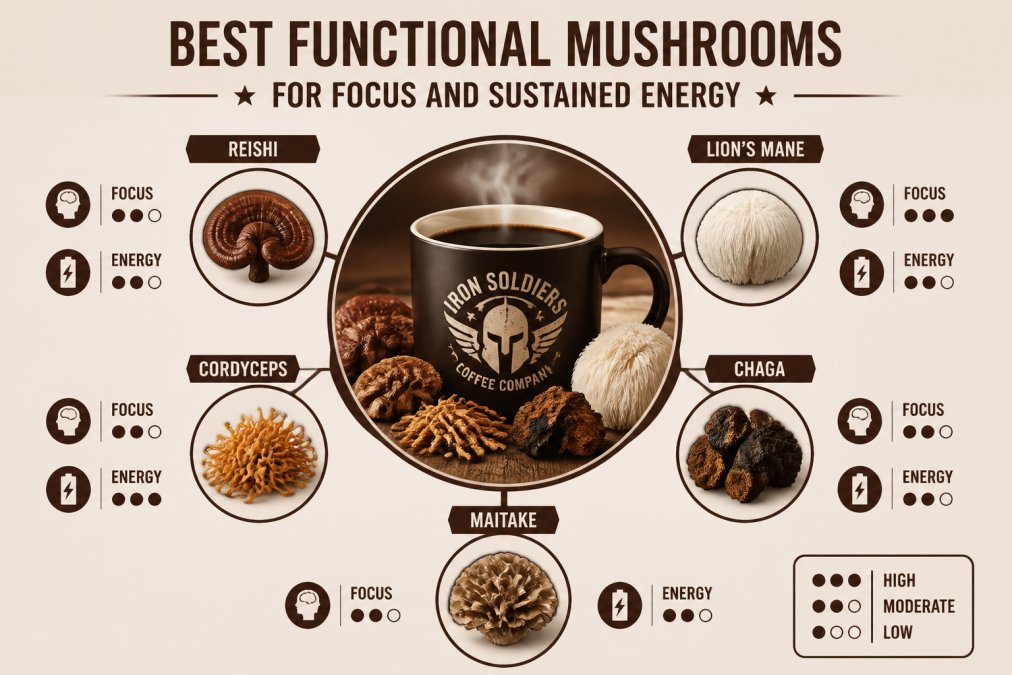
Not all medicinal mushrooms deliver the same effect. A handful have earned their place in quality energy blends based on documented bioactive properties.
Lion's Mane: The Cognitive Function Specialist
Lion's mane is the cognitive function compound in most serious mushroom coffee formulations. Its primary bioactive compounds, hericenones and erinacines, have been studied for their potential to support nerve growth factor production in the brain.
Most users report improved mental clarity and focus rather than a physical energy boost. This is the mushroom that makes mushroom coffee valuable for knowledge workers and anyone who needs sustained concentration. According to Memorial Sloan Kettering Cancer Center's integrative medicine herb database on lion's mane, the compound's effects on cognitive function have attracted increasing research attention.
Lion's mane works best when consumed consistently. The cognitive benefits accumulate with regular use.
Chaga and Reishi: Cortisol Regulation and Immune Support
Chaga and reishi address the anxiety reduction and cortisol regulation side of the energy equation. These mushrooms prevent the jittery, wired feeling that standard coffee can produce.
Reishi has a long documented history as a calming adaptogen. It doesn't sedate, it moderates. The nervous system stays activated and alert, but the cortisol spike that produces anxiety is dampened. Chaga contributes primarily through its antioxidant content, supporting cellular health and reducing inflammation.
Cordyceps: Metabolism and Physical Endurance
Cordyceps is the physical performance mushroom. It's been studied for its effects on oxygen use and ATP production, which govern physical endurance and metabolism.
Athletes and those in physically demanding roles benefit most from cordyceps-containing blends. The compound appears to support the body's ability to use oxygen efficiently, translating to better sustained physical output. The combination of cordyceps for physical endurance and lion's mane for cognitive function is why quality mushroom coffee blends target both mental and physical performance simultaneously.
Dosage and Timing: Deploying Mushroom Coffee for Maximum Effect
Timing and dosage are where mushroom coffee either delivers or disappoints. The functional mushroom compounds work best when consumed on a consistent schedule. Daily consumption over a minimum of two to four weeks is the standard threshold before most users report noticeable effects on energy levels and mental clarity.
Timing recommendations for different goals:
- Morning focus: Consume 30 to 60 minutes after waking to align with the body's natural cortisol peak.
- Pre-work concentration: Drink 45 to 90 minutes before demanding cognitive tasks.
- Physical performance: Cordyceps-heavy blends perform best 60 to 90 minutes before physical activity.
- Afternoon energy: Moderate-caffeine mushroom coffee can often be consumed in early afternoon without disrupting sleep quality.
Watch Out
Avoid consuming mushroom coffee within four hours of bedtime. Even moderate caffeine levels can affect sleep architecture. Poor sleep quality undermines every energy benefit the blend provides during the day.
Dosage is typically one cup per day for most people new to functional mushrooms. Two cups is reasonable for experienced users.
Mushroom Coffee Side Effects and Safety Considerations
Mushroom coffee side effects are generally mild. The most common reported issues include:
- Digestive adjustment: Some people experience mild digestive discomfort during the first week of daily use, which typically resolves as the gut microbiome adjusts.
- Allergic reactions: Anyone with known mushroom allergies should consult a physician before starting.
- Medication interactions: Reishi has documented blood-thinning properties. People on anticoagulant medications should discuss mushroom coffee consumption with their healthcare provider.
- Caffeine sensitivity: Even at lower caffeine levels, individuals with significant caffeine sensitivity may still experience jitters.
According to Mount Sinai integrative medicine resource on medicinal mushrooms and safety, functional mushrooms are generally considered safe for healthy adults, though the evidence base for specific therapeutic claims continues to develop.
Key Takeaway
Mushroom coffee is safe for most healthy adults. The side effect profile is mild. The bigger risk is expecting pharmaceutical-grade results from a food-category product.
Sourcing and Quality: What Separates Field-Ready Blends From the Rest
The market includes products using mycelium-on-grain, the cheapest production method, alongside products using fruiting body extracts, which contain significantly higher concentrations of active compounds.
The distinction matters. The fruiting body is the actual mushroom cap and stem, where most documented bioactive compounds, including beta-glucans, hericenones, and polysaccharides, are concentrated. A product made primarily from mycelium-on-grain may contain substantial grain starch and relatively low levels of the compounds you're actually after.
What to look for on a label:
- "Fruiting body extract" listed as the mushroom source
- Beta-glucan content disclosed
- Third-party testing documentation
- Organic certification for the mushroom component
- Clear extraction process information
Hot water extraction is the standard method for making polysaccharides and beta-glucans bioavailable. Dual extraction combines hot water and alcohol extraction to capture a broader spectrum of bioactive compounds.
Sustainability and sourcing transparency are increasingly important markers of quality. Brands that can trace their mushroom supply chain and disclose growing conditions are generally more trustworthy than those offering vague "proprietary blend" language.
Is Mushroom Coffee Good for Energy? The Honest Field Assessment
Mushroom coffee is good for energy, but the type of energy it delivers is specific. This isn't a replacement for high-caffeine coffee if raw stimulant power is your primary objective.

What mushroom coffee delivers is sustained energy with reduced volatility. The jitters are gone or significantly reduced. The post-coffee crash is flattened. Mental clarity tends to improve with consistent use. Physical endurance benefits accumulate over time with cordyceps-containing blends. For people who want their daily coffee to do more than just spike alertness, the functional mushroom category delivers genuine value.
Beta-glucans, adaptogens, and nootropic mushroom extracts have real mechanisms of action. They're not magic, but they're also not marketing fiction.
The honest assessment: for someone who needs raw caffeine volume, mushroom coffee probably isn't their primary cup. For someone who wants focus, mental clarity, anxiety reduction, and immune support alongside their morning caffeine, it's a serious option worth deploying.
Iron Soldiers Coffee Company's Frontline Focus Blend is built on this principle. Available in both dark roast and medium roast, the blend is engineered for endurance and clarity. It's designed for people who need to stay sharp across a long day, not just the first hour after waking.


| Mushroom | Primary Benefit | Best For | Effect Timeline |
|---|---|---|---|
| Lion's Mane | Cognitive function, mental clarity | Focus, concentration | 2-4 weeks consistent use |
| Reishi | Cortisol regulation, anxiety reduction | Stress management | 1-3 weeks |
| Chaga | Antioxidants, immune support | Overall wellness | 3-6 weeks |
| Cordyceps | Metabolism, physical endurance | Athletic performance | 2-4 weeks |
The real value is in the holistic health picture: a daily routine that supports cognitive function, regulates stress response, and provides sustained energy without the penalty of a hard crash.
That's a different mission than a standard cup of coffee. For the right person, it's the better mission.
Mushroom coffee sits at the intersection of a daily habit and a long-term wellness strategy. Most people come for the energy and stay for the focus.
The challenge most coffee drinkers face isn't finding caffeine. It's finding energy that lasts through a full day without wrecking sleep, spiking anxiety, or leaving them crashed by early afternoon. Iron Soldiers Coffee Company's Frontline Focus Blend addresses exactly that problem, combining quality dark or medium roast coffee with functional mushroom extracts engineered for sustained clarity. Shop All Coffee at Iron Soldiers Coffee Company and find out what a field-ready cup actually feels like.
Frequently Asked Questions
What is the downside to mushroom coffee?
Mushroom coffee costs more than standard coffee and carries a lower caffeine content per cup. Some people with mushroom allergies or autoimmune conditions should check with a doctor before adding it to their daily routine. Certain medicinal mushrooms like reishi can interact with blood-thinning medications. The taste is also an adjustment for some drinkers, though most describe it as earthy and smooth rather than bitter. Starting with a half-serving helps your system adapt.
Is it okay to drink mushroom coffee every day?
For most healthy adults, mushroom coffee is safe as a daily habit. Adaptogens like lion's mane and reishi are designed for consistent, long-term use rather than single-dose spikes. The lower caffeine content also reduces the risk of caffeine dependency compared to standard coffee. Daily use is where the benefits to cognitive function, immune support, and cortisol regulation tend to build most reliably. If you take prescription medications or have a chronic health condition, confirm with your doctor first.
Does mushroom coffee spike your cortisol?
Standard coffee raises cortisol, which is part of why it can trigger anxiety and jitters in caffeine-sensitive drinkers. Mushroom coffee works differently. Adaptogenic mushrooms like reishi and chaga are associated with cortisol regulation rather than elevation, which is why many drinkers report less post-coffee crash and lower anxiety. The reduced caffeine load in most mushroom coffee blends also means a smaller cortisol response compared to a full-strength black coffee.
How does mushroom coffee compare to traditional black coffee for energy?
Traditional black coffee delivers a fast, high-caffeine stimulant hit that peaks quickly and often ends in an energy crash. Mushroom coffee produces a more gradual energy curve because adaptogens slow caffeine absorption and support the nervous system rather than overwhelming it. The result is sustained energy and mental clarity without the jitters or sharp afternoon drop. For shift workers and professionals who need steady focus over long hours, mushroom coffee is often the more reliable option.
This article was written using GrandRanker