How to Organize Coffee Fundraisers for Veterans
Table of Contents
- Step 1: Select a Coffee Supplier for Your Fundraiser
- Step 2: Set Fundraising Goals and Build Your Campaign Timeline
- Step 3: How to Verify Charity Coffee Donations Reach Veterans
- Step 4: Create Coffee Fundraiser Flyer Templates That Get Attention
- Step 5: Your Fundraising Event Planning Checklist
- Step 6: Marketing Your Coffee Fundraiser to the Community
- Step 7: Legal and Tax Compliance for Your Fundraiser
- Frequently Asked Questions
Last Updated: September 27, 2026
Step 1: Select a Coffee Supplier for Your Fundraiser
Learning how to organize coffee fundraisers for veterans starts with one decision: your supplier. Get this right, and the rest of the mission runs smooth. Get it wrong, and you'll fight supply problems all campaign long.
Groups that run this play many ways find the winners all start with wholesale coffee, not retail.

Why Wholesale Coffee Beats Retail for Fundraising
Wholesale coffee protects your profit margins. Retail bags eat your net proceeds before the campaign even launches. Wholesale pricing lets you set a fair donation ask and still clear a real return.
Freshness matters too. Coffee roasted close to ship date tastes better and sells faster. A fresh roast gives your donors a reason to come back next year.
Questions to Ask Before You Commit
Ask any supplier these questions before you sign:
- What is the minimum order?
- How fresh is the roast on ship day?
- Do you offer bulk pricing tiers?
- Can you handle large order volumes?
- What is your shipping timeline?
Step 2: Set Fundraising Goals and Build Your Campaign Timeline
A fundraising goal without a deadline is just a wish. Set both before you sell a single bag.
Most campaigns run four to six weeks. That window is long enough to build momentum and short enough to keep urgency alive. Break your timeline into three phases: planning, selling, and fulfillment.
Give yourself two weeks of planning before launch. Then sell hard for four weeks. Then ship and close out.
Calculating Your Profit Margins
Know your numbers before you promise anything to a nonprofit partner. Use this simple formula:
Profit per bag = Sale price - (coffee cost + shipping + payment fees)
Run the math on a full case, not one bag. Small costs add up fast across a large order. A margin calculator or a basic spreadsheet keeps you honest.
Pro Tip
Build a 10% buffer into your margin for shipping surprises and damaged bags. Groups that skip this step often eat the loss themselves.
Step 3: How to Verify Charity Coffee Donations Reach Veterans
Verification is where trust is won or lost. Donors give more when they know the money lands where promised.
Ask your nonprofit partner for proof of impact. A legitimate group will share impact reporting without hesitation.
Red Flags to Watch For
Walk away from any partner that shows these signs:
- Refuses to share financial records
- Cannot name a registered nonprofit
- Pressures you to pay upfront fees
- Gives vague answers about where funds go
- Has no track record of community outreach
Check registration status through official state charity databases. The IRS Tax Exempt Organization Search confirms whether a group holds valid tax-exempt status. That check takes five minutes and protects your whole campaign.
Step 4: Create Coffee Fundraiser Flyer Templates That Get Attention
Your flyer is your first impression. Make it count.
Coffee fundraiser flyer templates should do three jobs fast: grab the eye, explain the cause, and tell people how to buy. Skip any one of those and the flyer fails.
Use a bold headline. "Fuel the Mission" beats "Coffee Fundraiser" every time. Add one clear photo of the coffee. Then list the price, the cause, and the deadline.
Keep text short. A donor should understand the whole offer in ten seconds.
Include a QR code that links to your donation page. That single addition lifts conversion rates because it removes friction.
Step 5: Your Fundraising Event Planning Checklist
A fundraising event planning checklist keeps your team marching in step. Assign one person to own each line. Shared ownership means no ownership.
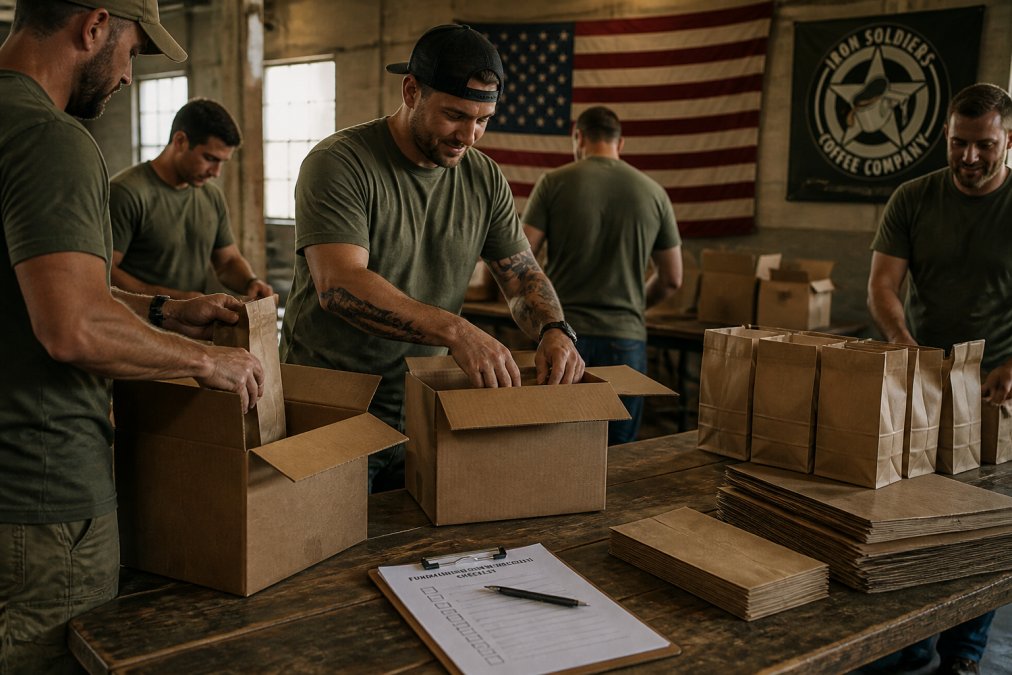
Work through these items before event day:
- Confirm supplier delivery date and drop-ship address
- Recruit and assign volunteers by role
- Set up your donation page and test it end to end
- Print promotional materials and pickup slips
- Arrange tables, signs, and cash handling
- Plan your pickup and delivery window
- Post event details on social media
- Confirm sales tax handling with your treasurer
- Stage boxes by last name or order number
Logistics: Storing and Distributing Coffee Orders
This is where most campaigns lose their footing. Plan the physical flow before you sell a single bag.
Storage.
Sorting. Match names to bags before pickup day. A simple system works: assign each order a number, write the number on the bag in marker, and stage boxes alphabetically by last name. Two volunteers can sort a hundred orders in under an hour with this method. Without it, pickup day becomes a search party.
Pickup windows. Set clear pickup windows, two or three blocks across a weekend usually works. Offer a drive-through option if you can.
- Order intake and spreadsheet updates
- Bagging and labeling
- Pickup table or drive-through line
- Shipping and tracking
- Cash and payment reconciliation
Pro Tip
Build a 10% buffer into your order count for damaged bags and last-minute buyers. Groups that skip this step often run short on the final weekend.
After the Last Bag Ships
Close-out matters as much as launch. Reconcile your spreadsheet against cash and payment records. Send thank-you notes to every buyer and volunteer. Publish your impact report. Then debrief with your team while the details are fresh, what worked, what stalled, and what you will change next year.
Step 6: Marketing Your Coffee Fundraiser to the Community
Marketing turns a good cause into a funded one. Plan your push before launch day, not after.
Social Media Outreach and Local Partnerships
Post daily during your selling window. Mix three post types: the cause, the coffee, and the progress.
Step 7: Legal and Tax Compliance for Your Fundraiser
Compliance is the trench you dig before the battle, not after. Get it right and your campaign runs clean. Get it wrong and a single complaint can freeze your donations and stain the cause you're serving.
Confirm Your Solicitation Registration
Nearly every state requires a charitable solicitation registration before you ask the public for money. The trigger is usually the first ask, not the first dollar received. If your group is raising on behalf of a registered nonprofit, confirm in writing whether you fall under that nonprofit's registration or need your own.
Nail Down the Tax-Deductibility Question
This is where most organizers stumble. Money given to a registered 501(c)(3) is generally tax-deductible. Money paid for a bag of coffee is generally a purchase, not a donation, even when the proceeds go to a veteran cause. If you advertise a bag as "tax-deductible," you may be promising something you cannot deliver.
Handle Sales Tax on Coffee Correctly
Coffee is a tangible good, and most states tax it. Some states exempt food items, some don't, and fundraiser exemptions vary widely. Confirm three things with your state revenue department before you sell:
- Whether your state taxes prepared coffee versus packaged beans
- Whether a fundraiser exemption applies to your group
- Who remits the tax, you or your supplier
Keep Records That Survive Inspection
Assume every dollar will be reviewed. Keep these records for at least three years, longer if your state requires it:
- Every donation received, with donor name, date, and amount
- Every expense, with receipts
- Your solicitation registration and any renewal notices
- Written agreements with your nonprofit partner
- Copies of every flyer, post, and email you sent
Watch the Red Flags
Walk away from any partner that shows these signs:
- Refuses to share financial records
- Cannot name a registered nonprofit
- Pressures you to pay upfront fees
- Gives vague answers about where funds go
- Has no track record of community outreach
Watch Out
Never promise a specific dollar amount per bag unless your supplier has committed to it in writing. Vague impact claims invite complaints and erode donor trust faster than any supply problem.
Close the Loop With Impact Reporting
After the campaign, publish a short report: total raised, total distributed, and where the money went. Send it to every donor. Impact reporting is not just good manners, it is the record that protects your next campaign and keeps your donor list warm.
Frequently Asked Questions
What are the most effective strategies for a coffee-based fundraiser?
Focus on three things: a clear mission tied to veteran support, a simple ordering process, and consistent promotion. Set a specific fundraising goal and share progress updates weekly. Partner with local businesses for drop-off locations. Use social media outreach and text-giving options to reach donors beyond your immediate circle. Offering themed gift baskets or bundled coffee packages increases average order value and gives supporters something tangible to share with others.
How do I verify that donations from a coffee fundraiser reach the intended veteran organization?
Request written confirmation from your coffee supplier detailing the exact dollar amount donated per bag or order. Ask the receiving nonprofit for a letter acknowledging the contribution. Review the nonprofit's IRS Form 990, which is publicly available and shows how funds are allocated. Reputable organizations provide impact reporting that connects donations to specific programs, such as housing assistance or mental health services for veterans.
What permits or regulations are required for hosting a local fundraiser?
Requirements vary by state and municipality. Common permits include a solicitation license for charitable fundraising, a temporary food service permit if you serve brewed coffee, and a sales tax permit if you sell tangible goods. Contact your state's attorney general office and local health department before launching. If you partner with a registered 501(c)(3), ask whether their permit covers your event or if you need a separate one.
How can I maximize community participation in a veteran-focused coffee drive?
Recruit volunteers from local veteran service organizations, churches, and civic groups. Set up a donation page and share it through email, social media, and community bulletin boards. Offer incentives like recognition on promotional materials or a small gift for top fundraisers. Host a kickoff event at a central location where people can sample the coffee and learn about the mission. Follow up with donors to build recurring donations and long-term support.
Related post
21
Oct

20
Oct