Why Does My Coffee Taste Bitter After Brewing?
Table of Contents
- The Usual Suspects: What Causes Bitter Coffee
- How to Fix Over-Extracted Coffee
- The Ideal Water Temperature for Coffee Brewing
- A Coffee Grind Size Guide for Beginners
- Bean Freshness and Roast Level: The Flavor Variables
- Equipment-Specific Troubleshooting for Bitter Brews
- Sour vs. Bitter: Know the Difference
- Conclusion: Taking Command of Your Brew
- Frequently Asked Questions
Last Updated: September 26, 2026
The Usual Suspects: What Causes Bitter Coffee
If you're wondering why does my coffee taste bitter after brewing, the answer usually comes down to one thing: over-extraction. That's when hot water pulls too many harsh compounds out of the grounds. At Iron Soldiers Coffee Company, we hear this complaint from new recruits all the time.
The good news? It's almost always fixable.
Bitter coffee isn't a bad-bean problem.
Over-Extraction: The Primary Culprit
Over-extraction is the process of pulling too much soluble material from coffee grounds, which releases harsh compounds and tannins that taste bitter.
The main triggers:
- Grind too fine for your brewing method
- Contact time too long during the brew
- Water too hot, which burns the grounds
- Too much agitation from stirring or pouring
How to Fix Over-Extracted Coffee
The fastest fix for over-extracted coffee is to coarsen your grind. Small changes go a long way.
Try this order of operations:
- Coarsen the grind by one setting. Brew again.
- Shorten contact time by 15-30 seconds.
- Drop water temperature a few degrees.
- Reduce agitation. Pour slower, stir less.
- Check your ratio. Too little coffee can also cause bitterness.
Adjusting Your Brew Ratio and Contact Time
A common starting ratio is 1 gram of coffee to 15-17 grams of water. If your cup tastes bitter and thin, you likely need more coffee, not less.
For contact time, match it to your method:
| Brewing Method | Contact Time | Grind Size |
|---|---|---|
| French press | 4 minutes | Coarse |
| Pour-over | 2.5-3 minutes | Medium |
| Drip machine | 4-5 minutes | Medium |
| Espresso | 25-30 seconds | Fine |
Pro Tip
If you're coming from a drip machine to a French press, expect a big jump in body and bitterness at first. Most people over-steep on day one. Cut your time to 4 minutes and press slowly.
The Ideal Water Temperature for Coffee Brewing
The ideal water temperature for coffee brewing is between 195°F and 205°F. Water above that range scalds the grounds and turns the cup harsh.
A Coffee Grind Size Guide for Beginners
A coffee grind size guide for beginners starts with one rule: finer grinds brew faster, coarser grinds brew slower. Match the grind to the method, and bitterness drops.
Here's the short version:
- Coarse (like sea salt): French press, cold brew
- Medium (like sand): drip, pour-over
- Fine (like table salt): espresso, moka pot
Matching Grind to Brewing Method
A blade grinder gives you uneven chunks, which means some grounds over-extract while others under-extract. You get bitter and sour in the same cup. A burr grinder fixes this by producing a consistent particle size.
Bean Freshness and Roast Level: The Flavor Variables
Stale beans and dark roasts both push a brew toward bitterness. Freshness is the variable most people overlook.
A210 Airscape Stainless Steel Medium →
Equipment-Specific Troubleshooting for Bitter Brews
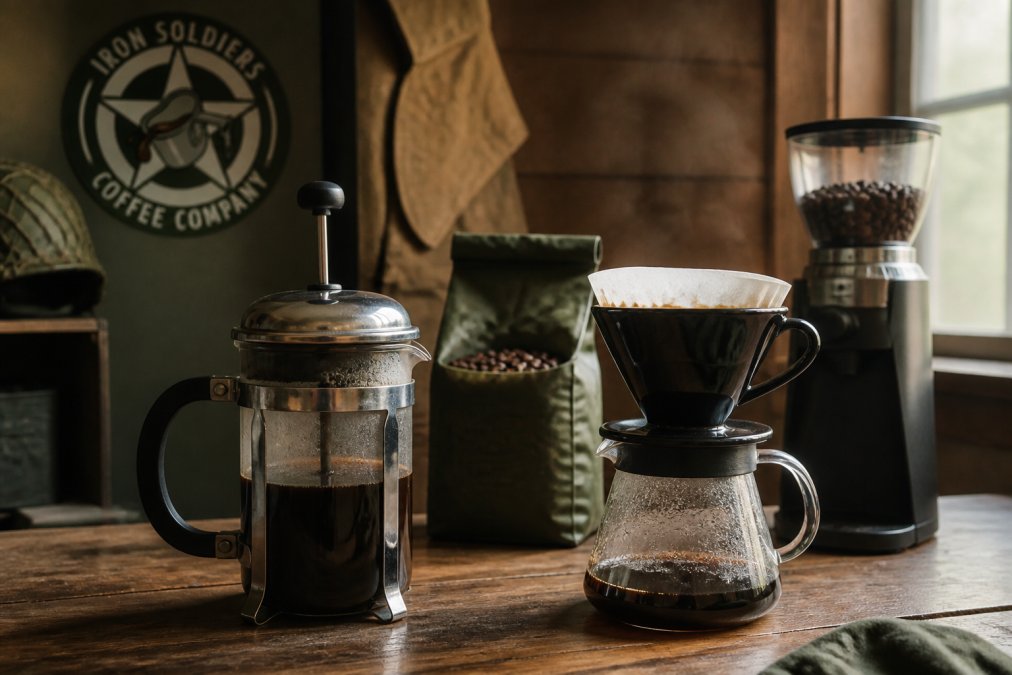
Every brewing method has its own failure points, and bitterness shows up differently in each. Diagnose by equipment, not by guesswork. The mechanics of over-extraction change with the setup, so the fix that rescues a French press will ruin an espresso shot.
French Press
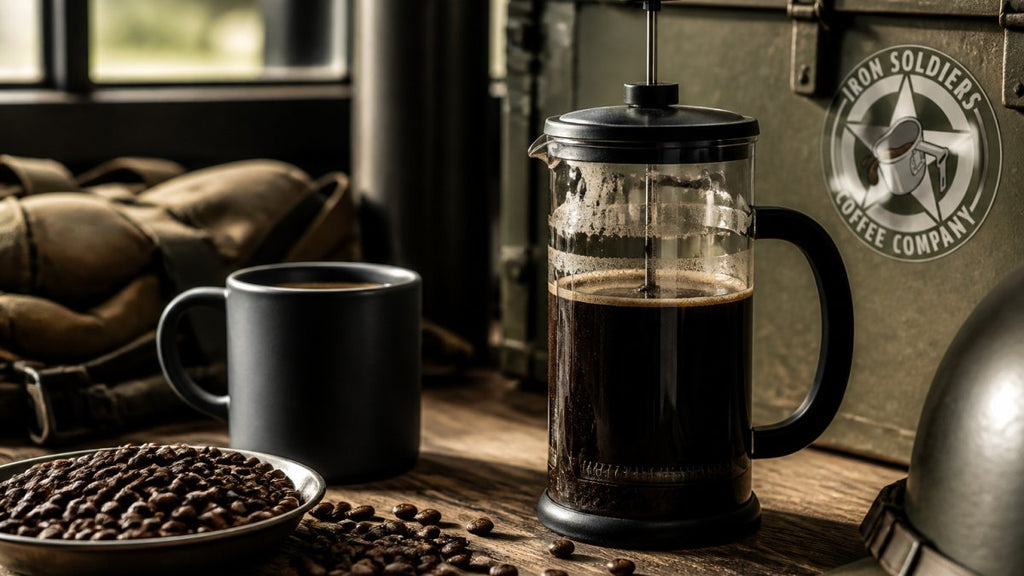
A French press is an immersion brewer, which means the grounds stay in contact with water the entire time. Two things drive bitterness here: grind too fine and steep too long.
- Grind: Coarse, roughly the texture of sea salt. Fine particles slip past the mesh and keep extracting after you press.
- Time: Four minutes is the standard window. Past five, tannins climb fast.
- The press itself: Push the plunger slowly. A hard plunge stirs up the bed and re-suspends fines, which keeps them extracting in the cup.
- Decant: Pour off all the coffee once you press. Leaving it on the grounds is the single most common French press mistake.
Drip Machine
Drip brewers are automatic, but they are not self-correcting. Bitterness usually traces to three sources.
- Residue: Old oils baked onto the carafe, basket, and showerhead add a stale, bitter edge to every pot. Descale monthly with a vinegar or citric acid solution, and wash the basket after each use.
- Water temperature: Cheaper machines run below the 195°F-205°F target, which under-extracts, or spike above it, which scorches. A thermometer in the basket tells you which side you are on.
- Grind and bed depth: Too fine a grind clogs the filter and stalls the flow, stretching contact time. Too little coffee in the basket creates a shallow bed that water races through unevenly.
Pour-Over
Pour-over bitterness is almost always a technique problem, not a bean problem.
- Pour speed: Pouring too fast raises agitation and turbulence, which pulls harsh compounds. Slow, steady spirals from the center outward keep the bed even.
- Bloom: Give the grounds 30-45 seconds of bloom with a small initial pour. Skipping it traps CO2, which channels water unevenly and over-extracts the paths of least resistance.
- Grind: Medium, like table salt or sand. If the drawdown runs past four minutes, go coarser.
- Filter rinse: Rinse the paper filter with hot water before brewing to wash out papery, sometimes bitter notes.
Espresso
Espresso concentrates everything, so small errors amplify. A shot that runs past 30 seconds turns bitter fast, but time is a symptom, not the cause.
- Grind: If the shot runs long, the grind is too fine. Adjust the grind, not the tamp. Tamping harder to fix a fast shot is a common dead end.
- Dose and yield: A common starting point is a 1:2 ratio by weight, so 18 grams in, roughly 36 grams out. If your yield is far above that, the shot is over-extracted.
- Temperature: Most machines run best around 200°F. A few degrees high pushes bitter compounds forward.
- Basket and group head: Old grounds and oils in the basket and screen add a burnt, bitter note. Backflush and clean the group head regularly.
Watch Out
Skip cleaning your equipment and you're brewing with last week's oils. That residue buildup adds a stale, bitter edge that no fresh bean can cover up. Clean your gear weekly, and descale on the schedule your machine's manual recommends.
Key Takeaway
The pattern across every method: bitterness comes from too much contact between water and grounds, whether from time, temperature, agitation, or particle size. Find which lever your equipment pulls hardest, and correct that one first.
Sour vs. Bitter: Know the Difference
Sour and bitter are not the same problem, and mixing them up sends you in the wrong direction. This is the diagnostic step most brewers skip, and it is the reason so many people over-correct: they taste something sharp, assume bitterness, grind coarser, and end up with a weak, sour cup that is worse than where they started.
The Two Failure Modes
- Sour (under-extraction): Sharp, acidic, bright, sometimes salty or thin. It makes you pucker. The water did not pull enough out of the grounds.
- Bitter (over-extraction): Harsh, dry, astringent. It leaves a drying, lingering aftertaste at the back of the mouth. The water pulled too much out, including tannins and harsh compounds.
A useful tell: sour hits the sides of your tongue and the front of your mouth. Bitter sits at the back and lingers after you swallow.
The Diagnostic Chart
Use this to match what you taste to the likely cause and the correct correction. Change one variable at a time.
| What You Taste | Likely Cause | First Correction |
|---|---|---|
| Sharp, acidic, puckering | Under-extraction | Grind finer, or brew longer |
| Thin and weak but not sour | Under-extraction from too little coffee | Increase dose |
| Harsh, dry, astringent | Over-extraction | Grind coarser, or shorten time |
| Bitter and hollow | Over-extraction from too much water | Tighten the ratio |
| Bitter and sour in the same cup | Uneven grind | Switch to a burr grinder |
| Bitter only at the end of the cup | Fines settling and over-steeping | Decant, or go coarser |
Why the Over-Correction Trap Happens
Here is the pattern that traps most brewers. They taste bitterness, so they grind coarser. The next cup is less bitter but also weaker and sharper. They taste that sharpness, assume it is still bitterness, and grind coarser again. Now the cup is sour, thin, and unpleasant, and they blame the beans.
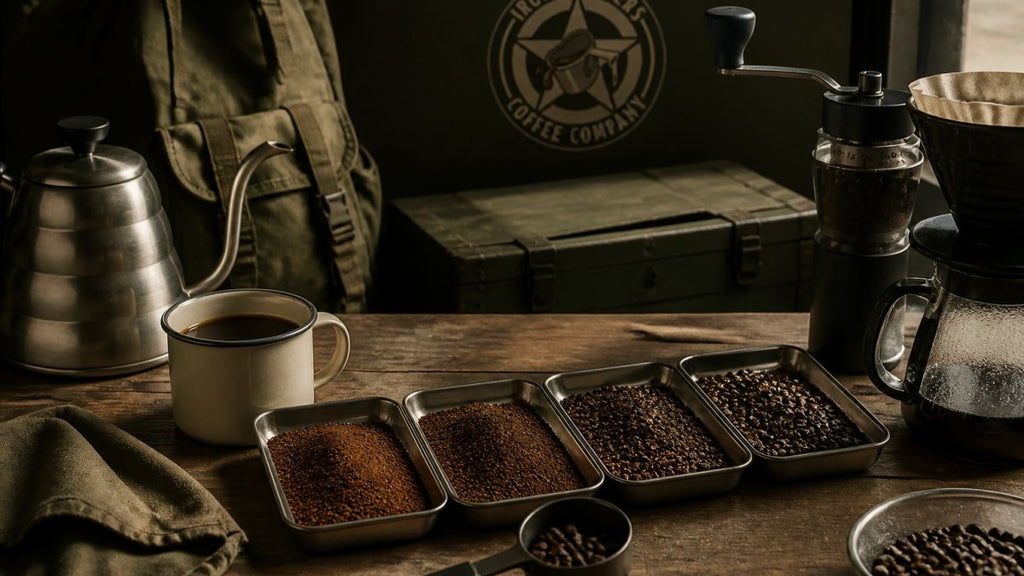
A Side-by-Side Calibration Brew
Pro Tip
Keep a brew log. Note the grind setting, dose, water temperature, and time for each cup, plus one word for the taste. After a week you will see the pattern in your own setup, which is worth more than any general guideline.
The Coffee Quality Institute trains tasters to separate these two sensations, and it is the same skill home brewers can build with a little practice.
Conclusion: Taking Command of Your Brew
Bitterness in coffee is a solvable problem, not a permanent condition. Grind size, water temperature, contact time, and freshness are your four levers. Pull the right one and the cup comes back into line.
Frequently Asked Questions
How to fix bitter coffee after brewing?
To fix bitter coffee, first try a coarser grind size to slow extraction. Second, lower your water temperature to between 195°F and 205°F. Third, shorten the contact time between water and grounds. Finally, ensure your equipment is clean and free of old coffee oils. Adjust one variable at a time to pinpoint the cause of the bitterness.
Why does my coffee all of a sudden taste bitter?
A sudden change in flavor often points to a shift in your routine. You might have a new bag of beans with a darker roast profile, or your grinder setting drifted to a finer grind. Stale beans and residue buildup in your brewing equipment are also common culprits. Check your recent changes to isolate the cause.
Does water temperature affect coffee bitterness?
Yes, water temperature directly impacts bitterness. Water that is too hot, above 205°F, scalds the coffee grounds and extracts harsh, bitter compounds. Water that is too cool, below 195°F, leads to under-extraction and a sour taste. The ideal range is 195°F to 205°F for a balanced flavor profile.
What factors contribute to over-extraction in coffee?
Over-extraction happens when too many solids dissolve into your brew. The main factors are a grind size that is too fine, water temperature that is too high, and a contact time that is too long. Agitation and a high brew ratio can also speed up extraction. Controlling these variables helps you achieve a balanced cup.
Related post
21
Oct
20
Oct