How to Brew Strong Coffee: A Step-by-Step Guide
Table of Contents
- Strong vs. Bitter: Why the Difference Matters When You Brew Strong Coffee
- What You'll Need Before You Start
- Coffee to Water Ratio for Strong Coffee
- Best Coffee Grind Size for Strength
- Step-by-Step: How to Brew Strong Coffee by Method
- Water Temperature, Quality, and TDS Explained
- How to Reduce Coffee Bitterness Without Losing Strength
- Common Mistakes That Weaken Your Cup
Last Updated: August 16, 2026
Most people who complain about weak coffee are making the same fixable mistake: they're adjusting the wrong variable. At Iron Soldiers Coffee Company, we've watched this problem play out countless times, someone buys quality beans, brews them the usual way, and wonders why it tastes thin and flat. The answer almost never comes down to the beans. This guide covers exactly how to brew strong coffee from start to finish, including the ratios, grind sizes, brewing methods, and water chemistry that separate a forgettable cup from one that actually delivers.
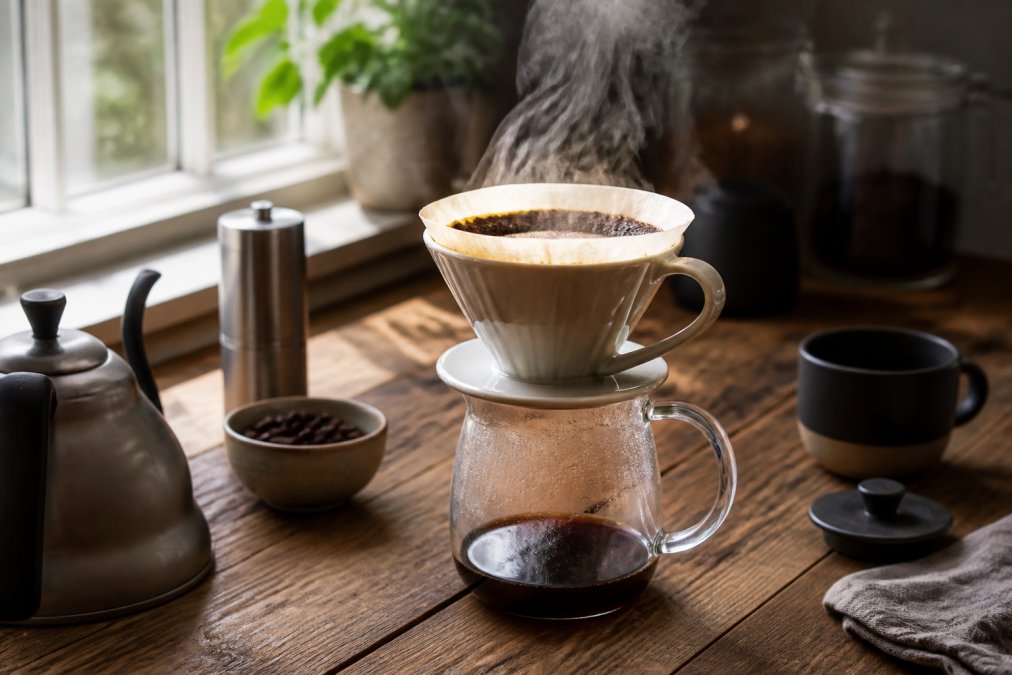
Strong vs. Bitter: Why the Difference Matters When You Brew Strong Coffee
Strong coffee is coffee with a high concentration of dissolved solids, more coffee flavor per ounce of water. Bitter coffee is coffee where over-extraction has pulled harsh, astringent compounds out of the grounds.
These are not the same thing. You can have weak coffee that's bitter, or strong coffee that's smooth and complex. The goal is to increase concentration without crossing into over-extraction.
The technical measure is Total Dissolved Solids, or TDS. According to the Specialty Coffee Association brewing standards, a well-extracted cup typically falls in the range of 1.15% to 1.35% TDS for filter coffee. Home brewers don't need a TDS meter to apply this principle, but understanding that "strong" means more dissolved coffee, not more bitterness, changes how you approach every variable.
The practical implication: when your coffee tastes bitter, don't assume it's strong. It's almost certainly over-extracted. The fix is a coarser grind or shorter brew time, not less coffee.
What You'll Need Before You Start
Bean Selection and Roast Profile
Dark roasts are more soluble, which means they extract faster and produce a bolder flavor profile. Medium roasts retain more origin character and complexity while still delivering solid body. For maximum strength with minimum bitterness, a medium-dark roast is often the sweet spot.
Bean quality matters just as much as roast level. Fresh-roasted coffee, ideally used within four weeks of the roast date, extracts more evenly and produces cleaner flavors. Stale beans go flat, no matter how you brew them.
Essential Brewing Equipment
You don't need expensive equipment to brew strong coffee. You need the right equipment for your chosen method:
- A kitchen scale (accurate to 0.1g), non-negotiable for consistent results
- A burr grinder, blade grinders produce uneven particle sizes that cause simultaneous under- and over-extraction
- A gooseneck kettle, critical for pour-over; useful for most other methods
- Your chosen brewer, French press, pour-over dripper, moka pot, or AeroPress
A thermometer or kettle with temperature control is worth adding if you brew light-to-medium roasts regularly.
Coffee to Water Ratio for Strong Coffee
The coffee-to-water ratio is the single most direct lever for controlling strength. More coffee relative to water means more dissolved solids in your cup.
The standard starting point for most brewing methods is a 1:15 ratio (1 gram of coffee per 15 grams of water). For strong coffee, move to a 1:12 or 1:13 ratio. For very strong coffee, closer to espresso-style concentration, a 1:10 ratio works well in an AeroPress or moka pot.
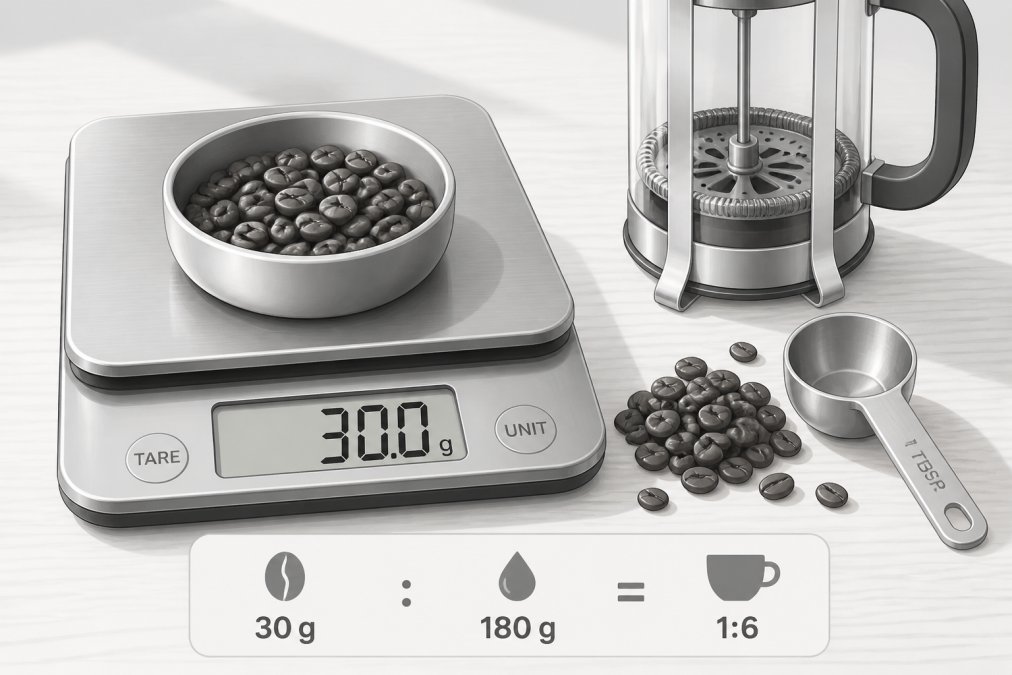
Here's a practical reference table for strong coffee ratios by method:
| Brewing Method | Standard Ratio | Strong Ratio | Very Strong Ratio |
|---|---|---|---|
| French Press | 1:15 | 1:12 | 1:10 |
| Pour-Over | 1:16 | 1:13 | 1:11 |
| AeroPress | 1:15 | 1:12 | 1:8 |
| Moka Pot | Fixed by basket | Use fine grind | Tamp lightly |
| Cold Brew | 1:8 | 1:6 | 1:4 |
Always measure by weight, not volume. Coffee scoops are inconsistent; a tablespoon of finely ground coffee weighs significantly more than a tablespoon of coarse ground coffee.
Pro Tip
When dialing in a new ratio, change one variable at a time. Adjust the ratio first, then the grind size. Changing both simultaneously makes it impossible to identify what fixed (or broke) your cup.
Best Coffee Grind Size for Strength
Grind size controls extraction rate. A finer grind exposes more surface area to water, which speeds up extraction and increases dissolved solids. A coarser grind slows extraction and produces a lighter cup.
Grind too fine for your brewing method and you'll over-extract, producing bitterness. Grind too coarse and you'll under-extract, producing sourness and weakness regardless of how much coffee you use.
Matching Grind Size to Your Brewing Method
| Method | Recommended Grind | Notes |
|---|---|---|
| French Press | Coarse | Prevents over-extraction during long steep |
| Pour-Over | Medium to medium-fine | Adjust finer for stronger cup |
| AeroPress | Medium-fine to fine | Shorter brew time allows finer grind |
| Moka Pot | Fine (not espresso-fine) | Too fine clogs the filter; too coarse makes weak coffee |
| Espresso | Extra-fine | Requires consistent tamping pressure |
| Cold Brew | Extra-coarse | Long contact time compensates for coarse grind |
A common mistake is grinding fine for a French press to "make it stronger." The long immersion time means a fine grind will over-extract badly, producing a bitter, muddy cup. Use the ratio instead.
Step-by-Step: How to Brew Strong Coffee by Method
Every brewing method has its own extraction logic. Here's how to apply strong-coffee principles to the most common ones.
French Press (Immersion Brewing)
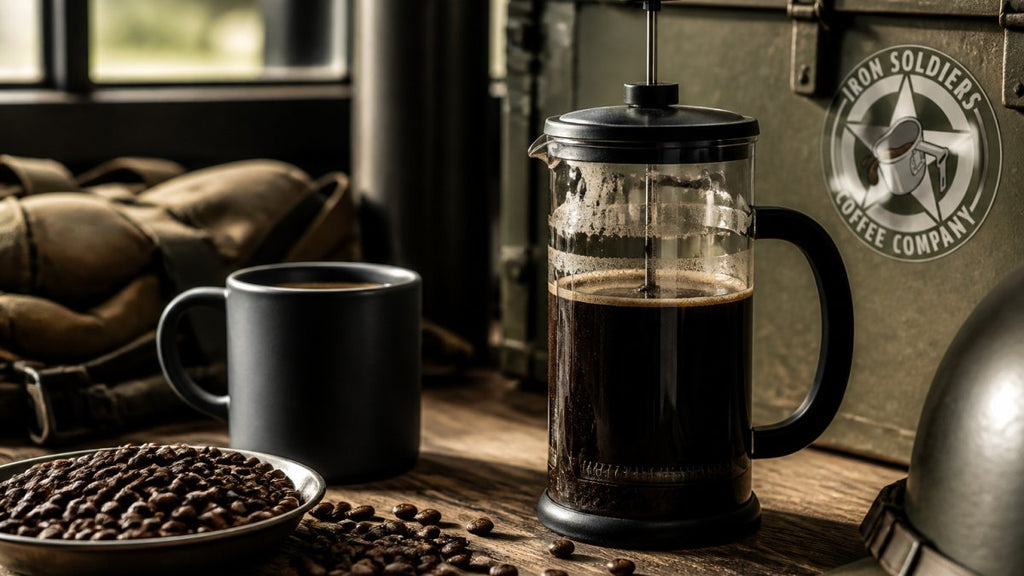
French press is an immersion brewing method where grounds stay in contact with water for the entire brew time. This makes it one of the easiest methods for producing a strong, full-bodied cup.
Total Time: 9 minutes
- Heat water to 200°F (just off the boil)
- Grind coffee coarse, similar to rough sea salt
- Use a 1:12 ratio (e.g., 30g coffee to 360g water)
- Add coffee to the press, then pour about 60g of water over the grounds
- Wait 30-45 seconds for the bloom
- Pour remaining water, stir gently, and place the lid on (plunger up)
- Steep for 4 minutes
- Press slowly and pour immediately
Don't let it sit after pressing. Extended contact with grounds continues extraction and adds bitterness.
Pour-Over
Pour-over is a filter brewing method where water passes through grounds continuously. Control comes from your pour rate and total brew time.
Total Time: 4-5 minutes
- Heat water to 200-205°F
- Grind medium-fine
- Use a 1:13 ratio for strong coffee
- Pre-wet the filter with hot water, then discard
- Add grounds and create a small well in the center
- Pour 2x the coffee weight in water (the bloom pour), wait 30-45 seconds
- Continue pouring in slow, steady circles, keeping the water level consistent
- Total brew time should be 3:30 to 4:00 minutes
If the brew runs long (over 4:30), grind slightly coarser. If it runs short (under 3:00), grind finer.
Moka Pot and AeroPress
Moka Pot produces espresso-adjacent coffee through pressurized steam extraction. Fill the bottom chamber with hot water to just below the valve, fill the basket with a fine grind without tamping, and heat on medium-low. Remove from heat as soon as you hear the coffee begin to sputter.
AeroPress is the most forgiving method for experimenting with strength. For a strong cup: use a 1:10 ratio, medium-fine grind, 175-185°F water, and a 1:30 to 2:00 minute steep before pressing. The inverted method gives you more control over contact time.
Watch Out
Never tamp the moka pot basket. Packing the grounds creates excessive pressure, which can damage the seal, cause uneven extraction, and produce a bitter, harsh result. Level the grounds and leave it at that.
Water Temperature, Quality, and TDS Explained
Water temperature directly controls extraction speed. Higher temperatures extract more compounds faster, which is useful for strength, but requires precision to avoid bitterness.
The ideal water temperature for most brewing methods falls between 195°F and 205°F. Below 195°F, extraction slows significantly and the cup tastes flat and sour. Above 205°F, you risk over-extracting bitter compounds, especially from dark roasts.
Dark roasts extract at lower temperatures than light roasts. If you're brewing a dark roast and getting bitterness, try dropping your water temperature to 195°F before adjusting anything else.
Water quality has a larger impact on flavor than most home brewers expect. Tap water with high mineral content can interfere with extraction and produce metallic or chalky flavors. Filtered water is a reliable baseline. Distilled water, however, is too pure; it lacks the minerals that help carry coffee flavor compounds into solution.
According to the Specialty Coffee Association's water quality guidelines, optimal brewing water should have a total dissolved solids level between 75 and 250 ppm, with a target around 150 ppm. Hard water (high calcium and magnesium) tends to produce flatter extraction. Soft water can produce over-extraction more easily. A simple carbon filter removes chlorine and improves taste without stripping beneficial minerals.
Key Takeaway
Water temperature and water chemistry are the two variables most home brewers never touch, and they're often the reason a good ratio and grind still produces a mediocre cup. Start with filtered water at 200°F and adjust from there.
How to Reduce Coffee Bitterness Without Losing Strength
Bitterness and strength are independent variables. You can reduce coffee bitterness significantly without weakening your cup, once you understand what's causing it.
The most common causes of bitterness in strong coffee:
- Over-extraction from too fine a grind or too long a brew time
- Water that's too hot, especially with dark roasts
- Low-quality or stale beans that extract unevenly
- Dirty equipment, oils from previous brews go rancid and add bitterness
The fix for each is specific. Over-extraction from grind size? Go one step coarser and retest. Temperature bitterness? Drop to 195°F. Stale beans? Fresh beans are the only solution.
A bloom step, pre-wetting grounds with a small amount of hot water before the main pour, helps reduce bitterness by releasing trapped CO2. According to research on coffee degassing and bloom, the bloom step is especially important for freshly roasted coffee, which contains more CO2 than older beans.
One technique worth trying: a small pinch of salt in the grounds before brewing. Salt suppresses bitterness perception without adding detectable flavor. This works particularly well with dark roasts.
Common Mistakes That Weaken Your Cup
The biggest mistake is measuring coffee by volume instead of weight. A heaping tablespoon and a level tablespoon can differ by several grams, which throws off your ratio and produces inconsistent results.
Other mistakes that consistently produce weak, disappointing coffee:
- Using pre-ground coffee that's been sitting open for weeks
- Skipping the bloom, especially with fresh beans
- Brewing with cold or room-temperature equipment, which drops water temperature immediately
- Grinding too coarse for a pour-over, which causes under-extraction
- Using the wrong ratio for cold brew, which requires a much higher coffee-to-water ratio (1:6 to 1:8) because cold water extracts far less efficiently than hot water
Cold brew made at a 1:15 ratio will taste weak and flat. The National Coffee Association brewing guide recommends a much higher coffee concentration for cold brew than for hot methods. Start at 1:8 and adjust from there.
Brewing strong coffee consistently comes down to controlling three things: ratio, grind, and extraction. Get those right and the beans do the rest. Iron Soldiers Coffee Company provides high-quality, fresh coffee crafted for those who appreciate a superior brew and value our freedoms, with a wide variety of coffee types including blends, flavored, single origin, and mushroom coffee. Every bag sold also puts $1 toward a volunteer-only nonprofit supporting veterans and their families. Shop All Coffee and find the roast that fits your brew.
Frequently Asked Questions
What is the ideal coffee-to-water ratio for a bold brew?
A standard ratio is 1:15 (1 gram of coffee to 15 grams of water). For a bold, strong cup, pull that ratio tighter to 1:12 or even 1:10. That means roughly 2 tablespoons of ground coffee per 6 ounces of water as a starting point. Adjust from there based on your brewing method and personal taste. Immersion methods like French press tend to produce a bolder flavor at the same ratio compared to a pour-over.
Does a finer grind size result in stronger coffee?
A finer grind increases the surface area exposed to water, which speeds up extraction and can produce a more concentrated, intense cup. However, grinding too fine for your brewing method often causes over-extraction, which reads as harsh bitterness rather than strength. The best coffee grind size for strength depends on your brewer: fine for espresso and moka pot, medium-fine for AeroPress, medium for pour-over, and coarse for French press.
How can I make my coffee stronger without it tasting bitter?
The key is separating strength from over-extraction. To brew strong coffee without bitterness, increase your coffee dose rather than your brew time or water temperature. Use filtered water between 195°F and 205°F, keep your grind size appropriate for the method, and shorten contact time if bitterness creeps in. A medium or medium-dark roast often delivers bold flavor with less of the sharp, burnt notes that dark roasts can produce when over-extracted.
Does steeping coffee longer actually increase caffeine content?
Longer steep time extracts more compounds from the grounds, including caffeine, but the gains taper off quickly. Most caffeine is extracted within the first few minutes of contact. Beyond that, you're primarily pulling out bitter-tasting compounds that mask flavor rather than boosting caffeine meaningfully. A better approach to higher caffeine is to increase your coffee-to-water ratio or choose a coffee with naturally higher caffeine content, such as a light roast or a robusta-blend.
This article was written using GrandRanker
Related post
21
Oct
20
Oct