Why Choose Small Batch Coffee: Fresh Roast Benefits
Table of Contents
- Why Choose Small Batch Coffee Over Mass Production?
- Fresh Roasted Coffee vs Grocery Store: The Critical Difference
- Core Benefits of Small Batch Roasting
- How to Identify Fresh Coffee Beans by Roast Date
- The Small Batch Coffee Advantage: Flavor, Ethics, and Shelf Life
- Brewing and Storing Your Small Batch Coffee
- Mission-Ready Coffee: The Final Verdict
- Frequently Asked Questions
Last Updated: September 6, 2026
Why Choose Small Batch Coffee Over Mass Production?
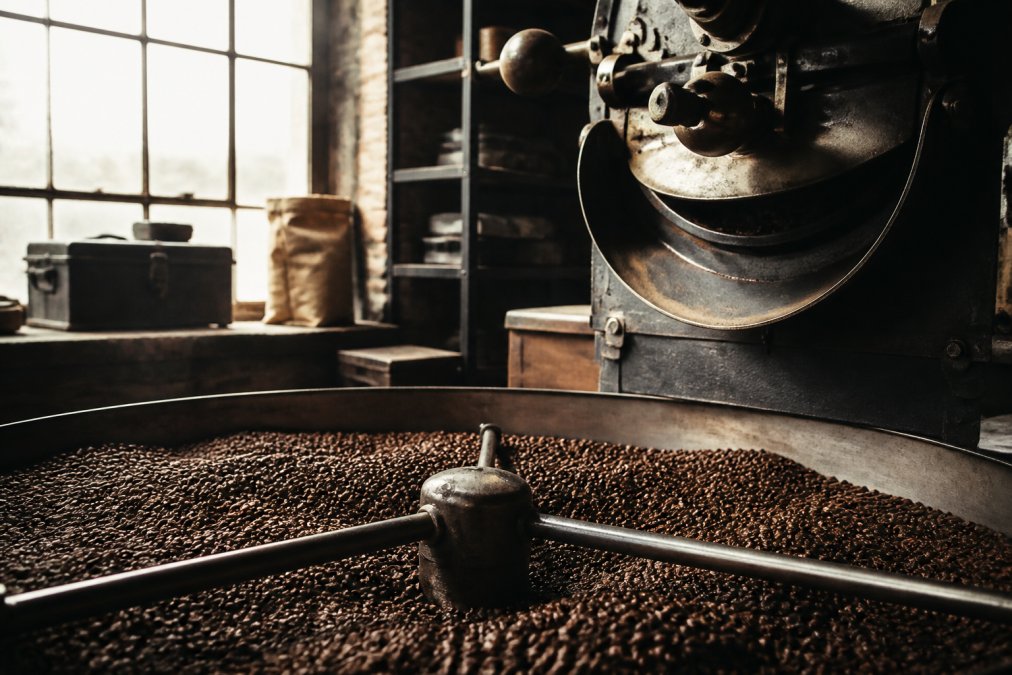
Every soldier knows the difference between a field ration and a hot meal from the mess tent. The same logic applies to your morning cup. Small batch coffee is roasted in limited quantities, typically 5 to 15 pounds at a time, allowing the roastmaster to monitor each bean with precision that mass production cannot match.
Mass-market operations roast thousands of pounds daily, prioritizing shelf stability over flavor, and beans sit in warehouses for months. Small batch roasting changes that equation: you receive beans roasted days ago, not seasons ago.
Fresh Roasted Coffee vs Grocery Store: The Critical Difference
The gap between fresh roasted coffee vs grocery store options comes down to one word: time. Grocery store coffee can sit on shelves for six to twelve months after roasting, losing the volatile compounds that create aroma and flavor complexity.
Fresh roasted coffee arrives within days of leaving the roaster. This window matters because beans release carbon dioxide for several days after roasting, a process called degassing, and flavors continue developing during this period.
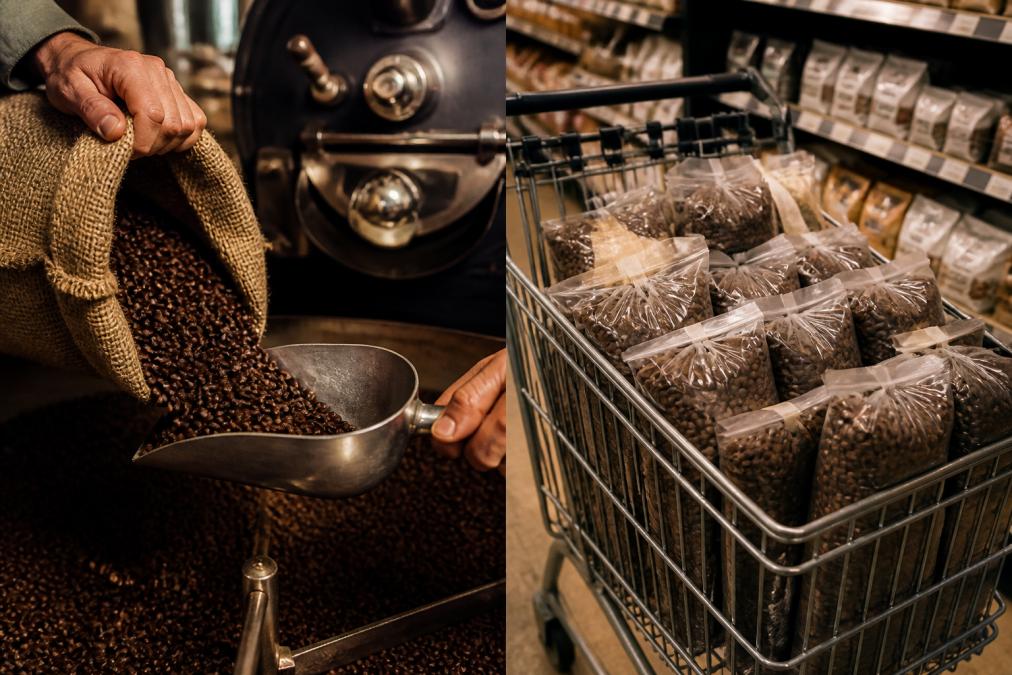
The difference is noticeable even to casual drinkers. Coffee that has lost its volatile oils tastes flat and stale, requiring more sugar and cream to mask the dullness.
Key Takeaway
Roast date matters more than any other factor in coffee quality. If a bag doesn't show when it was roasted, the roaster likely has something to hide.
Core Benefits of Small Batch Roasting
Small batch roasting delivers measurable advantages over commercial production, but the real story lies in the science of the roast.
The Physics of Heat Transfer in Small Batches
Coffee roasting is a dance of heat transfer. In a drum roaster, heat reaches beans through conduction, convection, and radiation. In large commercial roasters, the sheer volume creates a chaotic environment: beans at the center of a 1,000-pound drum may never touch the surface, relying solely on convection, while beans near the walls experience intense conduction. This leads to inconsistent roasting, some beans overdeveloped, others underdeveloped, even within the same batch.
Small batch roasters, handling 5 to 15 pounds, mitigate this through physics. With fewer beans, airflow reaches every bean more uniformly, and the roastmaster can adjust drum speed and gas flame in real time. The result is a uniform roast that extracts evenly, producing clarity and balance mass-market blends rarely achieve.
The Role of Drum Speed and Airflow
Drum speed is a critical variable most casual articles ignore. Faster speeds increase convective heat transfer but can cause uneven surface development; slower speeds allow more conductive heat, which can scorch the surface. Small batch roasters fine-tune drum speed to match the bean's density and moisture content.
Airflow controls chaff removal and heat transfer. High airflow during drying pulls moisture out quickly, preventing a baked flavor; low airflow during development allows sugars to caramelize and body to develop. In small batches, the roastmaster adjusts airflow on the fly, responding to the bean's behavior.
The Maillard Reaction and Caramelization
The Maillard reaction, the same process that browns bread and sears steak, occurs between amino acids and reducing sugars above 300°F, producing hundreds of aromatic compounds. Caramelization, beginning around 340°F, breaks down sugars into sweeter, nuttier flavors.
In small batches, the roastmaster can slow the roast near the end of the first crack to allow the Maillard reaction to continue without over-caramelizing sugars, a technique called "stretching the roast." This is nearly impossible in large batches because the drum's thermal mass makes rapid temperature changes sluggish.
Key Takeaway
Small batch roasting is not just about smaller quantities, it's about controlling the physics of heat transfer to achieve a uniform, flavorful roast. When you buy small batch coffee, you're getting a product where every bean has been given the same opportunity to develop its full potential.
Quality Control: More Than a Visual Check
Quality control extends beyond sorting defective beans. Roasters use visual inspection, moisture analysis, and cupping to ensure each batch meets standards. Green beans typically have 10-12% moisture, and roasting drives this down to 1-2%; too high and the roast is uneven, too low and the beans bake.
After roasting, the roastmaster performs a visual inspection for uniform color and surface development, and listens for the first and second crack, audible pops indicating internal pressure has fractured the bean's structure. In small batches, the roastmaster responds instantly, dropping the beans at the precise moment.
Cupping, the industry's standardized tasting method, is the final quality gate. Small batch roasters cup every batch, evaluating aroma, acidity, body, and flavor, catching defects visual inspection misses.
How to Identify Fresh Coffee Beans by Roast Date
Learning how to identify fresh coffee beans starts with a simple habit: check the roast date before anything else. Unlike expiration dates, the roast date tells you exactly when the coffee reached its peak potential.
Look for a "Roasted On" date rather than just a "Best By" date. Coffee reaches optimal flavor between three and fourteen days after roasting, when degassing has completed but volatile aromatic compounds remain intact. Beans roasted more than thirty days ago have already begun their decline, even if the expiration date suggests otherwise.
You can also evaluate freshness through appearance and aroma. Fresh beans have a matte finish with visible oils only on dark roasts. Stale beans look dull and dry, producing a flat, dusty aroma rather than the vibrant scent of recently roasted coffee.
The Small Batch Coffee Advantage: Flavor, Ethics, and Shelf Life
Small batch roasting creates advantages that extend far beyond the cup. Flavor complexity emerges from careful roast profiles that highlight each bean's natural characteristics rather than masking them under a uniform dark roast.
Ethical sourcing forms the backbone of craft coffee culture. Small batch roasters typically build direct relationships with growers, paying premiums for high-quality beans and supporting small-scale agriculture. This transparency means your purchase supports farmers directly rather than funneling through anonymous commodity markets.
Shelf life science works in your favor with small batch coffee. Because beans arrive fresh and are typically consumed within weeks of roasting, you experience them at their peak rather than after months of degradation.
| Factor | Small Batch Coffee | Mass-Market Coffee |
|---|---|---|
| Roast Volume | 5-15 pounds per batch | Thousands of pounds daily |
| Freshness Window | Days after roasting | Months on warehouse shelves |
| Quality Control | Individual attention per batch | Automated, minimal inspection |
| Sourcing | Direct trade relationships | Commodity market purchases |
| Flavor Profile | Distinct, origin-specific notes | Uniform, often flat taste |
Brewing and Storing Your Small Batch Coffee
Brewing method compatibility is not just a matter of taste, it's a matter of extraction science. The way water interacts with coffee grounds determines which flavor compounds end up in your cup.
The Science of Extraction and Brew Method
Coffee extraction dissolves soluble compounds from the grounds into water. The ideal yield is around 18-22% of the coffee's weight; under-extraction (below 18%) yields sour coffee, while over-extraction (above 22%) becomes bitter. Grind size and brew time control this ratio.
Different brew methods extract differently:
- Pour-over (e.g., V60, Chemex): This method uses a thin bed of coffee and a steady pour, allowing for high extraction of delicate flavor compounds. Light roasts, which retain more acidity and floral notes, shine here. The paper filter absorbs oils, producing a clean, tea-like cup. For small batch light roasts, use a medium-fine grind (similar to table salt) and water just off the boil (195-205°F).
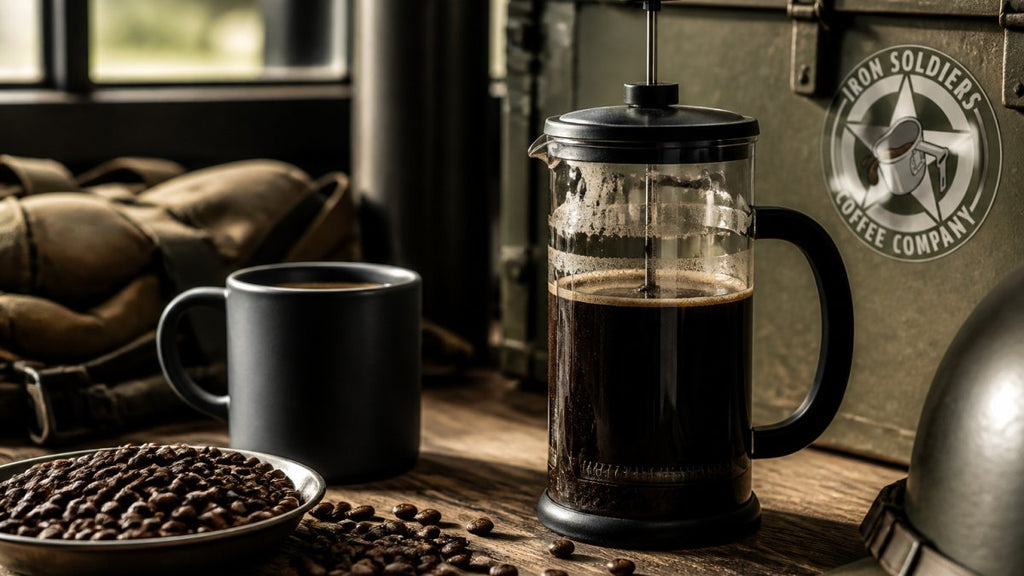
- French press: The metal mesh filter allows oils and fine particles through, producing a fuller body. Medium roasts, with their balanced acidity and body, are ideal. Use a coarse grind and steep for four minutes. The immersion method extracts more evenly, making it forgiving for less uniform roasts, but small batch beans will reward you with a richer mouthfeel.
- Espresso: Espresso forces water through finely ground coffee under pressure, extracting a concentrated shot. Dark roasts, with their bold, caramelized flavors, are traditional, but small batch medium roasts can offer surprising complexity. The uniform roast ensures even extraction, reducing the risk of channeling, where water finds paths through the puck, leading to over- and under-extraction. Use a fine grind and a 1:2 ratio of coffee to water.
- Cold brew: Cold water extracts slowly over 12-24 hours, producing a smooth, low-acid concentrate. Any roast works, but small batch beans' clean flavor profile prevents the muddiness that can occur with mass-market coffee. Use a coarse grind and a 1:8 ratio of coffee to water.
The Impact of Roast Date on Brewing
The roast date is your most valuable tool for brewing success. Coffee reaches peak flavor between three and fourteen days after roasting, when beans have degassed enough for even extraction but volatile aromatic compounds remain intact.
To maximize flavor, grind your beans just before brewing. Whole beans retain their aromatics much longer than ground coffee, which exposes more surface area to oxygen. A burr grinder, producing a consistent particle size, is superior to a blade grinder.
Storage Science: Protecting Your Beans
Coffee's enemies are oxygen, light, heat, and moisture. Oxygen oxidizes oils, causing rancidity; light and heat accelerate this, while moisture causes mold and off-flavors. The best storage is an airtight, opaque container of ceramic or stainless steel in a cool, dark cabinet.
A common pattern among enthusiasts is to buy whole beans in quantities lasting one to two weeks, ensuring you always brew within the freshness window. The best practice, however, is to buy small batch coffee frequently, supporting the roaster's craft and ensuring your cup is always at its peak.
Watch Out
Never store coffee in a clear container on the counter. Light exposure can degrade flavor within days. Instead, use an opaque, airtight container in a dark cabinet.
The Role of Water Quality
Water makes up over 98% of your brewed coffee, so its quality is paramount. Tap water with high mineral content can cause scale buildup and off-flavors, while distilled water extracts poorly because it lacks the minerals that help dissolve coffee compounds. If your tap water is hard or chlorinated, consider filtered water or a simple carbon filter.
Mission-Ready Coffee: The Final Verdict
Choosing small batch coffee means joining a movement that values craftsmanship, freshness, and purpose over convenience and uniformity.
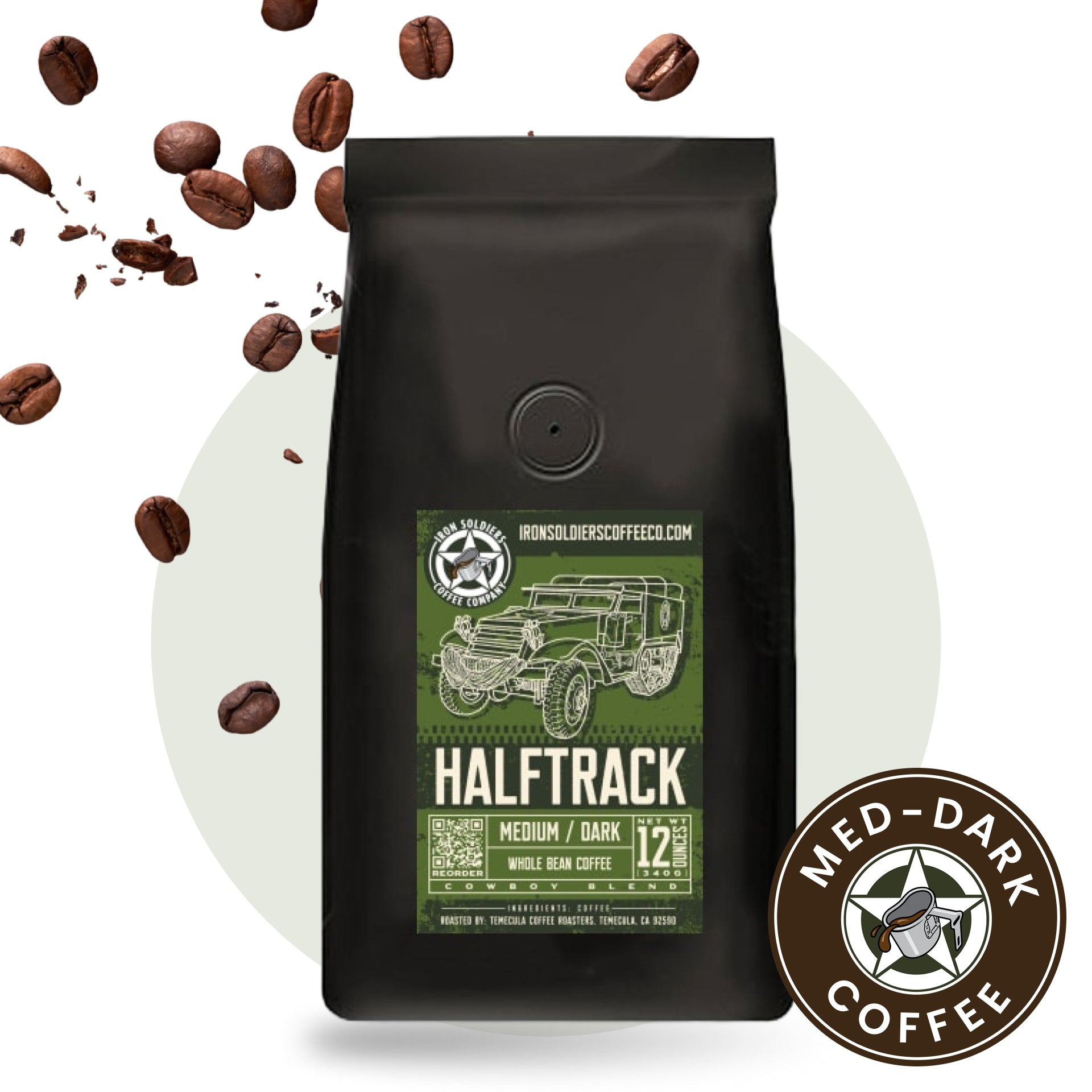
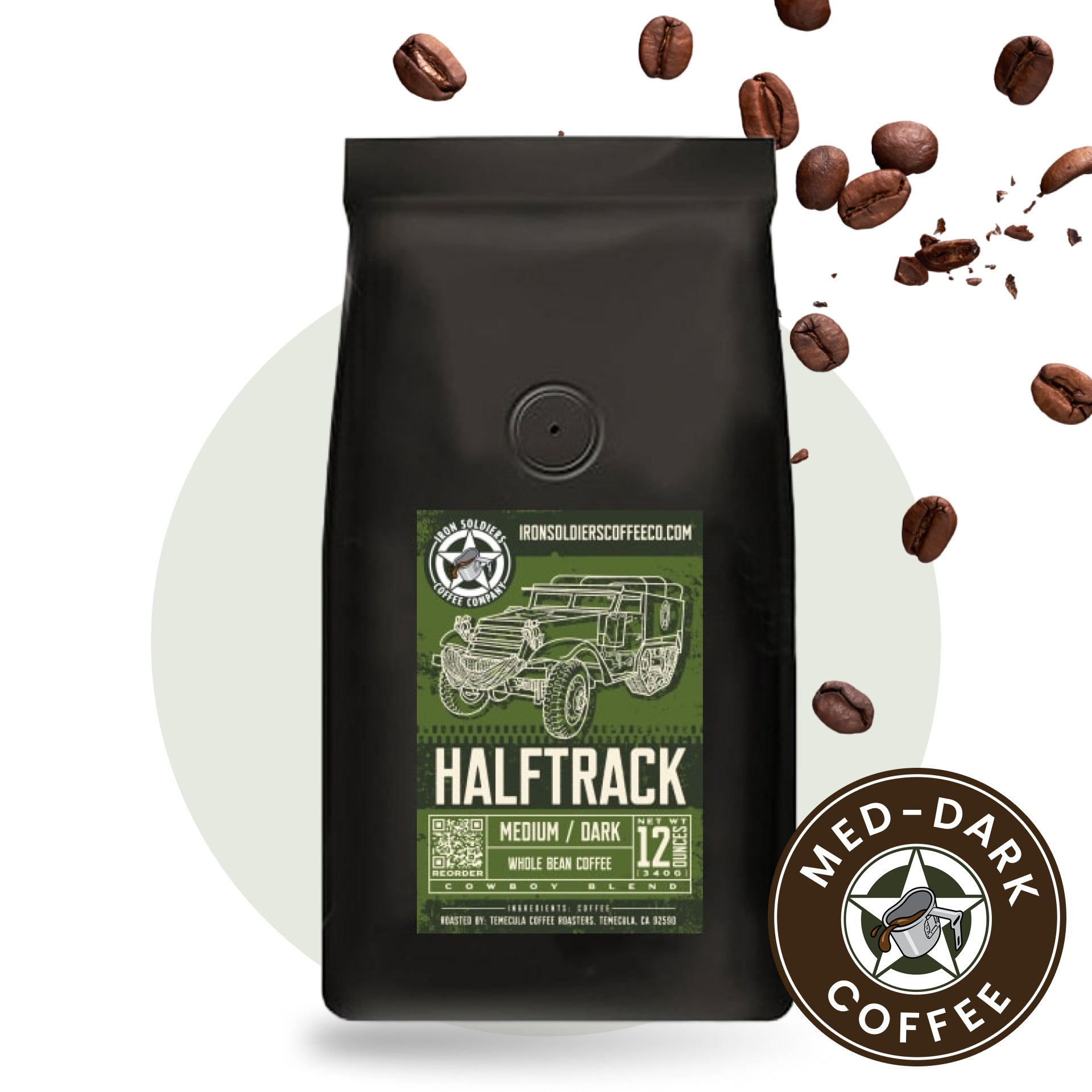
Iron Soldiers Coffee Company embodies this philosophy with blends like the Sherman Tank Edition, a dark roast house blend for espresso lovers demanding intensity and complexity. The Halftrack Edition offers a medium-dark balance for versatility across brewing methods.

Every bag from Iron Soldiers Coffee Company supports veterans and their families, with a donation from each order going to a volunteer-only nonprofit. This mission-driven approach, combined with fresh, precision-roasted coffee, delivers value that transcends the grocery store shelf.
Frequently Asked Questions
Is small batch coffee better than mass-produced coffee?
For most drinkers, yes. Small batch coffee offers a fresher product because roasters typically ship it within days of the roast date, not weeks or months later. Fresher beans produce a more complex aroma and flavor. Small batch roasting also allows the roastmaster to monitor each batch closely, catching defects and adjusting heat application for consistency. The result is a cup with clearer flavor notes and better bean integrity than mass-market coffee that may sit in warehouses for extended periods.
What is the 15-15-15 rule for coffee?
The 15-15-15 rule is a simple freshness guideline: buy coffee within 15 days of its roast date, grind it within 15 minutes of brewing, and consume it within 15 minutes of pouring. This rule emphasizes that coffee begins losing its volatile aroma compounds immediately after roasting. Following it helps you experience the full flavor complexity that small batch roasters work to achieve. Check the roast date on the bag to confirm you are starting with beans inside that first 15-day window.
How does small batch roasting affect the flavor profile?
Small batch roasting gives the roastmaster precise control over roasting temperature and heat application. With smaller batch sizes, the roaster can adjust the profile in real time as the beans develop. This precision produces a more consistent roast and a clearer flavor profile. Mass-market roasting handles huge volumes, which makes it harder to maintain even development. Small batch coffee also allows for better bean sorting before roasting, removing defects that create off-flavors.
What does the roast date on a coffee bag mean?
The roast date tells you exactly when the beans were roasted, which is the starting point for coffee freshness. Unlike a best-by date, which can be months away, the roast date lets you gauge how much time has passed since the beans were heat-treated. Coffee is best consumed between 4 and 14 days after roasting. This window allows gases from the roasting process to escape while the volatile flavor compounds remain strong. Always look for a visible roast date when buying coffee.
The choice between mass-produced coffee and small batch roasting ultimately reflects your priorities. If you value freshness, flavor complexity, and supporting those who served, craft coffee delivers on all fronts. Experience the difference that precision roasting and a mission-driven approach provide. Get started with Iron Soldiers Coffee Company and taste coffee that honors tradition while building a better future for our veterans.
Related post
21
Oct
20
Oct