7 Steps to Select Loose Leaf Tea for Relaxation
Last Updated: October 24, 2026
Quick Summary
To select loose leaf tea for relaxation, first define when you will drink it and your caffeine tolerance, then choose caffeine-free herbal blends like chamomile, lavender, lemon balm, or rooibos for evening cups. Inspect leaf quality by aroma, color, ingredient list, and packaging date, and brew with the right dose, temperature, and time.
- Herbal blends contain no caffeine and are the safest bet for pure relaxation.
- Rooibos and honeybush brew a deep red, sweet cup with no caffeine at all.
- Check the ingredient list, not the front label, since herbal blends can hide green tea or matcha.
- Store tea airtight away from light and heat, and use it within six to twelve months of opening.
- Brew herbal blends at 212°F for 5-10 minutes and green tea at 175°F for 3-4 minutes.
Table of Contents
- Step 1: Define Your Relaxation Mission
- Step 2: Choose Your Tea Type for Relaxation
- Step 3: Pick the Best Herbal Tea for Relaxation
- Step 4: Select Caffeine-Free Loose Leaf Tea for Evening Use
- Step 5: Understand Loose Leaf Tea for Stress and Anxiety
- Step 6: Inspect Leaf Quality and Freshness Before You Buy
- Step 7: Learn How to Brew Loose Leaf Tea for a Calming Cup
- Stock Your Rations: Picking Your First Relaxation Blend
- Frequently Asked Questions
Step 1: Define Your Relaxation Mission
Before you touch a single leaf, define your mission. Learning how to select loose leaf tea for relaxation starts with one question: what are you actually trying to fix? A racing mind at midnight needs a different brew than an afternoon lull at the desk.
At Iron Soldiers Coffee Company, we treat tea selection like any good operation: clear objective first, gear second. Ask yourself three things:
- When will you drink it? Evening cups demand caffeine-free options.
- What's your caffeine tolerance? Some of us run hot; others need zero after noon.
- What flavor do you actually enjoy? A blend you dislike won't calm anyone.
Write those answers down. They form your selection criteria for every step that follows.
Step 2: Choose Your Tea Type for Relaxation
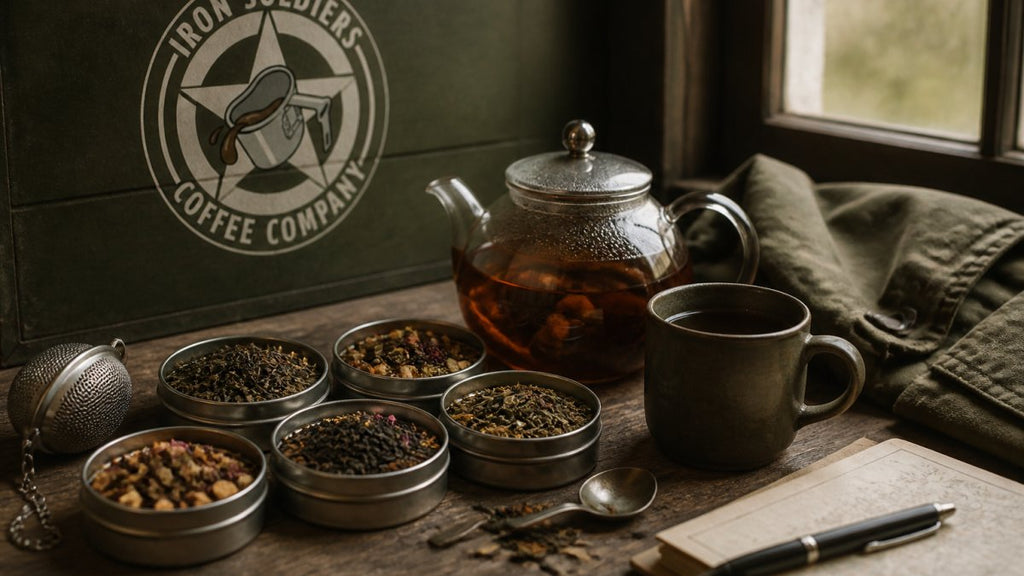
The tea world splits into two camps: true teas and herbal infusions. True teas come from the Camellia sinensis plant, including black, green, white, and oolong. Herbal teas are blends of dried flowers, leaves, roots, and spices, and most contain no caffeine at all.
Loose leaf tea is whole or large-cut tea leaves steeped directly in water, rather than the dust and fannings packed into standard tea bags. That whole-leaf format is why loose leaf tea for stress and anxiety tends to deliver a fuller flavor and aroma.
Herbal Blends and True Teas Compared
| Tea Type | Caffeine | Best For | Flavor Range |
|---|---|---|---|
| Herbal blends | None | Evening wind-down | Fruity, floral, spicy |
| White tea | Low | Gentle daytime calm | Light, sweet |
| Green tea | Moderate | Focused calm | Grassy, fresh |
| Oolong tea | Moderate | Slow afternoon sipping | Toasty, complex |
| Black tea | High | Morning energy only | Bold, malty |
For pure relaxation, herbal blends are the safest bet. True teas can still fit, but only if you respect their caffeine load.
Step 3: Pick the Best Herbal Tea for Relaxation
The best herbal tea for relaxation is one built around proven calming herbs, not just a pretty label. Look for blends that list their ingredients clearly and lead with nervines, the class of plants traditionally used to ease tension.
Calming Herbs to Look For
- Chamomile: gentle and floral, the classic evening herb
- Lavender: aromatic and soothing, best in small amounts
- Lemon balm: citrusy and mellow, a favorite for winding down
- Peppermint: cooling and refreshing, good after meals
- Rooibos: earthy and sweet, naturally caffeine-free
Mint-forward blends are a strong starting point. Our Moroccan Mint pairs organic gunpowder green tea with spearmint and peppermint for a smooth, vibrant cup that's refreshing hot and excellent iced.

Step 4: Select Caffeine-Free Loose Leaf Tea for Evening Use
If your relaxation window falls after dinner, caffeine-free loose leaf tea is non-negotiable. Caffeine lingers for hours, and a late cup of green or black tea can quietly sabotage your sleep.
Rooibos and honeybush are the workhorses here. Both come from South African shrubs, brew a deep red cup, and carry sweet, earthy notes without a trace of caffeine. Hibiscus adds tartness and color. Fruit pieces and spices round out the flavor.
One practical tip: check the ingredient list, not the front label. "Herbal" doesn't always mean caffeine-free if a blend sneaks in green tea or matcha.
Our Hibiscus Berry Rooibos Tea is a ready-made evening option, brewed from organic hibiscus, rosehips, orange peel, and rooibos with blueberry and currant notes.

Step 5: Understand Loose Leaf Tea for Stress and Anxiety
Here's where we separate fact from folklore. Loose leaf tea for stress and anxiety offers a genuine ritual: the measuring, the steeping, the quiet pause. That ritual itself does real work. The herbs matter too, but keep expectations realistic.
What the Evidence Actually Supports
Chamomile, lemon balm, and lavender have long histories of traditional use for calm. That is not the same as proven treatment. Most human studies on these herbs are small, short, or use extracts rather than steeped tea. A common pattern in the literature is modest, subjective relaxation rather than clinical anxiety reduction. Treat tea as a supportive habit, not a therapy.
- Chamomile: traditional sleep and digestion aid; evidence is promising but not definitive
- Lemon balm: traditional calm and mood support; limited large-scale human data
- Lavender: aromatherapy and oral preparations studied; tea-strength doses are low
- Peppermint: primarily digestive comfort; relaxation effect is largely sensory
Caffeine: The Variable Most People Miss
A "calming" green tea still delivers a stimulant. Caffeine content varies by tea type, leaf age, and steep time. Black tea typically carries the most, green and oolong moderate amounts, white tea less, and herbal infusions none unless a caffeinated ingredient is blended in. For an evening cup, read the ingredient list, not the front label. "Herbal" does not guarantee caffeine-free if the blend includes green tea, matcha, or guarana.
If you are sensitive to caffeine, set a cutoff time. Most people find that caffeine's effects linger for several hours; a common guideline is to avoid it after early afternoon if sleep is a concern.
Safety, Interactions, and When to Seek Help
Herbs are not automatically risk-free. Some can interact with medications or affect pregnancy.
- Chamomile: avoid if you have a ragweed or daisy-family allergy
- Lemon balm: may interact with thyroid medications; consult a professional if you take them
- Lavender: generally regarded as safe in food amounts; avoid concentrated oils
- Peppermint: may worsen reflux in some people
- Pregnancy and nursing: check with a clinician before using medicinal-strength herbal teas
Watch Out
Tea is not a treatment for anxiety disorders. If worry interferes with sleep, work, or daily life, or if you experience panic, persistent low mood, or thoughts of self-harm, seek professional care. A calm cup is a supplement to good care, not a substitute.
For steady focus without the jitters, read our guide on managing caffeine intake for sustained mental focus before you build your evening routine.
Step 6: Inspect Leaf Quality and Freshness Before You Buy
Quality lives beyond leaf size. A big leaf can still be stale. Judge these signals instead, and use a simple inspection routine before you commit.
The Five-Point Inspection
- Aroma: fresh tea smells vivid and true to its type; flat tea smells like hay or cardboard
- Color: leaves should look consistent, not faded, dusty, or unevenly dyed
- Ingredient list: whole herbs and named botanicals beat vague "natural flavors"
- Harvest or packaging date: fresher is better; tea fades with age
- Seller reputation: buy from shops that store tea properly and sell often
Label-Reading for Blends
Blends hide caffeine and quality cues in the ingredient list. Look for the order of ingredients, the first listed is the largest by weight. If a "calming" blend lists green tea or matcha first, it is caffeinated. If it lists "flavoring" without naming the herb, you cannot judge the dose. Prefer labels that name the botanical and its part (leaf, flower, root).
Storage and Shelf Life
Store tea in an airtight container away from light, heat, and moisture. A cool, dark cupboard is better than a countertop jar. Most loose leaf teas are best within six to twelve months of opening; herbal blends with fruit pieces may fade faster. Buy in quantities you will finish, and date the container when you open it.
Pro Tip
Smell before you steep. If the dry leaf smells dull or musty, no brewing method will rescue it.
Watch out: bargain bins and bulk jars left in sunlight are where good tea goes to die. Buy sealed, dated packages from a reputable seller.
Step 7: Learn How to Brew Loose Leaf Tea for a Calming Cup
Great leaves still fail with bad brewing. How to brew loose leaf tea comes down to three controls: dose, water temperature, and time.
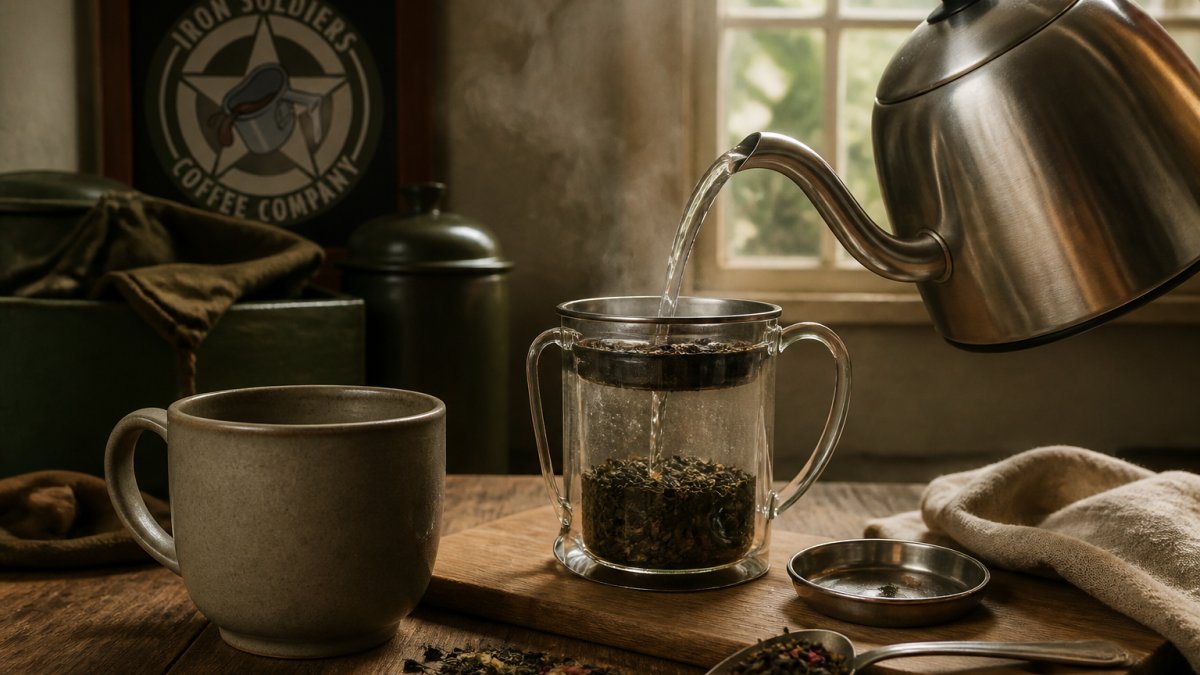
Use about one teaspoon of leaves per cup. Heat filtered water, and match the temperature to the tea: gentler heat for green and white, full boil for herbal blends. Then steep and taste.
- Green tea: 175°F for 3-4 minutes
- Herbal blends: 212°F for 5-10 minutes
- Rooibos: 212°F for 5-6 minutes
For a full walkthrough, see our guide on how to brew the perfect cup of loose leaf tea.
Stock Your Rations: Picking Your First Relaxation Blend
Start with one caffeine-free blend and one lighter option. That pairing covers evening wind-down and gentle daytime calm without cluttering your shelf.
Our Apple Cider Rooibos brings cinnamon, orange peel, and natural spices to a caffeine-free rooibos base, a cozy cup for any season. Buy sealed, store it cool and dark, and replace it within a few months of opening.

Your mission is simple: define the goal, match the caffeine, pick herbs you enjoy, and brew with care. A calm cup is a well-planned cup.
Frequently Asked Questions
What type of tea is best for relaxation?
Herbal blends and low-caffeine true teas work best. Chamomile, lavender, lemon balm, and peppermint are common calming herbs, while rooibos and hibiscus-based blends are naturally caffeine-free. If you want a true tea, white tea or a lightly steeped green tea carries less caffeine than black tea. Match the choice to your caffeine sensitivity and the time of day: a caffeine-free herbal blend in the evening, a gentle green tea in the afternoon.
Which herbal teas are naturally caffeine-free?
Any blend built on herbs, roots, or fruit rather than the Camellia sinensis plant is caffeine-free. Rooibos, hibiscus, rosehips, orange peel, peppermint, spearmint, chamomile, and lemon balm all fit. Check the label: a blend labeled herbal or tisane should list no green, black, oolong, or white tea. Blends that mix mint with gunpowder green tea, for example, do contain caffeine, so read the ingredient list before you buy.
How do you brew loose leaf tea for a relaxing cup?
Use about 3 grams of leaf per 12 ounces of filtered water and match the water temperature to the leaf. Delicate green and white teas want water around 175°F, while herbal blends and rooibos want 212°F. Steep 3-6 minutes depending on the type, then remove the leaves. A finer mesh infuser keeps small leaf pieces out of the cup, and a second steep often gives a softer, gentler cup for later in the evening.
When is the best time to drink tea for relaxation?
Most people get the most from a cup in the late afternoon or evening, when the goal is winding down rather than waking up. Choose a caffeine-free loose leaf tea for that window so it does not interfere with sleep. A lower-caffeine green or white tea fits the mid-afternoon slot. Keep the ritual consistent, same mug, same steep time, and the habit itself becomes part of the wind-down.
Relaxation shouldn't be complicated. If you want a brewing ritual that also serves a cause, Iron Soldiers Coffee Company offers loose leaf teas and fresh-roasted coffee, with $1 from every bag supporting veterans and their families. Explore our blends, our Coffee Bootcamp guides, and a community that values history and freedom. Get started with Iron Soldiers Coffee Company and make your next cup count.

Related post
21
Oct
20
Oct