Fresh vs Grocery Store Coffee: What's the Difference?
Table of Contents
- Fresh vs Grocery Store Coffee: The Core Differences
- Why Coffee Roast Date Importance Cannot Be Overstated
- The Supply Chain Journey of Grocery Store Coffee
- Whole Bean vs Pre-Ground: How Oxidation Kills Flavor
- Signs of Stale Coffee Beans You Should Know
- How to Store Coffee Beans for Freshness After You Buy
- Fresh vs Grocery Store Coffee: Which One Is Right for You?
- Conclusion
Last Updated: August 16, 2026
Fresh vs Grocery Store Coffee: The Core Differences
The difference between fresh and grocery store coffee is real, measurable, and most everyday drinkers can taste it. Fresh-roasted coffee is roasted within days or weeks and sold through channels prioritizing rapid delivery. Grocery store coffee moves through a supply chain taking months from roasting to your cart.
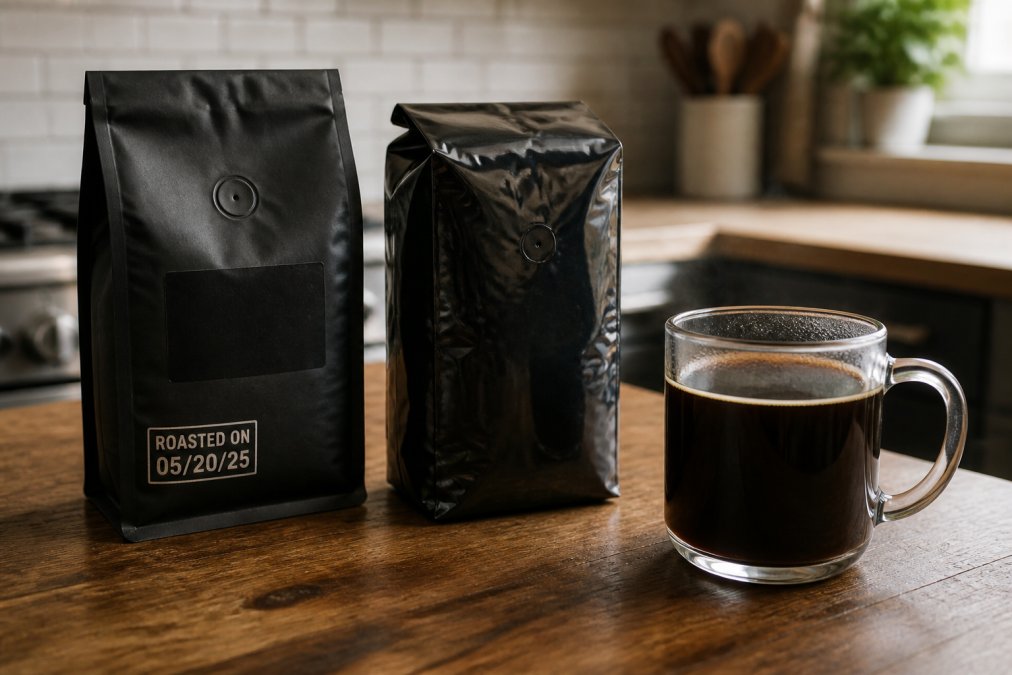
Side-by-Side Comparison Table
| Factor | Fresh-Roasted Coffee | Grocery Store Coffee |
|---|---|---|
| Roast date transparency | Printed on bag | Rarely disclosed |
| Time from roast to shelf | Days to 2-3 weeks | Weeks to several months |
| Oxidation exposure | Minimal | Higher (extended storage) |
| Packaging | One-way valve bags | Vacuum-sealed bricks or cans |
| Flavor profile | Complex, nuanced, aromatic | Flatter, more uniform |
| Grind options | Whole bean widely available | Pre-ground dominates |
| Price point | Higher | Lower |
| Best for | Pour over, espresso, cupping | Convenience brewing |
Why Coffee Roast Date Importance Cannot Be Overstated
Coffee roast date importance is the single factor most consumers overlook. Once beans leave the roaster, aromatic compounds, volatile oils, and carbon dioxide begin to dissipate immediately. A bag roasted six months ago and one roasted two weeks ago are fundamentally different products.
Most grocery store brands do not print roast dates, they print best by dates. Those are not the same thing.
The Degassing Window: Carbon Dioxide and Peak Freshness
After roasting, coffee beans release carbon dioxide through degassing. Quality roaster bags include a one-way valve to let CO2 escape without letting oxygen in. Peak freshness for most brewing methods falls between 5 and 21 days after the roast date, when volatile oils are most expressive and acidity is bright. For espresso, many roasters recommend waiting 7-10 days post-roast.
Grocery store coffee, by the time it reaches your kitchen, has almost certainly passed this window.
What 'Best By' Dates Actually Tell You
A "best by" date tells you when the product becomes unacceptably stale, not when it was roasted. For vacuum-sealed mass-market coffee, best by dates are typically set 12 to 24 months from the packing date, which itself may be weeks after roasting. A bag showing a best by date 18 months from now could have been roasted 6 months ago.
According to the Specialty Coffee Association's consumer education resources, roast date transparency is a defining characteristic of specialty coffee standards.
The Supply Chain Journey of Grocery Store Coffee
Mass-market coffee travels through a long supply chain: green coffee is roasted in large batches at centralized facilities, packaged, shipped to regional distribution centers, then to store warehouses, where it may sit for additional weeks before purchase. This model is optimized for consistency and shelf stability, not peak freshness.
Small batch roasters operate differently. Beans are roasted to order or in small quantities, bagged with roast dates, and shipped directly to consumers. The supply chain shrinks from months to days. That compression is where the flavor difference lives.
Key Takeaway
The grocery store coffee model is built for shelf stability, not peak flavor. The supply chain adds months between roast and cup, and no amount of quality packaging fully compensates for that time gap.
Whole Bean vs Pre-Ground: How Oxidation Kills Flavor
When coffee is ground, surface area increases dramatically, exposing the beans to oxygen and accelerating degradation of aromatic compounds. Pre-ground coffee begins losing its best qualities within 15-30 minutes of grinding.
Most grocery store coffee is sold pre-ground, meaning the flavor profile is already compromised before the bag is opened. Whole bean coffee preserves volatile oils inside the bean's cell structure. Grinding immediately before brewing gives you access to the full aromatic complexity the roast was designed to deliver.
As the National Coffee Association's brewing guide notes, grinding just before brewing is one of the most impactful steps a home brewer can take to improve cup quality.
Signs of Stale Coffee Beans You Should Know
Visual cues: Dull, matte surface (fresh beans have a slight sheen), absence of oily residue on darker roasts, visible white or gray patches, or shrunken beans.
Smell test: Fresh beans smell intensely aromatic; stale beans smell flat, papery, or like cardboard.
Brewing behavior: Minimal or no bloom when hot water hits grounds, flat crema on espresso, or weak extraction even at correct ratios.
Taste: Bitterness without complexity, flat acidity, or a hollow finish.
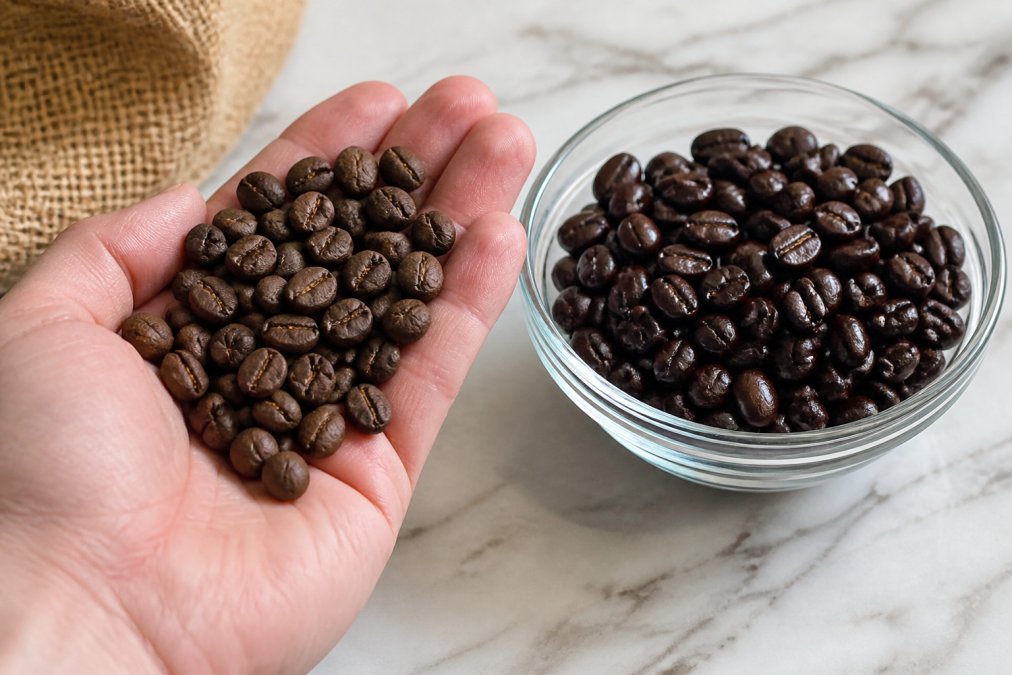
The bloom test is the most reliable quick check. Put a tablespoon of grounds in a filter and pour a small amount of just-off-boil water over them. Fresh coffee will bubble and puff up noticeably within 30 seconds. Stale coffee will sit flat.
Watch Out
Never judge coffee freshness by the "best by" date alone. A bag showing 12 months of shelf life remaining could still be significantly past its peak flavor window if the roast date was months before packaging.
How to Store Coffee Beans for Freshness After You Buy
The four enemies of coffee freshness are oxygen, light, heat, and moisture. Your storage strategy should address all four.
Core storage rules:
- Store in an airtight container, ideally one with a one-way valve
- Keep away from direct sunlight in a cabinet or pantry
- Avoid storing near heat sources
- Do not refrigerate whole beans; temperature cycling and moisture exposure accelerate staling
- Freeze only if storing for more than a month in an airtight, vacuum-sealed container
Buy what you'll use within 2-3 weeks. Buying in bulk sacrifices quality on everything past the first week or two.
Storage Science for Grocery Beans: Getting More From What You Buy
Grocery store coffee arrives already past its optimal window, but proper storage can meaningfully extend what's left of its quality. Transfer coffee to an airtight container immediately after opening. Opaque containers in a dark cabinet outperform decorative glass canisters.
For pre-ground grocery coffee, use within one week of opening. Grinding smaller amounts more frequently from a whole bean bag is better than buying pre-ground in large quantities.
According to the USDA's food storage and handling resources, airtight packaging and temperature stability are the two most critical variables in preserving the quality of dry food products.
| Storage Method | Shelf Life After Opening | Quality Preservation |
|---|---|---|
| Original bag, folded closed | 1-2 weeks | Poor |
| Airtight canister, room temp | 2-4 weeks | Good |
| Airtight canister, dark cabinet | 3-5 weeks | Better |
| Vacuum-sealed, freezer | 2-3 months | Best for long-term |
Pro Tip
Buy a small airtight container that holds just enough for one to two weeks of brewing. Keep the rest sealed in its original bag until needed to slow oxidation.
Fresh vs Grocery Store Coffee: Which One Is Right for You?
Fresh-roasted coffee is the clear winner on flavor, especially for brewing methods that reward complexity: pour over, French press, Aeropress, and espresso. For high-volume brewing like a large household running a drip machine, the difference is real but may matter less than convenience and cost.
If you drink one or two cups a day and care about what's in the cup, fresh-roasted coffee is worth the price difference. If you're making a pot for a crowd, grocery store coffee serves the purpose adequately.
The Middle Ground Compromise
Buy fresh-roasted coffee for your morning ritual, the cup you actually sit down with. Use grocery store coffee for secondary brewing: the afternoon pot or travel mug. This approach lets you experience the quality difference where it matters while keeping costs manageable.
Another option: buy whole bean from the grocery store rather than pre-ground, grind at home, and store properly. You won't get roast date transparency, but you'll preserve more freshness and get noticeably better extraction than pre-ground.
For those wanting the full specialty coffee experience, Iron Soldiers Coffee Company offers freshly roasted blends and single origins shipped with roast dates clearly marked. Every bag sold puts $1 toward a nonprofit supporting veterans and their families.
The real difference between fresh and grocery store coffee comes down to time. Fresh coffee gives you access to the full flavor potential of the bean. Grocery store coffee gives you a convenient, affordable approximation, with months of supply chain and shelf time already subtracted from the cup.
Finding quality comes down to sourcing from roasters who treat roast date transparency as a baseline standard. Iron Soldiers Coffee Company was built on exactly that premise: high-quality, freshly roasted coffee paired with a mission that matters. Shop All Coffee at Iron Soldiers Coffee Company and taste the difference that a real roast date makes.
Frequently Asked Questions
Does the roast date on coffee bags actually matter?
Yes, the roast date is the single most useful freshness indicator on a coffee bag. After roasting, beans release carbon dioxide and aromatic compounds that define their flavor profile. Most specialty roasters consider the first two to four weeks after the roast date the peak freshness window. Grocery store coffee rarely prints a roast date, only a 'best by' date, which can be 12 to 24 months after roasting. That gap alone explains most of the flavor difference between fresh vs grocery store coffee.
Will I actually taste the difference between fresh-roasted and grocery store coffee?
Most everyday coffee drinkers do notice a difference, even without formal training. Fresh-roasted coffee tends to have brighter acidity, more defined flavor notes, and a fuller aroma. Grocery store coffee, after months in the supply chain, often tastes flat, bitter, or one-dimensional because volatile oils and aromatic compounds have degraded. Brewing method amplifies the gap, pour over and espresso show it most clearly. A simple side-by-side brew at home is the most reliable test.
How long does coffee stay fresh after roasting?
Whole bean coffee is generally at peak freshness between 7 and 28 days after the roast date. After 30 days, flavor complexity starts to fade noticeably. Pre-ground coffee degrades much faster, oxidation accelerates once the bean's surface area increases, so ground coffee can go stale within a week of opening. Vacuum-sealed bags with one-way valves extend shelf life by limiting oxygen exposure, but they cannot stop staling indefinitely. Proper storage in an airtight container away from heat and light slows the process further.
What is the best way to store coffee beans to keep them fresh?
Store whole beans in an airtight container, away from direct light, heat, and moisture. A dark pantry or cabinet works well. Avoid the refrigerator, temperature cycling causes condensation that accelerates staling. The freezer is acceptable for long-term storage of sealed, unopened bags, but once opened, use the beans within two weeks. For grocery store coffee, transferring beans to an airtight container immediately after opening is one of the most effective ways to extend shelf life and protect volatile oils.
Is fresh-roasted coffee worth the higher price compared to grocery store brands?
For daily drinkers who brew at home, the price difference often comes down to how much flavor matters to you. Fresh-roasted specialty coffee costs more because of small-batch roasting, shorter supply chains, and higher-quality sourcing. Grocery store commodity coffee is priced for volume and convenience. If you brew pour over, espresso, or any method where extraction matters, the quality gap is noticeable. Mission-driven roasters also offer added value, for example, Iron Soldiers Coffee Company donates $1 from every bag to veteran-support nonprofits. Visit ironsoldierscoffeeco.com for current pricing.
This article was written using GrandRanker
Related post
21
Oct
20
Oct