Ideal Roast Date for Coffee Beans: A 2026 Guide
Table of Contents
- Why the Roast Date on Coffee Beans Matters
- The Coffee Degassing Process: What Happens After Roasting
- The Ideal Roast Date Window by Brew Method
- Fresh Roasted Coffee vs Grocery Store Coffee
- How to Store Coffee Beans for Maximum Freshness
- Signs Your Coffee Beans Have Gone Stale
- Conclusion: Brew on the Right Schedule
- Frequently Asked Questions
Last Updated: September 25, 2026
Why the Roast Date on Coffee Beans Matters
The ideal roast date coffee window depends on how you brew, but most bags hit their best flavor between 4 and 14 days after roasting. That window is when carbon dioxide has escaped enough for water to reach the oils inside each bean.
Here at Iron Soldiers Coffee Company, we treat the roast date like a mission clock. It tells you exactly how much time you have before the flavor starts falling off.
Fresh beans matter because coffee is a perishable product, not a pantry staple. Once roasted, beans begin losing volatile oils and aromatic compounds to oxygen. A bag roasted last week will out-brew a bag roasted last spring every single time.
Below, we'll show you exactly how to read that date, how long each brew method needs, and how to keep your beans fighting fit.
The Coffee Degassing Process: What Happens After Roasting
Degassing is the controlled release of carbon dioxide trapped inside the bean during the roast. A green bean holds almost no CO2. Apply 380-450°F of drum heat for 8-15 minutes and the Maillard reaction and caramelization generate gas faster than the bean's cell walls can vent it. What you pull from the roaster is a pressurized vessel, roughly 1-2% of the bean's weight is CO2 waiting to escape.
That gas leaves on a curve, not a switch. Most of it vents in the first 48 hours. The remainder bleeds off over the next two to three weeks. Your brew method decides which point on that curve you want.
Drop beans in hot water too soon and the CO2 pushes water away from the grounds, baristas call this the rest period problem. The result is channeling, uneven extraction, and a cup that tastes sour or hollow. Wait too long and the same volatile oils that carry origin character have already oxidized. The mission is to hit the window, not to wait it out.
How Roast Level Changes Resting Time
Darker roasts rest faster than light roasts. The longer, hotter roast fractures more of the bean's cellulose structure, so gas escapes sooner and the bean is more porous from the start.
Light roasts keep more of their density and their CO2. They often need a longer rest before they taste right. Dark roasts can be ready to brew in just a few days.
| Roast Level | Typical Rest Period | Peak Flavor Window |
|---|---|---|
| Light roast | 7-10 days | 10-21 days |
| Medium roast | 4-7 days | 7-21 days |
| Dark roast | 2-4 days | 5-14 days |
The Specialty Coffee Association's freshness guidance notes that roast profile and processing method both shape how quickly a bean peaks.
Home Roast vs. Commercial Roast: Two Different Clocks
Most guides treat degassing as one timeline. It is not. Where the bean was roasted changes the rest schedule.
Commercial roasters typically drop beans into a cooling tray, then into a one-way-valve bag within hours. By the time the bag reaches your kitchen, several days of degassing have already happened in transit. That is why a bag stamped "roasted 6 days ago" from a commercial roaster often brews well immediately.
Home-roasted beans are a different animal. They come off the roaster hot, sit in a colander or cooling tray for 10-20 minutes, and then go straight into whatever jar you have on the counter. No transit time. No valve. No head start. Most home roasters find their beans need 3-5 extra days of rest compared to a commercial bag of the same roast level before the cup evens out.
If you roast at home, add a few days to every window in this article. If you buy from a roaster, trust the date on the bag, the clock already started before it shipped.
Key Takeaway
Degassing is not a waiting game, it is a schedule. Roast level sets the pace, brew method sets the target, and home vs. commercial roasting shifts the start line.
The Ideal Roast Date Window by Brew Method
The best roast date window is not one number. It shifts based on your gear, your grind, and how you like your cup.
Espresso needs a short rest. Pour-over and filter methods reward a little more patience. Here is how the windows break down.
Pour-Over and Filter Brewing
For pour-over and filter brewing, aim for beans 7 to 21 days off roast. This range gives you flavor clarity and a clean, even extraction.
Filter methods are forgiving. They let you taste acidity, body, and the bean's origin notes without the pressure of an espresso machine. Beans in this window bloom predictably when hot water hits them.
If your pour-over tastes thin or hollow, the beans may be too fresh. Give them a few more days.
A210 Airscape Stainless Steel Medium →
Espresso Extraction
Espresso extraction works best with beans 5 to 14 days off roast. Fresh beans still hold enough CO2 to build a thick, stable crema.
Push past three weeks and the crema thins out. The shot runs fast and tastes flat. Pull too early and the gas fights your puck, giving you channeling and sour notes.
Espresso is the least forgiving method. Match your roast date to your machine and you will taste the difference in the cup.
Fresh Roasted Coffee vs Grocery Store Coffee
Fresh roasted coffee vs grocery store coffee comes down to one thing: time. Most grocery bags carry a best-by date, not a roast date, so you have no idea how long they've sat on the shelf.
Supermarket beans often sit for months before you buy them. By then, the aromatic compounds have faded and the volatile oils have gone stale. You are paying for packaging, not freshness.
A local roaster stamps the roast date on the bag. That single line tells you everything you need to know about shelf life and peak flavor.
Pro Tip
Flip the bag over before you buy. If there is no roast date, only a best-by date, treat it as an old bag. Roasters who care about freshness print the date.
How to Store Coffee Beans for Maximum Freshness
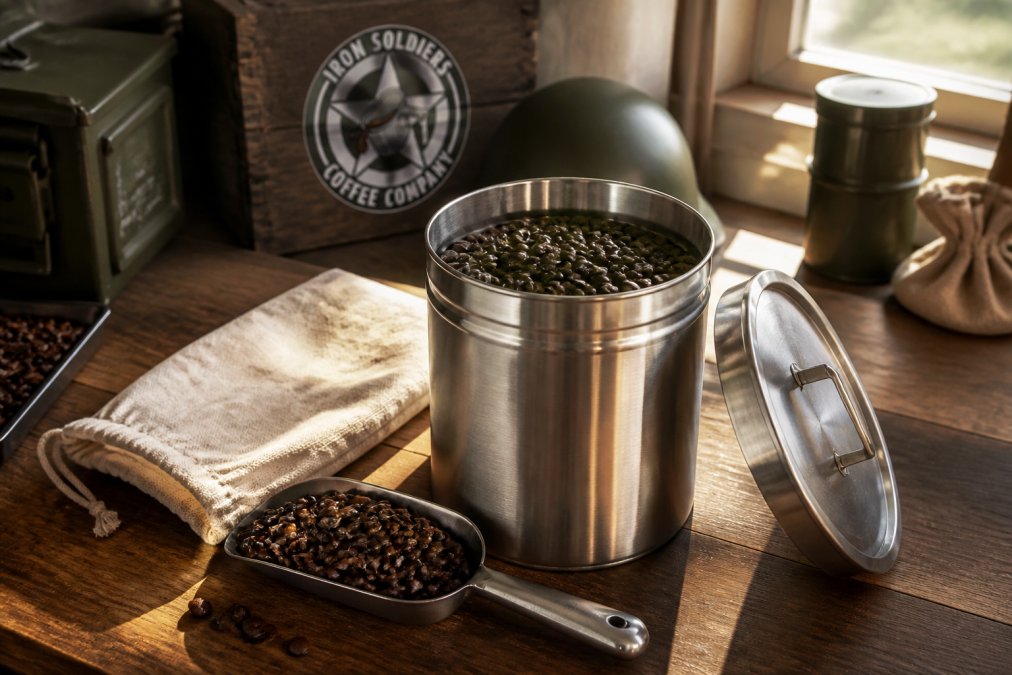
To store coffee beans for maximum freshness, keep them away from air, light, heat, and moisture. Whole beans hold up far better than ground coffee because the surface area is smaller.
The enemy is oxidation. Every time air touches the bean, it steals a little flavor.
Follow these steps:
- Keep beans in an airtight container, not the rolled-up bag.
- Store the container in a cool, dark cabinet.
- Buy only what you will drink in two to three weeks.
- Grind right before you brew.
- Skip the fridge for daily storage.
Packaging Technology: Why the Bag Does Half the Work
Most articles treat the roast date as a hard deadline. It is not, packaging changes the curve.
A one-way valve on a coffee bag is a degassing port. It lets CO2 escape without letting oxygen in. Without it, a sealed bag would inflate and the trapped gas would stale the beans from the inside. With it, the bean keeps venting on the shelf exactly as it would in open air, minus the oxygen exposure.
Nitrogen flushing goes a step further. Roasters who flush the bag replace the ambient air with nitrogen before sealing. Oxygen content drops from roughly 21% to under 2%. Oxidation slows to a crawl.
Freezing Coffee Beans: When It Helps and When It Hurts
Freezing coffee beans helps when you buy in bulk or want to save a special bag. It hurts when you thaw and refreeze the same beans over and over.
- Freeze in single-use portions so you never thaw more than you brew.
- Vacuum-seal or use a valve bag inside a freezer bag to block moisture and odor transfer.
- Let the portion come fully to room temperature before opening the seal. Opening cold beans invites condensation.
Watch Out
Never freeze beans you plan to brew the same day. The thaw cycle is the risk, not the cold. Portion once, thaw once, brew once.
Signs Your Coffee Beans Have Gone Stale
Stale beans announce themselves before you even brew. Watch for these visual and sensory cues:
- The beans look dull and dry, not glossy
- No bloom when hot water hits the grounds
- A flat, cardboard-like smell
- Thin body and muted acidity in the cup
- Crema that fades in seconds
Conclusion: Brew on the Right Schedule
Timing your brew around the roast date is one of the easiest upgrades you can make. Treat the bag like a countdown, not a suggestion, and your cup will reward you.
Frequently Asked Questions
How long after the roast date should you use coffee beans?
Most whole bean coffee hits peak flavor between 4 and 14 days after roasting, depending on the brew method. Filter and pour-over drinkers often get the best results in that range, while espresso tends to need 7 to 14 days of rest. After about 4 to 6 weeks, oxidation and staling take over, and the aromatic compounds that give coffee its character fade noticeably.
Why do grocery store coffee bags lack a roast date?
Many grocery store bags print a best-by date instead of a roast date, and that date is often set 9 to 12 months after packaging. Without a roast date, you cannot tell how long the beans sat in a warehouse or on a shelf. Fresh roasted coffee from a roaster that stamps the roast date gives you a real reference point for peak flavor.
Does the coffee degassing process affect flavor?
Yes. After roasting, beans release carbon dioxide for several days. Brew too soon and the gas disrupts extraction, causing uneven flavor and a flat cup. Wait through the rest period and the bloom settles, extraction stabilizes, and you taste the roast profile as intended. Light roasts degas more slowly than dark roasts.
How should you store coffee beans for maximum freshness?
Keep beans whole, sealed in an airtight container away from light, heat, and moisture. A one-way valve lets carbon dioxide escape without letting oxygen in. The Airscape Stainless Steel Medium Coffee Container uses patented airtight technology to remove oxygen and holds 1 lb of whole bean coffee. Skip the fridge and store in a cool, dark cabinet instead.