How to Choose a Patriotic Coffee Blend: 2026 Guide
Table of Contents
- Step 1: Define Your Mission and Flavor Preferences
- Step 2: Coffee Roast Profiles Explained for Patriotic Coffee
- Step 3: How to Verify Charity Coffee Donations
- Step 4: Match the Blend to Your Brewing Method
- Step 5: The Impact of Supporting Military-Focused Coffee Companies
- Step 6: Check Freshness, Roast Dates, and Caffeine Content
- Step 7: Evaluate Sustainability and Ethical Sourcing
- Conclusion: Brew with Purpose
- Frequently Asked Questions
Last Updated: September 24, 2026
Step 1: Define Your Mission and Flavor Preferences
Choosing a patriotic coffee blend starts with knowing what you want from the cup. At Iron Soldiers Coffee Company, we tell new recruits the same thing: pick your flavor profile first, then let the mission follow.
Start with three questions:
- Do you drink coffee black or with cream and sugar?
- Do you want a smooth cup or a bold, smoky one?
- Is this for your morning routine, a gift, or a special occasion?
Your answers point to a roast and a blend. A patriotic coffee should match your taste, not just your values.
Step 2: Coffee Roast Profiles Explained for Patriotic Coffee
Coffee roast profiles describe how long beans stay in the roaster and how much internal heat they take on. That time and temperature decide flavor, body, aroma, and, this is the part most guides get wrong, actual caffeine content.
Think of it as a field briefing. The bean goes in green, the roaster runs it through first crack (the audible pop when moisture escapes), and the roastmaster calls the halt at the target profile. Call it too early and you get a bright, tea-like cup. Run it long and you get smoke, bittersweet cocoa, and a heavier body.
Light roasts keep bright, fruity, and floral notes with higher acidity. Medium roasts balance sweetness and body with notes like caramel and cocoa. Dark roasts bring smoky, bold flavor with low acidity and a full body.
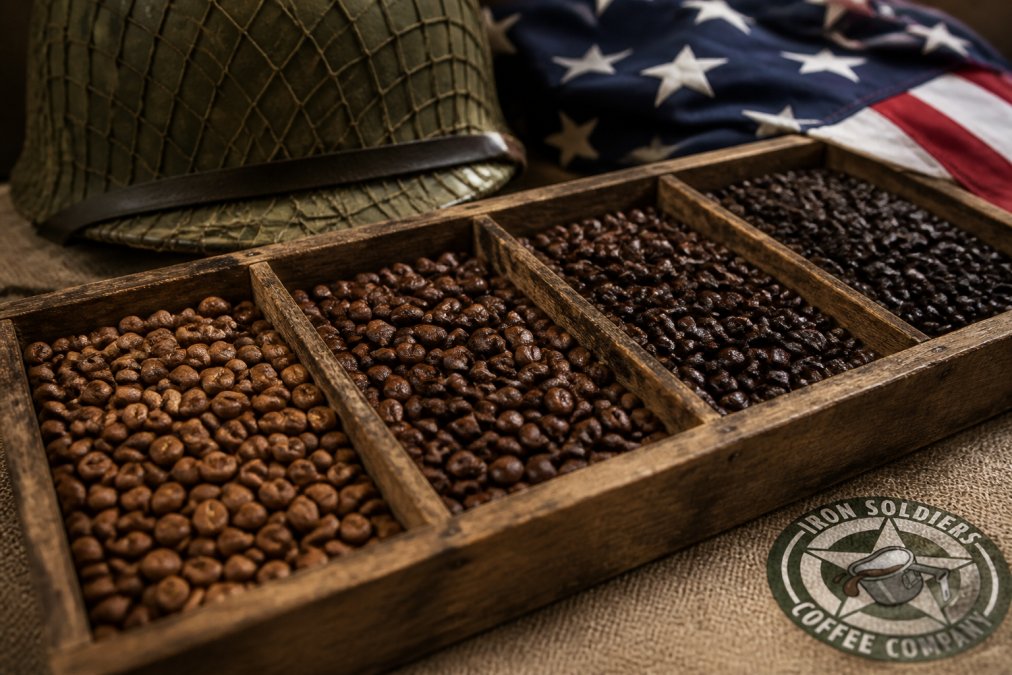
Here is how the three main roast profiles compare:
| Roast Profile | Flavor Notes | Body | Best For |
|---|---|---|---|
| Light | Fruity, floral, bright | Light | Pour-over, drip |
| Medium | Caramel, cocoa, balanced | Medium | Drip, French press |
| Dark | Smoky, bittersweet cocoa | Full | Espresso, cold brew |
The Strength Myth: Roast Color Is Not Caffeine
A dark roast tastes stronger, but taste and caffeine are two different supply lines. Caffeine is largely set by the green bean itself, species and growing conditions do most of the work. During roasting, a small fraction of caffeine is lost to heat, so a dark roast can actually finish with slightly less caffeine by weight than the same bean roasted light.
What dark roasting really does is mute acidity and push bittersweet, smoky notes forward. That reads as "strong" on the tongue. If you want the honest number, ask the roaster for caffeine content per serving, not per scoop, dose size swings the total far more than roast level does. A 12-ounce mug brewed at a 1:15 ratio will out-caffeinate a 6-ounce cup every time, regardless of roast.
Key Takeaway
Perceived strength comes from roast. Actual caffeine comes from dose, species, and brew ratio. Ask for the number, not the color.
Blend vs. Single-Origin: Pick Your Objective
A blend mixes beans to hit a target flavor, a roaster might pair a bright Central American bean with a heavier Indonesian one to build a cup that holds up to milk. Single-origin coffee comes from one region and shows that place's character, terroir and all. Both work well in a patriotic coffee, depending on what you crave. If you drink black and want consistency bag after bag, a blend is the safer patrol. If you want to taste one place, go single-origin.
One more field note: roast date beats roast level for freshness. A light roast three weeks off the roaster will taste flatter than a dark roast shipped this week. Check the date stamp before you salute the label.
Step 3: How to Verify Charity Coffee Donations
How to verify charity coffee donations comes down to one thing: proof. A real mission shows its numbers, not just its slogans.
Ask these questions before you buy:
- Which nonprofit receives the money?
- Is it a registered 501(c)(3)? You can check any charity's status through the IRS Tax Exempt Organization Search.
- What amount goes per bag, and how often are donations made?
- Does the company publish a donation report or receipt?
A serious brand answers all four without hesitation. If a company dodges the question, that tells you plenty.
Watch Out
A common mistake is trusting a "supports veterans" label with no named nonprofit behind it. Without a named partner and a verifiable record, you cannot confirm where your money lands.
Iron Soldiers Coffee Company donates $1 from every bag sold to a volunteer-only nonprofit, and we invite customers to ask where it goes.
Step 4: Match the Blend to Your Brewing Method
Your brewing method decides which blend tastes best in your kitchen. The wrong match makes good beans taste flat.
- Drip machine: medium roast, medium grind
- French press: medium or dark roast, coarse grind
- Espresso: dark roast, fine grind
- Pour-over: light or medium roast, medium-fine grind
- Cold brew: dark roast, coarse grind
Grind size matters as much as the bean. A coarse grind in an espresso machine chokes the shot. A fine grind in a French press slips through the mesh.
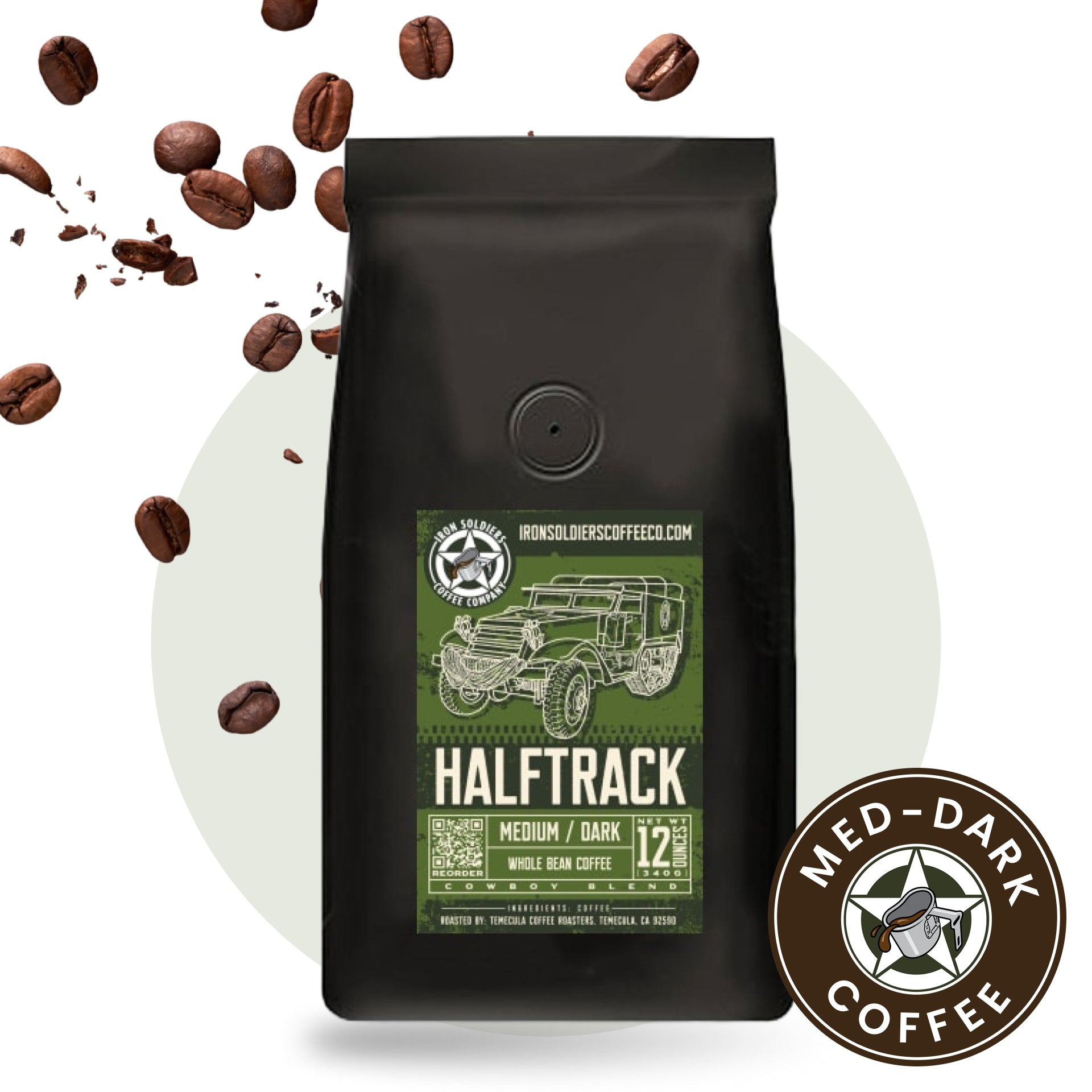
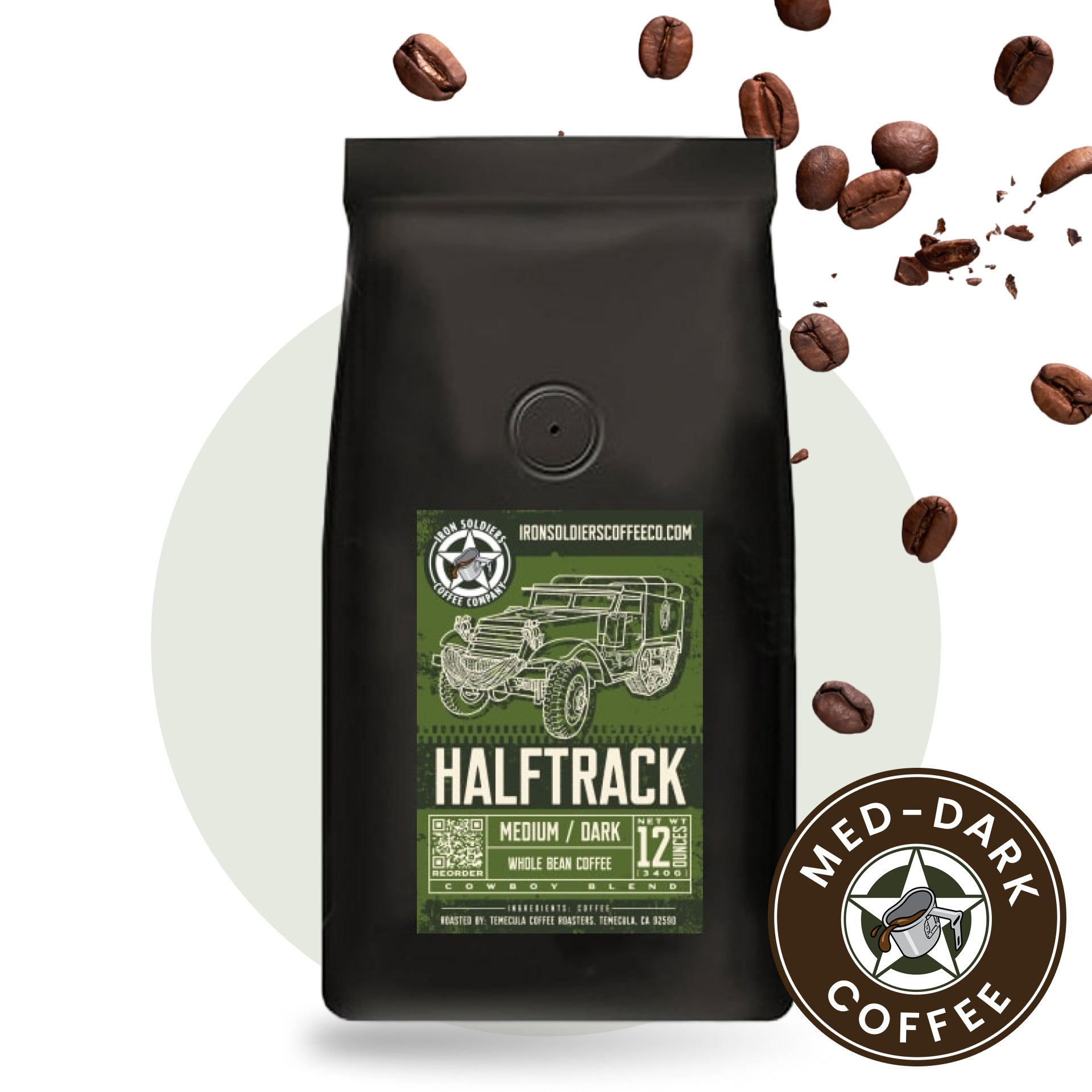
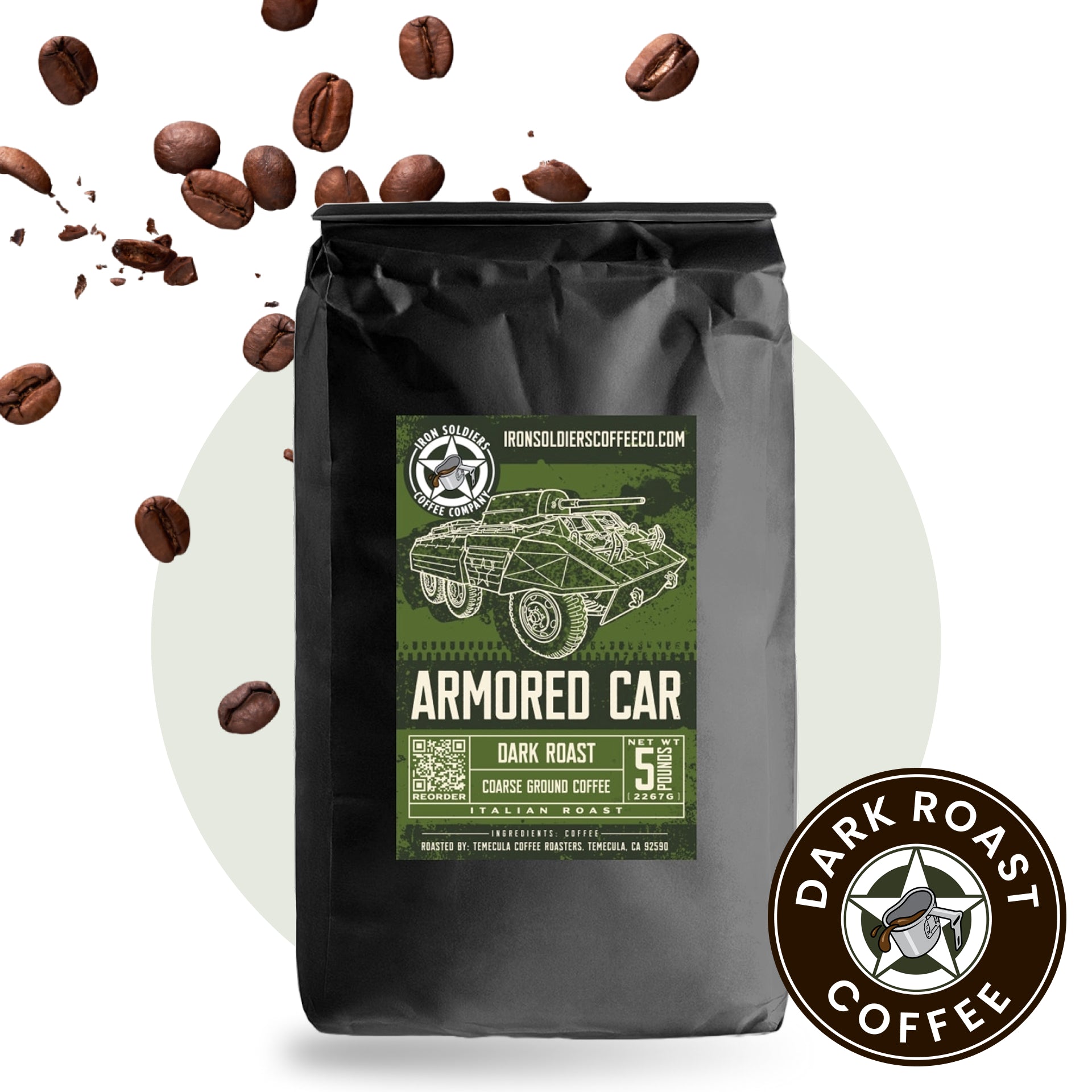
Our G503 Jeep Blend is a medium house breakfast blend built for drip machines and easy mornings. For espresso drinkers, the Sherman Tank Edition is a dark roast house blend made for that job.


Pro Tip
Buy whole bean and grind right before brewing. Pre-ground coffee loses aroma fast, and the difference shows up in the first sip.
Step 5: The Impact of Supporting Military-Focused Coffee Companies
The impact of supporting military-focused coffee companies reaches past the cup, but only when the money actually moves. Most guides stop at the slogan. This one follows the supply line.
Here is the mechanism, step by step:
- The bag sells. A roaster sets aside a fixed amount per bag, a flat dollar figure, not a vague percentage of "profits."
- The nonprofit is named. The receiving organization is identified on the label or site, not hidden behind a logo.
- The transfer is scheduled. Donations go out on a stated cadence, monthly, quarterly, or per campaign, so the buyer knows when the money lands.
- The record is published. A donation report, receipt, or annual summary closes the loop.
That support can take many forms:
- Direct donations to veteran nonprofits
- Funding for family assistance programs
- Community events that connect service members and civilians
- Equipment, transportation, or facility support for organizations already in the field
The scale adds up when buyers choose with purpose. A daily habit becomes a small, steady contribution, and steady beats sporadic every time.
How to Read a Mission Statement Like a Quartermaster
A mission statement is a supply manifest. It should tell you what is going out the door and to whom. Watch for these markers:
- A named partner. "Supports veterans" is not a partner. A specific 501(c)(3) is.
- A stated amount. A flat figure per bag is easier to verify than a percentage of unspecified profits.
- A stated cadence. Monthly and quarterly are checkable. "Ongoing" is not.
- A published record. Ask for the donation report. A serious operation keeps one.
You can confirm any charity's status through the IRS Tax Exempt Organization Search. If a company dodges the question, that tells you plenty.
The Unique Angle: Follow the Bean, Not Just the Badge
Most patriotic coffee guides cover the donation side and stop.
That is the full chain: grower, roaster, buyer, nonprofit, recipient.
Step 6: Check Freshness, Roast Dates, and Caffeine Content
Freshness is the difference between a flat cup and a great one. Check the roast date, not just the expiration date.
Look for these markers:
- A printed roast date within the last few weeks
- Whole beans instead of pre-ground
- A one-way valve bag that lets beans breathe
- A roaster who ships soon after roasting
Step 7: Evaluate Sustainability and Ethical Sourcing
Ethical sourcing asks how the beans were grown, picked, and paid for. It is a fair question for any patriotic coffee buyer.
Check for these signals:
- Named farms or regions
- Fair prices paid to growers
- Water and waste practices at the roastery
- Recyclable or compostable packaging
Conclusion: Brew with Purpose
Choosing a patriotic coffee blend comes down to matching your taste, your brewing method, and your values. Do the homework on roast profiles, charity claims, and freshness, and you will drink better coffee while backing a real mission.
Frequently Asked Questions
What defines a patriotic coffee brand?
A patriotic coffee brand is defined by its mission to support veterans and military families, often through donations or partnerships with nonprofits. It also reflects values of freedom, service, and community. Look for transparency in donations, military-themed branding, and a genuine commitment to giving back. Iron Soldiers Coffee Company, for example, donates $1 from every bag sold to a volunteer-only nonprofit supporting veterans and their families.
How can I verify if a coffee company actually supports military causes?
To verify a coffee company's support for military causes, check their website for details on nonprofit partnerships and donation amounts. Look for third-party verification, such as charity watchdogs or impact reports. Contact the company directly if information is unclear. Iron Soldiers Coffee Company clearly states that $1 per bag goes to a volunteer-only nonprofit, and they provide educational resources about their mission. Transparency is key to ensuring your purchase makes a difference.
Does the roast profile affect the patriotic theme of the coffee?
The roast profile can complement a patriotic theme by evoking historical or military connections. For example, a dark roast might symbolize strength and resilience, while a medium roast represents balance and unity. Iron Soldiers Coffee Company names blends after WWII vehicles like the Sherman Tank and G503 Jeep, tying the roast to military history. The theme is more about the story and mission than the roast itself, but the flavor can enhance the overall experience.
What should I look for in a high-quality coffee roast?
Look for freshly roasted beans with a clear roast date, ideally within two weeks of purchase. Check for origin information, processing method, and tasting notes. High-quality roasts have a consistent color and aroma. For patriotic blends, consider the roast profile that matches your brewing method: medium roasts for drip coffee, dark roasts for espresso. Iron Soldiers Coffee Company offers a range of roasts, including medium, dark, and French roast, all roasted fresh and shipped to your door.