How to Tell if Coffee is Fresh Roasted: A Field Manual
Table of Contents
- Why Fresh Roasted Coffee Matters to Your Mission
- The Roast Date: Your First Line of Defense
- Visual Inspection: Reading the Battlefield
- The Bloom Test: Degassing and CO2 Release
- Aroma and Scent Profiles: What Fresh Smells Like
- Fresh Roasted Coffee vs. Grocery Store Options
- Coffee Bean Shelf Life and Storage Strategy
- Signs of Stale Coffee Beans: What to Avoid
Last Updated: August 23, 2026
Why Fresh Roasted Coffee Matters to Your Mission
The difference between fresh roasted coffee and stale beans is the difference between a sharp, alert operative and one running on fumes. Fresh roasted coffee delivers volatile compounds, aromatic oils, and flavor complexity that deteriorate the moment beans leave the roaster. Stale coffee tastes hollow, papery, and flat, you end up drinking more to achieve the same effect.
This field manual covers everything you need to identify fresh roasted coffee and avoid the grocery store imposters sitting on shelves for months. You'll learn to read the roast date, inspect beans visually, understand degassing and CO2 release, and recognize the sensory markers that separate a fresh roast from a compromised one.
The Roast Date: Your First Line of Defense
The roast date is your most reliable intelligence. Coffee begins its decline the moment it exits the roaster.
Look for packaging that clearly displays a roast date, not a "best by" date or vague stamp. A fresh roasted coffee should be no more than 2-4 weeks old at purchase (peer-reviewed research). Anything beyond 30 days has already lost significant aromatic compounds through oxidation (peer-reviewed research).
Many grocery store bags don't display a roast date at all, a red flag. If the roaster won't reveal when beans were roasted, they're hiding that the coffee is weeks or months old. Specialty roasters like Iron Soldiers Coffee Company print the roast date prominently because freshness is a competitive advantage. Check the date before anything else. If there's no roast date visible, move on.
Visual Inspection: Reading the Battlefield
Your eyes tell you a story if you know how to read it.
Oil Migration vs. Rancid Oxidation: The Visual Battlefield
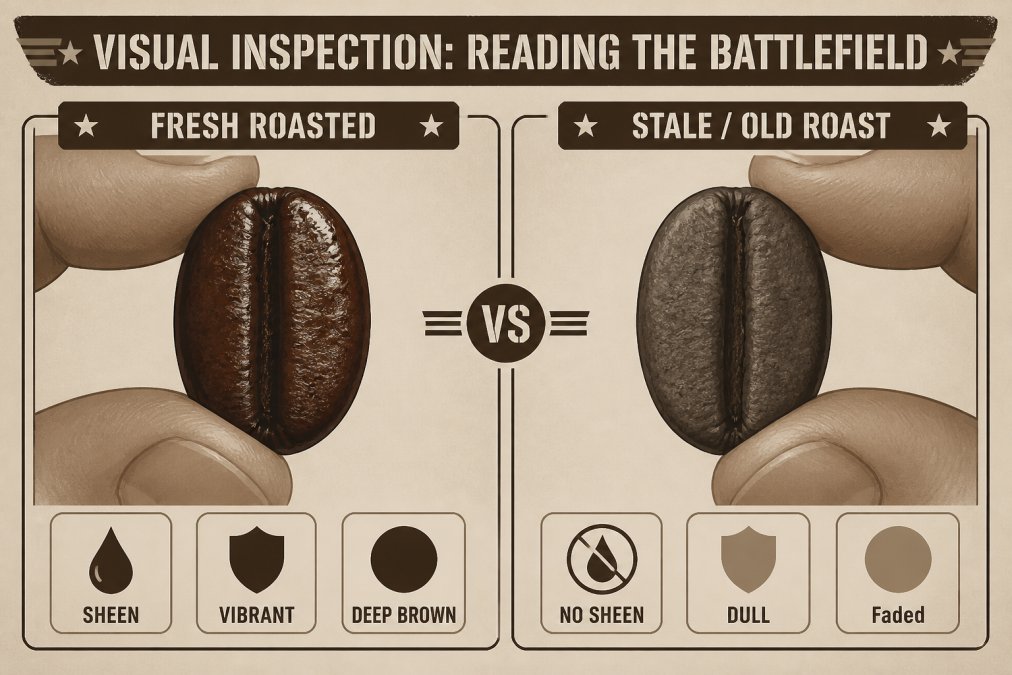
Fresh roasted beans, especially darker roasts, develop a glossy sheen from oils that migrate to the surface during roasting. This oil migration is a sign of freshness, not a defect. The oils contain flavor compounds and contribute to the coffee's body and complexity.
Fresh oils are glossy, vibrant, and uniform across the bean surface. They catch light evenly and look wet and alive. When you hold beans in your palm, the sheen is noticeable and consistent.
Rancid oils look dull, sticky, and uneven. The surface appears waxy or chalky rather than glossy. The beans may look slightly discolored with dark patches where oxidation has concentrated. Rancid oils smell off, slightly sour, musty, or like old nuts left in a pantry.
Fresh dark roast beans gleam like polished mahogany. Stale dark roast beans look like they've been dusted with ash.
Color Consistency as a Freshness Indicator
Light roasts should have tan to light brown color with minimal oil. Medium roasts develop richer brown color and some surface oils. Dark roasts are nearly black with heavy oil migration, this is normal.
Problems emerge when color deviates from the roast profile. A dark roast that's turned ashy or grayish instead of deep brown shows oxidation at work. A light roast that's turned unexpectedly dark or developed spotting suggests age and degradation.
Fresh beans from a single roast should look consistent, same color, same sheen, same surface condition. A mix of dull and glossy beans or uneven coloring suggests they're from different roasts, stored improperly, or aged unevenly.
Checking for Visible Defects
Inspect for mold, discoloration, or structural damage. Visible mold indicates storage failure, avoid these beans entirely. Uneven spotting or dark patches suggest moisture exposure or improper handling. Shriveled beans or visible cracks are past their prime.
Fresh beans feel dense and uniform in weight. Stale beans feel lighter and more brittle. This tactile feedback combined with visual inspection gives you a complete picture of bean condition.
The Bloom Test: Degassing and CO2 Release
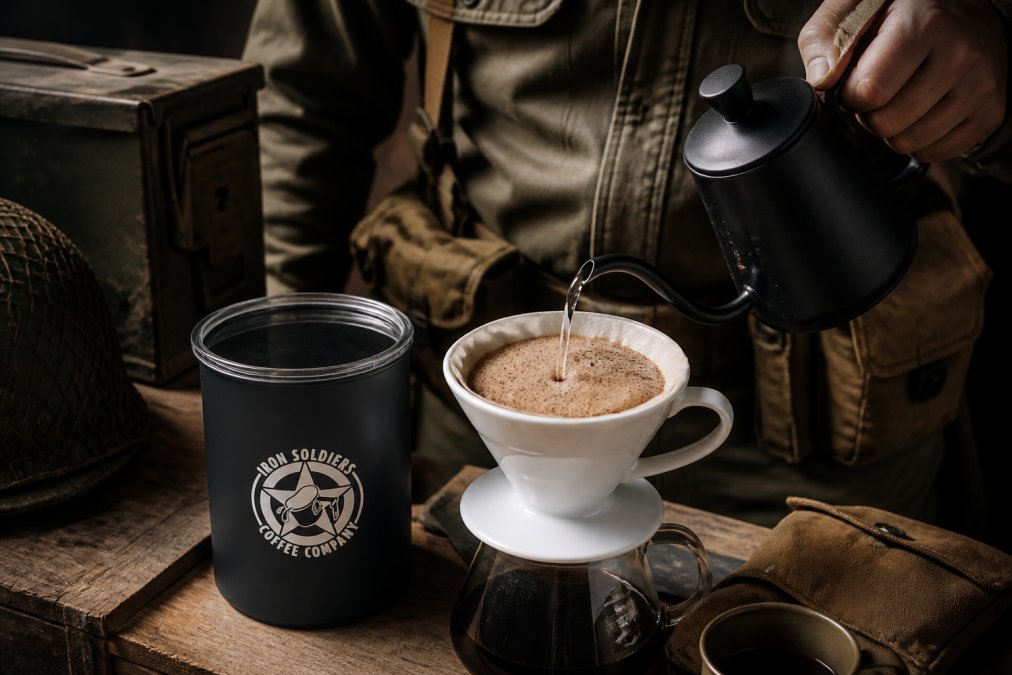
When you pour hot water over fresh beans, they bloom, and that bloom reveals everything about degassing and CO2 release. The intensity and duration depend on roast age, roast profile, and whether beans were roasted commercially or at home.
Understanding CO2 Degassing in Fresh Roasted Beans
During roasting, beans absorb carbon dioxide. This CO2 is trapped inside the bean's cellular structure. The moment roasting stops, degassing begins, CO2 gradually escapes over the following weeks.
Fresh roasted beans are still actively degassing. When you pour hot water, heat accelerates CO2 release. You'll see vigorous bubbling and foam rising from grounds. The bloom should be aggressive and lively, with visible foam lasting 30-45 seconds or longer.
Stale coffee blooms weakly or not at all. The CO2 has already escaped during storage. You'll see minimal bubbling. The bloom will be thin and short-lived, often disappearing in 10-15 seconds.
Bloom Intensity by Roast Profile
Darker roasts, roasted longer, often have slightly less CO2 trapped because some escapes during extended roasting. Their bloom may be less dramatic than a light roast's bloom, even if both are equally fresh.
Light roasts, roasted for shorter time, trap more CO2 inside the bean. Their bloom tends to be more vigorous and longer-lasting. This doesn't mean light roasts are fresher, it's a function of roast profile.
When evaluating freshness using the bloom test, account for roast level. Compare the bloom against what you'd expect for that specific roast profile. A weak bloom on a light roast is a red flag. A moderate bloom on a dark roast, if beans are only 2 weeks old, is normal.
Reading the Bloom as a Freshness Timeline
Use bloom intensity to estimate roast age:
- Extremely vigorous bloom (45+ seconds): Beans are likely 3-10 days old. Excellent freshness.
- Strong, sustained bloom (30-45 seconds): Beans are likely 10-25 days old. Peak flavor window.
- Moderate bloom (15-30 seconds): Beans are likely 25-40 days old. Still acceptable, but approaching the edge of optimal window.
- Weak or minimal bloom (under 15 seconds): Beans are likely 40+ days old. Freshness is compromised.
- No visible bloom: Beans are likely 60+ days old. Stale territory.
A vigorous, aggressive bloom with substantial foam indicates beans still in their prime. A weak or absent bloom indicates beans that have lost their volatility and most aromatic compounds.
Aroma and Scent Profiles: What Fresh Smells Like
Your nose is a sophisticated instrument. Trust it.
Fresh roasted coffee has a distinctive, complex aroma. The smell should be vibrant with layers, you might detect chocolate, caramel, fruit notes, floral undertones, or spice depending on roast level and origin. The aroma should be immediate and intense when you open the bag or grind the beans.
Stale coffee smells flat and one-dimensional. Aromatic compounds have oxidized or escaped. You might detect a musty or slightly off smell, the beginning of rancidity. Some describe stale coffee as smelling cardboard-like or hollow.
When beans are fresh roasted, the aroma should fill the room. Grind them and the smell intensifies. Brew them and the aroma is unmistakable. If you open a bag and the smell is barely present, or if it smells slightly sour or musty, the beans have degraded.
Fresh Roasted Coffee vs. Grocery Store Options
The gap between fresh roasted specialty coffee and grocery store commodity coffee is vast.
Grocery store coffee is typically roasted weeks or months before reaching the shelf. The roast date is hidden or absent. Beans have been exposed to light, heat, and oxygen during transport and storage. By purchase time, they're already past their prime.
These beans are often roasted to a dark, uniform level to mask flavor defects. Dark roasting helps hide staleness, charred flavors mask the hollow taste of oxidized coffee. When you brew grocery store coffee, you're tasting the roast, not the bean.
Fresh roasted coffee from a dedicated roaster like Iron Soldiers Coffee Company is a different product entirely. The roast date is printed. Beans arrive days or weeks after roasting, not months. The roaster has selected specific origins and executed specific roast profiles to highlight bean characteristics, not hide defects. The flavor difference is immediate. Fresh roasted coffee tastes alive with body, complexity, and presence.
Coffee Bean Shelf Life and Storage Strategy
Fresh roasted coffee has a window of peak flavor. The optimal drinking window is roughly 5-30 days after roasting (peer-reviewed research). Within this period, beans have finished degassing but haven't begun significant oxidation. Flavors are complex and fully developed.
Beyond 30 days, decline accelerates. By 60 days, most beans have lost substantial flavor complexity. By 90 days, they're well into stale territory.
Storage conditions matter enormously. Coffee is hygroscopic and sensitive to light, heat, and oxygen. The ideal storage is an airtight container, away from light, at room temperature.
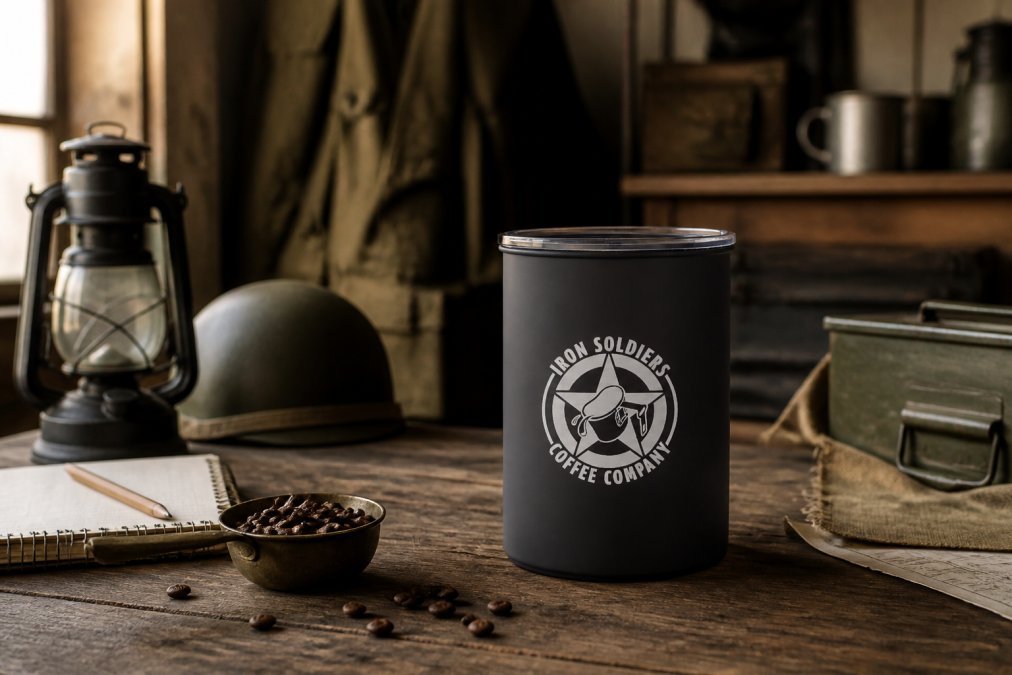
The A210 Airscape Stainless Steel Medium Coffee Container from Iron Soldiers Coffee Company is engineered for this purpose. Its patented airtight technology removes oxygen from the container, preventing oxidation and flavor loss. Stainless steel protects against light exposure.

Avoid storing coffee in the freezer or refrigerator. Temperature fluctuations and moisture exposure accelerate degradation. Room temperature in an airtight container is your best bet. Whole beans last longer than ground coffee because grinding increases surface area and accelerates oxidation. Grind only what you need for each brew.
Signs of Stale Coffee Beans: What to Avoid
Stale coffee beans display several warning signs. The surface looks dull and chalky instead of glossy. The aroma is weak or absent, or slightly sour, musty, or off. The bloom is minimal or nonexistent. The brewed coffee tastes hollow, papery, flat, or slightly rancid. The body is thin and the finish is short.
Some beans develop visible mold or discoloration, indicating storage problems or contamination. Avoid these entirely. Others show uneven color or spotting, suggesting age or improper handling.
When you open a bag and the smell is barely present, that's a signal. When you brew and the coffee tastes thin or lifeless, that's a signal. When the bloom is weak, that's a signal. Your senses are reliable instruments.
The most common mistake is accepting stale coffee as normal. Many have never experienced truly fresh roasted coffee. Once you've tasted fresh beans and understood how to identify them, going back to stale grocery store options becomes intolerable.
The difference between great coffee and mediocre coffee starts with freshness. A fresh roasted bean from a roaster committed to quality, one that prints roast dates and manages its supply chain carefully, will transform your daily routine. Iron Soldiers Coffee Company delivers fresh roasted coffee with the transparency and quality you deserve. Shop All Coffee and join a community that understands that freshness is the foundation of an exceptional cup.
== FAQ ANSWERS (audit these too, same rules) ==
[1] Q: What is considered freshly roasted coffee? A: Freshly roasted coffee refers to beans roasted within 2-4 weeks of purchase. The optimal window for peak flavor extraction and aroma is 3-10 days post-roast, when degassing is complete and volatile compounds remain active. Beans roasted more than 4 weeks ago begin losing their lively character and flavor profile. Check the roast date on packaging rather than the best-by date, roast dates are your most reliable intelligence for assessing freshness.
[2] Q: How does coffee bean shelf life change after roasting? A: Post-roast shelf life depends on storage conditions and roast level. Whole beans maintain peak quality for 2-4 weeks in an airtight container away from light and heat. Dark roasts oxidize faster than light roasts due to increased surface area and oil migration. Ground coffee loses freshness within days because grinding exposes more organic material to oxygen. Proper storage in an airtight container like the A210 Airscape extends shelf life significantly by removing oxygen and preventing moisture infiltration.
[3] Q: What are the main signs of stale coffee beans? A: Stale coffee beans display hollow or papery taste, lack aroma intensity, and show minimal bloom during brewing due to reduced CO2 release. Visually, stale beans appear dull or dusty rather than glossy, with faded color and no oil migration on the surface. Rancid or musty smells indicate oxidation and moisture exposure. The crema (foam layer in espresso) becomes thin or absent. Extraction becomes weak regardless of brewing method, resulting in flat, characterless coffee without the acidity and body of fresh roasted beans.
[4] Q: Is coffee roasted 4 months ago still good? A: Coffee roasted 4 months ago is past its prime. While it remains safe to drink, the flavor degradation is significant. Volatile compounds have largely dissipated, oxidation has progressed substantially, and the bean's acidity and body flatten considerably. The bloom test will show minimal CO2 release, indicating most degassing is complete. For optimal taste and the full benefit of your coffee experience, consume within 2-4 weeks of the roast date. Beans this old are better suited for cold brew, which masks some flavor loss, rather than pour-over or espresso methods that demand fresh roasted character.
Frequently Asked Questions
What is considered freshly roasted coffee?
Freshly roasted coffee refers to beans roasted within 2-4 weeks of purchase. The optimal window for peak flavor extraction and aroma is 3-10 days post-roast, when degassing is complete and volatile compounds remain active. Beans roasted more than 4 weeks ago begin losing their lively character and flavor profile. Check the roast date on packaging rather than the best-by date, roast dates are your most reliable intelligence for assessing freshness.
How does coffee bean shelf life change after roasting?
Post-roast shelf life depends on storage conditions and roast level. Whole beans maintain peak quality for 2-4 weeks in an airtight container away from light and heat. Dark roasts oxidize faster than light roasts due to increased surface area and oil migration. Ground coffee loses freshness within days because grinding exposes more organic material to oxygen. Proper storage in an airtight container like the A210 Airscape extends shelf life significantly by removing oxygen and preventing moisture infiltration.
What are the main signs of stale coffee beans?
Stale coffee beans display hollow or papery taste, lack aroma intensity, and show minimal bloom during brewing due to reduced CO2 release. Visually, stale beans appear dull or dusty rather than glossy, with faded color and no oil migration on the surface. Rancid or musty smells indicate oxidation and moisture exposure. The crema (foam layer in espresso) becomes thin or absent. Extraction becomes weak regardless of brewing method, resulting in flat, characterless coffee without the acidity and body of fresh roasted beans.
Is coffee roasted 4 months ago still good?
Coffee roasted 4 months ago is past its prime. While it remains safe to drink, the flavor degradation is significant. Volatile compounds have largely dissipated, oxidation has progressed substantially, and the bean's acidity and body flatten considerably. The bloom test will show minimal CO2 release, indicating most degassing is complete. For optimal taste and the full benefit of your coffee experience, consume within 2-4 weeks of the roast date. Beans this old are better suited for cold brew, which masks some flavor loss, rather than pour-over or espresso methods that demand fresh roasted character.
This article was written using GrandRanker