Best Coffee Brewing Methods for Rich Flavor at Home
Table of Contents
- Quick Comparison: Brewing Methods Ranked for Rich Flavor
- How to Brew Strong Coffee: The Variables That Decide Richness
- Best Coffee Grind Size for Flavor by Brewing Method
- Water Temperature for Coffee Brewing: The Range That Works
- French Press and AeroPress: Immersion Methods for Heavy Body
- Pour-Over, Moka Pot, and Drip: Percolation Methods Compared
- Espresso Extraction Basics and the Beans That Carry It
- Water Chemistry and Equipment: What Actually Changes Your Cup
- Frequently Asked Questions
Last Updated: September 19, 2026
Quick Comparison: Brewing Methods Ranked for Rich Flavor
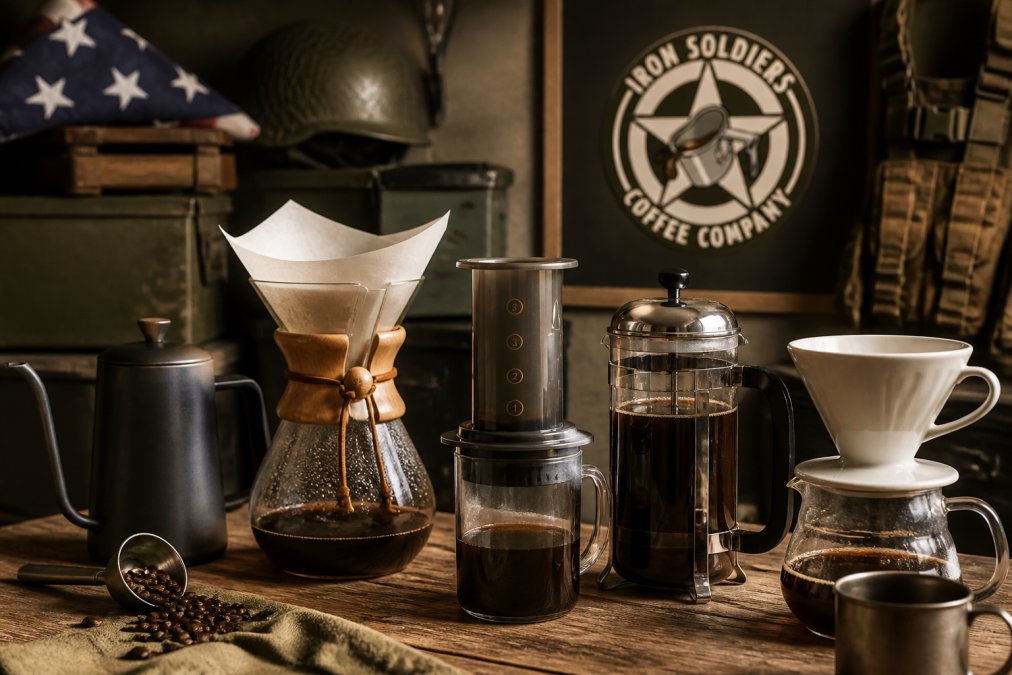
The best coffee brewing methods for rich flavor at home come down to how water meets grounds. Immersion methods like the French Press deliver heavy body and sediment. Percolation methods like pour-over and drip deliver clarity. Espresso delivers concentration.
At Iron Soldiers Coffee Company, we field this question constantly from folks who want a cup with real depth. Below is a side-by-side briefing on what each method actually produces.
| Method | Grind Size | Brew Time | Flavor Character | Best For |
|---|---|---|---|---|
| French Press | Coarse | 4 min | Full-bodied, sediment-rich | Heavy mouthfeel |
| AeroPress | Medium-fine | 1-2 min | Concentrated, low acidity | Quick strong shots |
| Pour-Over | Medium | 3-4 min | Clean, bright clarity | Nuanced single-origin |
| Moka Pot | Fine | 5 min | Intense, syrupy | Stovetop intensity |
| Drip | Medium | 5-6 min | Consistent, balanced | Daily ration |
| Espresso | Fine | 25-30 sec | Concentrated, aromatic | Bold base shots |
How to Brew Strong Coffee: The Variables That Decide Richness
Richness is not a roast setting. It is the sum of four variables working together: coffee-to-water ratio, grind size, water temperature, and brew time. Miss one and the cup goes thin or bitter.
Coffee-to-Water Ratio: The Foundation of a Full-Bodied Cup
A common field ratio is 1:15 to 1:17 by weight. That means 1 gram of coffee to 15-17 grams of water. Go tighter, around 1:12, and you get a heavier, more concentrated cup. Go looser and you get clarity but less body.
Weigh your grounds. Scoops vary too much between kitchens.
Best Coffee Grind Size for Flavor by Brewing Method
Grind size is the single biggest lever most home brewers ignore, and it is the one variable that decides whether a method tastes rich or ruined.
| Method | Grind Texture | Contact Time | What Finer Does | What Coarser Does |
|---|---|---|---|---|
| French Press | Coarse, like sea salt | 4 min | Muddy, silty, clogged plunger | Thin body, weak extraction |
| AeroPress | Medium-fine, like table salt | 1-2 min | Stalls the plunge, bitter bite | Sour, watery shot |
| Pour-Over | Medium, like sand | 3-4 min | Slow draw-down, harsh and bitter | Fast drain, sour and hollow |
| Moka Pot | Fine, like powdered sugar | 5 min | Scorched, sputtering, burnt | Weak, underpowered brew |
| Drip | Medium, like sand | 5-6 min | Overflow, bitter stew | Weak, tea-like cup |
| Espresso | Fine, like flour | 25-30 sec | Choked shot, no flow | Gushing shot, sour and thin |
- Consistency beats average size. A burr grinder produces uniform particles that extract at the same rate. A blade grinder produces a mix of dust and boulders, so part of your cup is bitter and part is sour at the same time, no ratio or temperature fix rescues that.
- Freshness changes the dial. Beans degas for the first several days after roasting, so a grind that worked on day two may run fast on day ten. Expect to tighten slightly as beans age.
- Roast level shifts the target. Dark roasts are more porous and extract faster, so they often want a slightly coarser grind than a light roast in the same method.
- Humidity matters. On a damp morning, static and clumping push you coarser; on a dry day, you may need to tighten up.
Pro Tip
Buy a burr grinder, not a blade grinder. Blade grinders produce uneven particles that extract at different rates, which means part of your cup is bitter and part is sour at the same time. A burr grinder gives you a consistent particle size you can actually dial in.
If you only change one thing this week, change your grind before you change your machine. It is the cheapest upgrade in the kit and the one that moves flavor the most.
Water Temperature for Coffee Brewing: The Range That Works
Water temperature for coffee brewing should land between 195°F and 205°F. Below that range, you underextract and the cup tastes sour and weak. Above it, you scorch the grounds and pull out bitterness.
French Press and AeroPress: Immersion Methods for Heavy Body
Immersion brewing soaks the grounds fully in water for the entire brew cycle. That full contact is why these methods produce the heaviest body and the boldest mouthfeel of any home setup.
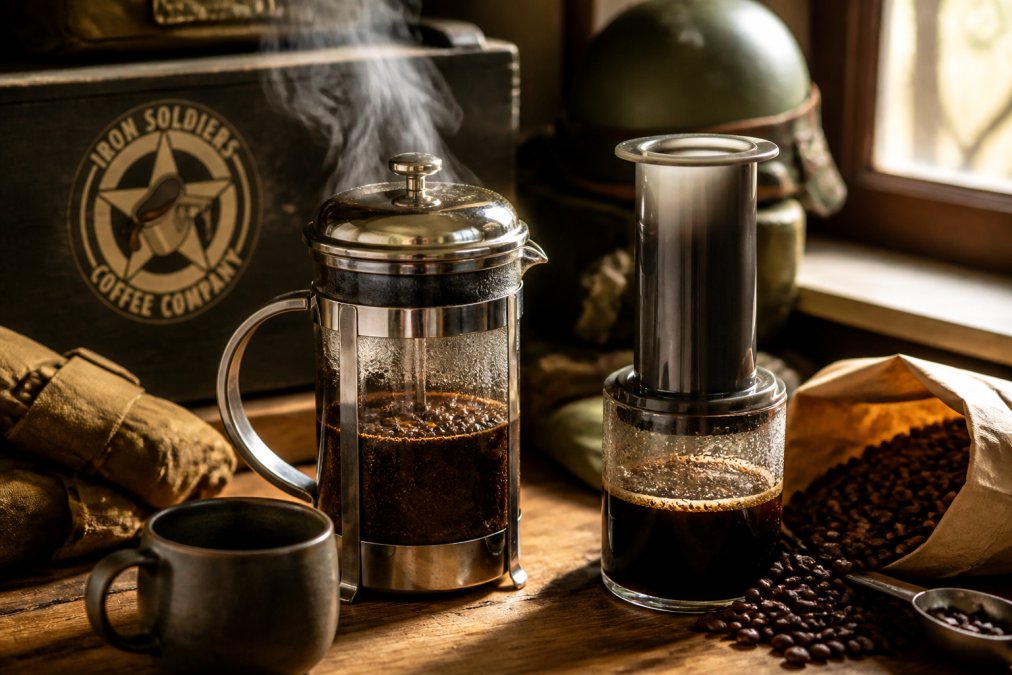
French Press: Full-Bodied and Sediment-Rich
The French Press is the workhorse of rich home brewing. Coarse grounds, 4 minutes of steep time, then a slow plunge. The metal mesh filter lets fine sediment through, which is exactly what gives the cup its weight.
AeroPress: Concentrated Shots Without an Espresso Machine
The AeroPress uses pressure and a short steep to produce a concentrated, low-acidity shot in about a minute. It is portable, forgiving, and cheap to run.
Watch Out
Do not use fine espresso grind in an AeroPress. The pressure will stall the plunge and you will fight the plunger instead of brewing. Stick to medium-fine.
Pour-Over, Moka Pot, and Drip: Percolation Methods Compared
Percolation pushes water through a bed of grounds once. That single pass is why these methods produce cleaner cups with more clarity and defined tasting notes than immersion brewing.
Pour-Over: Clarity and Control
Pour-over gives you total control over agitation, pour rate, and draw-down time. The paper filter traps oils and sediment, producing a bright, clean cup where single-origin tasting notes actually show up.
Moka Pot: Stovetop Intensity
The Moka Pot builds pressure on the stovetop to push hot water up through fine grounds. The result is a concentrated, syrupy brew that sits between drip and espresso.
Drip Coffee Maker: Consistency for the Daily Ration
A drip machine wins on consistency. Set it, walk away, and get the same cup every morning. For shift workers and anyone running a daily ration, that reliability matters more than finesse.
Espresso Extraction Basics and the Beans That Carry It
Espresso extraction forces water through fine grounds at pressure in 25-30 seconds. The result is a concentrated shot with a thick layer of aromatic oils on top. Grind size, dose, and tamp pressure all decide whether you get a balanced shot or a bitter one.
Water Chemistry and Equipment: What Actually Changes Your Cup
Water chemistry is the variable almost nobody talks about, and it is the one that quietly decides whether your carefully dialed grind produces a rich cup or a flat one. Coffee is roughly 98% water, so what is in that water ends up in your cup.
- Magnesium binds to coffee compounds and pulls them into solution, it is the mineral most associated with a fuller, sweeter extraction.
- Calcium adds body and helps buffer acidity, but too much pushes bitterness forward.
- Bicarbonate (alkalinity) acts as a buffer. A little keeps acidity in check; too much mutes brightness and flattens the cup.
What the extremes do to your brew:
- Very hard water (high TDS, high alkalinity): mutes flavor, dulls acidity, and scales your kettle, grinder burrs, and machine internals over time.
- Very soft or distilled water (near-zero TDS): extracts poorly, produces a flat, lifeless, sometimes chalky cup, and can actually corrode metal components.
- Chlorinated tap water: the chlorine compounds carry straight into the cup and read as a medicinal or band-aid note no grind adjustment fixes.
Key Takeaway
Technique beats equipment every time. Dial in your ratio, grind, and water temperature first. Upgrade gear only after those three are consistent.
Frequently Asked Questions
Which brewing method produces the most full-bodied coffee?
Immersion methods like the French press and AeroPress typically deliver the heaviest body because the grounds steep directly in water and retain more oils and sediment. A metal mesh filter lets those compounds pass into the cup, while a paper filter traps them and produces a lighter mouthfeel. For maximum richness, use a coarse grind, a 1:15 coffee-to-water ratio, and a four-minute steep before pressing slowly.
How does grind size affect the richness of my coffee?
Grind size controls how fast water pulls flavor from the grounds. Too coarse and the water runs through without extracting enough, leaving a weak, sour cup. Too fine and you get bitterness and a muddy texture. Match the grind to the method: coarse for French press, medium-coarse for pour-over, fine for AeroPress and Moka Pot, and espresso-fine for espresso. A burr grinder keeps those particles even, which matters more than any single setting.
What is the best water-to-coffee ratio for a strong brew?
Start with 1 gram of coffee to 15 grams of water by weight, which lands near a 1:15 ratio. For a heavier, more concentrated cup, tighten it to 1:12. For a lighter daily ration, loosen it to 1:17. Weighing beats scooping because bean density varies. If you brew 30 grams of coffee, aim for 450 grams of water at 1:15, then adjust one variable at a time until the strength matches your taste.
Does a French press provide more flavor than a drip machine?
A French press keeps more aromatic oils and fine particles in the cup, so the result tastes fuller and often sweeter. A drip machine with a paper filter strips those oils out, giving you a cleaner, lighter brew. Neither is better in every case. If you want maximum body and mouthfeel, press. If you want clarity and a consistent batch for a crowd, drip wins. Both depend on fresh beans, correct grind, and water between 195 and 205 degrees Fahrenheit.
How can I improve the flavor profile of my daily coffee ration?
Buy whole beans and grind right before brewing, since pre-ground coffee loses aromatic oils fast. Store beans in an airtight container away from light and heat. Keep water between 195 and 205 degrees Fahrenheit and weigh your dose instead of scooping. If your water tastes flat or heavily chlorinated, switch to filtered water. Finally, start with a dark roast like the Sherman Tank Edition, which is built for espresso and delivers bittersweet cocoa, toasted nuts, and caramel notes.