
How to Verify Charity Donation Claims: 2026 Guide
Table of Contents
- Step 1: Pull the Charity's Tax-Exempt Status
- Step 2: Use the IRS Tax Exempt Organization Search Tool
- Step 3: Read the Form 990 Before You Trust a Claim
- Step 4: Check Charity Transparency Ratings and State Registration
- Step 5: How to Spot Charity Scams Before You Give
- Step 6: Track Your Donation After It Leaves Your Hands
- Common Mistakes That Let Bad Donation Claims Slip Through
- Conclusion
- Frequently Asked Questions
Last Updated: September 17, 2026
Step 1: Pull the Charity's Tax-Exempt Status
Learning how to verify charity donation claims starts with one document: the IRS determination letter. Any group asking for your money should be able to show proof it holds 501(c)(3) tax-exempt status.
- Ask for the charity's legal name, not just its nickname
- Request its Employer Identification Number (EIN)
- Confirm the status is current, not revoked
Watch Out
A revoked organization can still print "tax-exempt" on a flyer. If you donate without checking, you lose the deduction and your money goes nowhere useful.
Step 2: Use the IRS Tax Exempt Organization Search Tool
The IRS Tax Exempt Organization Search tool is a free public database that confirms whether a group is legitimately tax-exempt. It replaced the old "Select Check" system and takes about two minutes to use.
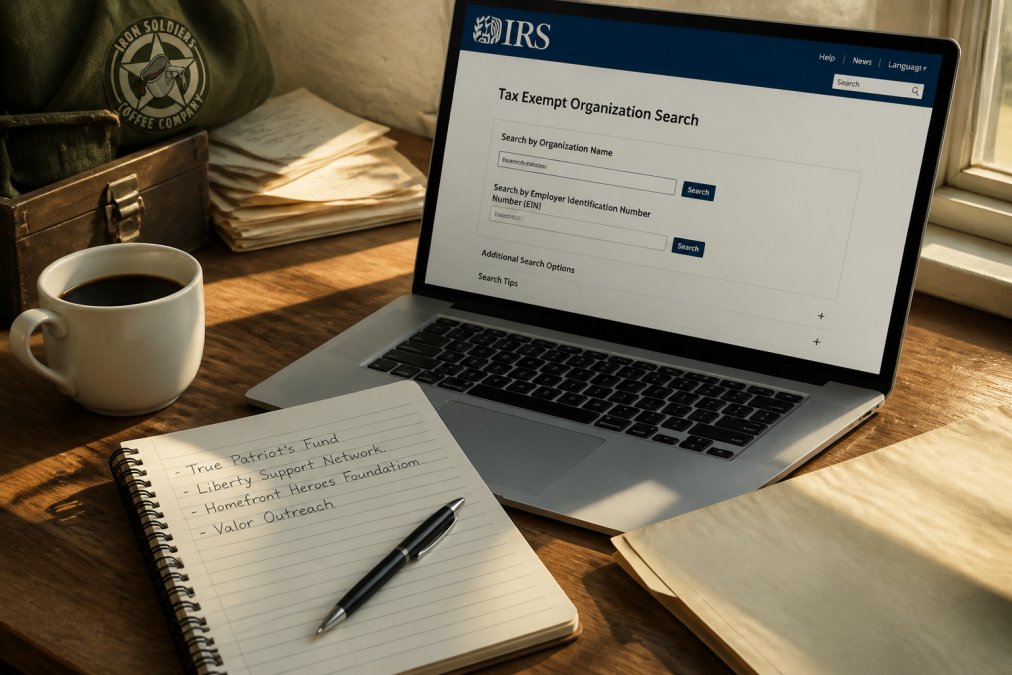
Here is the drill, step by step:
- Go to the IRS site and open the Tax Exempt Organization Search page
- Enter the charity's legal name or EIN
- Select your state from the dropdown
- Review the results and download the determination letter if listed
- Note any "revoked" or "not listed" flags
Reading the IRS Database Results
A listing means the group is recognized as tax-exempt. It does not mean the group spends money well.
Step 3: Read the Form 990 Before You Trust a Claim
Form 990 is the annual information return most tax-exempt groups must file with the IRS. It shows revenue, expenses, salaries, and how much actually reaches the mission.
Program Expenses vs. Overhead Costs
Program expenses are dollars that go straight to the mission. Overhead covers administration and fundraising.
- Program expenses: direct mission spending
- Overhead: salaries, rent, fundraising
- Watch the ratio over time, not one snapshot
Pro Tip
Compare three years side by side. A single strong year can hide a slow slide. Consistency is the real signal.
Step 4: Check Charity Transparency Ratings and State Registration
Charity transparency ratings come from independent evaluators that grade how openly a group shares its finances and governance. Strong ratings do not guarantee results, but they flag which groups hide the books.
IRS Tax Exempt Organization Search user guide
Step 5: How to Spot Charity Scams Before You Give
Knowing how to spot charity scams is a survival skill. Scammers copy real names, real logos, and real stories. They rely on speed and emotion to bypass your defenses.
Watch for these tells:
- Pressure to give right now, before you can check
- Requests for gift cards, wire transfers, or crypto
- A name that sounds almost like a real charity
- No EIN, no address, no phone number that works
- Emotional stories with zero paperwork
- A website with no "About" page, no staff names, and no physical address
- Donation buttons that route to a personal payment app instead of the charity's own merchant account
Crowdfunding and Social Media Appeals
Crowdfunding pages skip most of the checks above. Anyone can start a campaign with a photo and a sad story. That does not make every campaign a fraud, but it does mean you must verify the organizer, not just the cause.
- Confirm the organizer's identity. Most platforms show a verified name or a linked social profile. If the organizer is anonymous or uses only a first name, treat that as a warning flag.
- Check how funds are withdrawn. Platforms differ: some send money directly to the organizer's personal bank account, while others require the organizer to designate a beneficiary or a registered nonprofit. Know which model applies before you give.
- Look for a named beneficiary. A credible campaign names the person, family, or organization receiving the funds and explains the relationship to the organizer.
- Read the update history. Real campaigns post receipts, photos, and progress notes after the campaign closes. A campaign that goes silent once funded is a warning sign.
- Ask whether the platform guarantees the funds. Some platforms release money only after the campaign ends and only to a verified recipient. Others release funds immediately. The difference matters if the campaign is disputed.
- Check for duplicate campaigns. Scammers sometimes clone a real campaign's text and photos under a new organizer name. Search the campaign title and the beneficiary's name to see if multiple versions exist.
Watch Out
A crowdfunding page is not a tax-deductible charity unless the funds flow to a qualified tax-exempt organization. If the organizer promises a deduction but the money goes to a personal account, that promise is false.
High-Pressure Tactics and Urgency
Scammers manufacture deadlines. They claim a matching gift expires in an hour, a family will lose housing by nightfall, or a disaster relief window is closing. Real charities may have deadlines, but they will still accept your gift after you verify.
Other pressure tactics to watch for:
- A caller who refuses to let you hang up and call back
- A request to keep the donation quiet or "between us"
- A threat that a child or animal will suffer if you do not give immediately
- A demand for a specific payment method you cannot reverse
Key Takeaway
Speed is the scammer's weapon. Any honest charity will still be there tomorrow. Slow down and verify.
FTC charity scam warnings
Step 6: Track Your Donation After It Leaves Your Hands
Your job does not end at checkout. Post-donation tracking is how you confirm the money landed where promised. Most guides stop at the point of giving; this step is where you separate a real accountability trail from a thank-you note.
What to Collect at the Moment of Giving
Before you close the browser tab, secure these items:
- A written acknowledgment from the charity showing its legal name, the amount, the date, and a statement that no goods or services were received in exchange. The IRS expects this for any gift you plan to deduct.
- The charity's EIN printed on the receipt or acknowledgment. A receipt without an EIN is nearly useless at tax time.
- The donation confirmation number or transaction ID from the payment processor.
- A screenshot of the campaign page or appeal you responded to, including the specific claim made.
What to Expect in the Weeks After
A transparent organization follows a predictable pattern:
- Within days: an email or letter confirming the gift and providing the EIN.
- Within a few weeks: a note explaining what program or fund received the money.
- Within a few months: an impact update or newsletter describing results.
- Annually: a summary of how the organization spent its funds, often tied to its Form 990 filing.
If none of these arrive, that silence is itself information. A group that cannot confirm receipt of your gift is unlikely to confirm its use.
How to Verify the Money Was Used as Promised
- Match the receipt to the 990. The following year's Form 990 should show program expenses consistent with the mission you supported. If you gave to disaster relief but the 990 shows most spending went to fundraising, ask why.
- Look for restricted-fund reporting. If you gave to a specific campaign, the organization should be able to tell you how much was raised and how much was spent on that campaign.
- Check for third-party audits. Larger organizations often publish audited financial statements. An audit is not a guarantee of effectiveness, but it is a sign the group submits to outside review.
- Follow the program, not the logo. If the charity claims to fund local partners, ask which partners and where. A real program can name them.
When the Trail Goes Cold
If a charity cannot or will not answer basic questions about your gift, take these steps:
- Send a written request for confirmation of receipt and use.
- If the organization is registered in your state, file a complaint with the state charity regulator or attorney general's office.
- Report suspected fraud to the FTC.
- Stop future giving to that organization until the questions are resolved.
Keep a simple donation log: date, charity legal name, EIN, amount, and the program you intended to support. At tax time and at follow-up time, that log is your after-action report.
FTC charity scam warnings
Common Mistakes That Let Bad Donation Claims Slip Through
The biggest mistake is trusting a name. A patriotic-sounding or faith-based title proves nothing about finances.
Other common errors:
- Giving because a friend shared the link
- Skipping the EIN check because the cause feels urgent
- Never reading a single Form 990
- Assuming a logo means a group is registered
Here is a quick reference for the whole process:
| Step | What to Check | Where to Look |
|---|---|---|
| 1 | Tax-exempt status | IRS determination letter |
| 2 | EIN and current standing | IRS Tax Exempt Organization Search |
| 3 | Spending breakdown | Form 990, last 3 years |
| 4 | Ratings and registration | Charity evaluators, state regulator |
| 5 | Scam signals | Payment method, pressure tactics |
| 6 | Post-gift proof | Receipts, impact reports |
Watch Out
A receipt without an EIN is nearly useless at tax time. Ask for the number before you give, not after.
Conclusion
Verifying a charity takes minutes, but it protects both your money and your trust. The same discipline applies to everyday purchases that promise to give back. At Iron Soldiers Coffee Company, our $1-per-bag donation goes to a volunteer-only nonprofit, and we built our whole mission around transparency, fresh coffee, and support for veterans and their families. Shop All Coffee and taste the difference a verified mission makes.
Frequently Asked Questions
How can I confirm a charity is legitimate before donating?
Start with the IRS Tax Exempt Organization Search tool to confirm 501(c)(3) status. Then pull the organization's most recent Form 990 and compare program expenses to overhead costs. Check that the charity is registered to solicit in your state, and look for a physical address and phone number you can verify independently. If a group only communicates through social media DMs and refuses to share registration details, treat that as a stop sign.
How do I distinguish between a reputable nonprofit and a scam?
Reputable nonprofits publish their EIN, their Form 990, and their state charitable solicitation license. Scams pressure you to give immediately, ask for gift cards or wire transfers, and dodge questions about where the money goes. Run the name through the IRS database and your state attorney general's office. If the name does not appear in either, do not give. Legitimate organizations welcome the scrutiny.
Are charitable donations public record?
The organization's finances are public, not yours. Form 990 filings, including revenue, program expenses, and executive compensation, are available through the IRS and charity evaluator sites. Your personal donation amount stays private unless you sign a disclosure. This means you can audit how a charity spends its money before you give, even though your own gift stays between you and the IRS.
How do I report a suspicious charitable solicitation?
File a complaint with your state attorney general's office, which regulates charitable solicitation. You can also report the organization to the IRS using Form 13909 if you suspect tax-exempt status abuse. Keep records of the solicitation, including caller IDs, emails, and any payment requests. If money already changed hands, contact your bank or card issuer about a chargeback and file a report with the FTC.
Related post


08
Oct