How to Store Coffee Beans for Freshness: Field Manual
Table of Contents
- How to Store Coffee Beans for Freshness: Step 1, Secure the Container
- How Long Do Coffee Beans Stay Fresh? A Field Timeline
- Can You Freeze Coffee Beans? Yes, Here's the Briefing
- How to Store Coffee Beans in the Original Bag (When It Works)
- Where to Store Coffee Beans at Home: Recon the Kitchen
- Signs Your Coffee Has Lost Freshness: Inspection Checklist
- Conclusion: Fall In and Brew
- Frequently Asked Questions
Last Updated: October 7, 2026
How to Store Coffee Beans for Freshness: Step 1, Secure the Container
Fresh coffee is a perishable item, not a pantry decoration. To store coffee beans for freshness, you have to win four fights at once: heat, light, air, and moisture.
At Iron Soldiers Coffee Company, we ship whole beans to people who take their morning brew seriously. So we treat storage like a supply line. Get the container right first, and everything else falls into place.
The best container for coffee beans is an airtight, opaque canister that blocks light and pushes oxygen out. Skip clear glass jars and open bins. They look sharp on a shelf and ruin the roast inside.
Best Container for Coffee Beans: What to Look For
Look for four things before you buy any canister:
- Airtight seal. Oxygen is the main enemy of roasted coffee.
- Opaque walls. Light breaks down the oils that carry flavor.
- One-way valve or oxygen removal. Fresh beans release carbon dioxide as they degas. That gas needs somewhere to go.
- Food-grade material. Stainless steel or ceramic beats plastic for odor control.
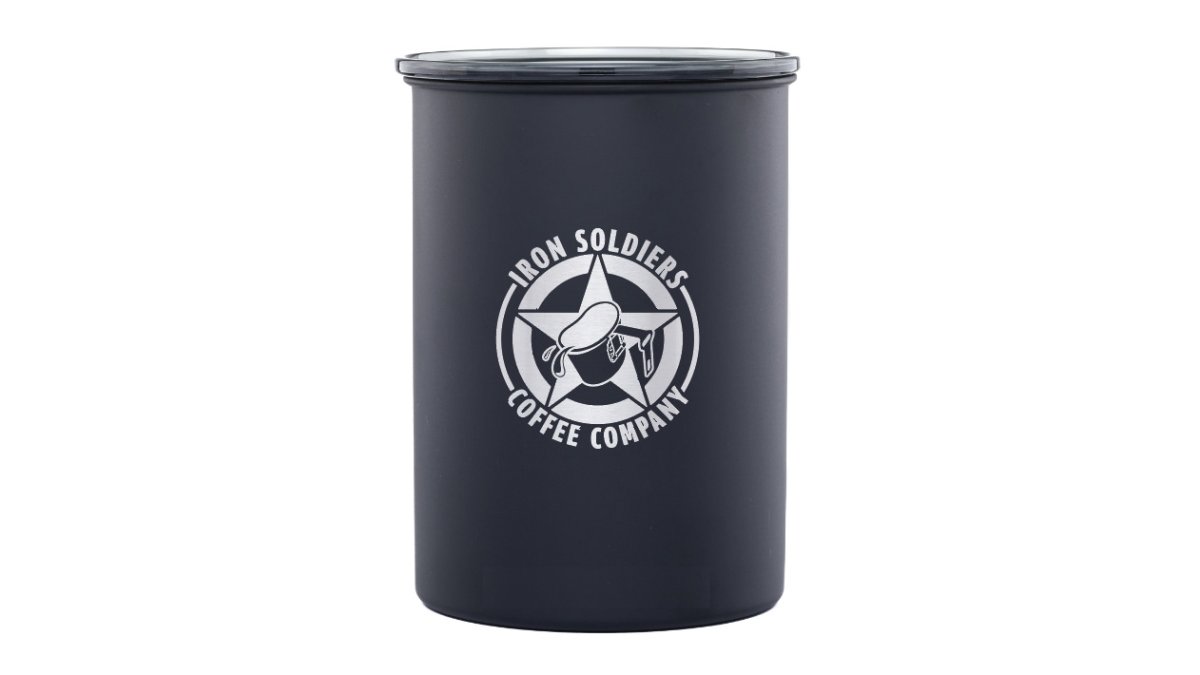
Our pick is the A210 Airscape Stainless Steel Medium Coffee Container. Its patented airtight design removes oxygen from the canister, which slows staleness. It holds one pound of whole bean coffee and doubles for tea, sugar, or flour.

Pro Tip
Press the inner lid down until it meets the beans. That step pushes the air out. Most people leave the lid sitting high and wonder why the roast fades in a week.
How Long Do Coffee Beans Stay Fresh? A Field Timeline
Whole beans hold peak freshness for about two to four weeks after the roast date when stored in an airtight container at room temperature. Ground coffee fades in days, not weeks. That gap is why we push whole beans and a grinder.
Here is the timeline we use:
| Stage | Time After Roast | What You'll Notice |
|---|---|---|
| Peak window | 3-14 days | Full aroma, bright flavor |
| Still good | 2-4 weeks | Solid cup, slight fade |
| Past prime | 4-8 weeks | Flat aroma, dull taste |
| Stale | 8+ weeks | Papery, lifeless brew |
The roast date on the bag matters more than any "best by" stamp. A bag roasted last week beats a bag roasted last season every time.
Can You Freeze Coffee Beans? Yes, Here's the Briefing
Freezing is the most misunderstood maneuver in coffee storage. Done right, it preserves peak flavor for months. Done wrong, it ruins a pound of beans in a single thaw. The difference comes down to three things: portioning, moisture control, and never breaking the seal twice.
Here is the full drill, step by step.
Step 1: Portion Before You Freeze
Divide beans into portions you will use in about one week. A standard coffee scoop holds roughly two tablespoons, and most brewing methods call for one to two tablespoons per six ounces of water. A daily brewer going through two cups a day will finish about half a pound in a week, so a one-pound bag splits cleanly into two portions.
Why portion first? Because every time you open a frozen container, warm room air rushes in and condenses on the cold beans. Portion once, thaw once, and you never expose the whole supply to that cycle.
Step 2: Seal Each Portion Airtight
Use a vacuum-sealed bag, a heavy-duty freezer bag with the air pressed out, or a small airtight canister sized to the portion. Headspace is the enemy here. The less air trapped with the beans, the slower the oils degrade. If you are using a bag, roll it tight and tape or clip the end.
Step 3: Freeze at a Steady Temperature
A dedicated freezer that holds a consistent temperature works better than a freezer door that swings open all day. Keep the portions toward the back, away from the door, where temperature swings are smallest. Label each portion with the roast date so you rotate oldest first.
Step 4: Thaw Correctly
Pull one portion and let it come to room temperature unopened. This is the step most people skip. If you open the bag while the beans are still cold, moisture from the air condenses directly on the bean surface. That surface moisture dulls the oils and can push the beans toward stale faster than room-temperature storage would have.
Once the portion is fully at room temperature, open it, grind, and brew. Do not return it to the freezer.
Step 5: Never Refreeze a Thawed Portion
Each freeze-thaw cycle pulls moisture into the bean and breaks down cell structure. One cycle is fine. Two or three and the cup goes flat no matter how good the roast was. If you thawed more than you can drink in a week, accept the loss and adjust your portion size next time.
Watch Out
Do not grind before freezing. Ground coffee has far more surface area exposed to air and moisture, and it degrades in the freezer much faster than whole beans. Freeze whole, grind after thawing.
How Long Does Frozen Coffee Last?
Whole beans stored in an airtight, oxygen-free portion at a steady freezer temperature hold peak quality for roughly two to three months. Beyond that, quality slowly declines, though the beans remain safe to brew. For long-term storage of a bulk order, freezing in one-week portions is the most reliable method available.
The Refrigerator Trap
The refrigerator is not a freezer and not a pantry. It cycles through humidity every time the door opens, and it pulls in odors from everything stored inside. Beans left in a fridge absorb those odors and pick up moisture at the same time. Skip the fridge entirely. Freeze it or pantry it, but do not park it in the middle ground.
A210 Airscape Stainless Steel Medium Coffee Container →
How to Store Coffee Beans in the Original Bag (When It Works)
The original bag can work, but only if it has a one-way valve and a tight seal. Many quality roasters ship in bags built exactly for this. If yours has a valve, keep the beans in it, press out the air, and fold the top down tight.
Here is when the bag is enough:
- You'll finish it within two weeks.
- The bag has a working one-way valve.
- You store it in a cool, dark cabinet, not on the counter.
If any of those fail, move the beans to a hard canister. A rolled-down bag on a sunny shelf is a losing position.
How to Choose a Storage Container: A Field Comparison
Not all containers are built for the same mission.
| Container Type | Seal Quality | Light Protection | Ease of Use | Best For |
|---|---|---|---|---|
| Opaque airtight canister with one-way valve | Excellent | Excellent | High | Daily brewing, whole beans |
| Original valve bag, folded and clipped | Good | Good to fair | High | Beans you'll finish in two weeks |
| Clear glass jar with clamp lid | Fair | Poor | High | Short-term display only |
| Open bin or hopper | Poor | Poor | High | Beans you'll use within days |
| Vacuum-sealed bag | Excellent | Good | Low | Long-term freezer storage |
Seal quality is the first filter. A container that lets air in and out freely will not hold freshness no matter how dark or sturdy it looks.
Light protection is the second filter. Clear glass and clear plastic let light through, and light breaks down the oils that carry flavor. Opaque stainless steel, ceramic, or dark-tinted containers block it.
Ease of use is the third filter, and it matters more than people admit. A container that is annoying to open and reseal will get left open.
A Quick Decision Guide by Coffee Type and Use
- Whole beans, daily brewing: Opaque airtight canister with a one-way valve, kept in a cool dark pantry. Grind fresh each time.
- Ground coffee: Airtight canister, used within one to two weeks. Ground coffee has more surface area and fades faster than whole beans.
- Opened bag you'll finish soon: Keep it in the original valve bag, press out the air, fold and clip the top.
- Bulk purchase for long-term storage: Portion into one-week airtight servings and freeze. Keep one week's worth in the pantry canister.
- Infrequent brewing: Buy smaller bags. A one-pound bag that takes two months to finish will be past its window before you reach the bottom.
Pro Tip
Match your container size to your consumption. A large canister filled a quarter of the way leaves too much air around the beans. A smaller canister that fills to the top pushes most of the oxygen out.
The One-Way Valve, Explained
Fresh roasted beans release carbon dioxide for several days after roasting. That gas needs to escape, or it builds pressure inside a sealed container. A one-way valve lets carbon dioxide out while keeping oxygen from getting in. That is why roasters ship in valve bags, and why a valve-equipped canister is the strongest choice for beans you'll brew within a few weeks.
Where to Store Coffee Beans at Home: Recon the Kitchen
Pick a cool, dark, dry spot. That is the whole mission. A pantry shelf away from the stove and the window is ideal.
Avoid these spots:
- Above the coffee maker, where steam rises
- Next to the oven or stove
- On a windowsill in direct sunlight
- On top of the fridge, which runs warm
Room temperature is fine for beans you'll use soon. Heat speeds up the breakdown of oils. Light does the same. So does air. Keep all three away and your beans hold their edge longer.
Signs Your Coffee Has Lost Freshness: Inspection Checklist
Run this check before you blame your brewing method:
- The beans smell flat or papery, not rich
- No visible oil sheen on darker roasts
- The bag has no roast date, or it's months old
- The beans feel dry and light
- The brewed cup tastes dull or bitter with no sweetness
- The beans were stored in a clear jar or open bin
If you check two or more boxes, the beans are past their window. Fresh beans fix most "bad brewing" complaints before you touch your grinder settings.
Conclusion: Fall In and Brew
Storage is a discipline, not a one-time setup. Seal the container, keep it cool and dark, and freeze in small portions when you buy in bulk. Do that and every cup lands closer to the roast date.
We roast for people who want a superior brew and want their coffee to mean something. Every bag we sell sends $1 to a volunteer-only nonprofit that supports veterans and their families.
Get started with Iron Soldiers Coffee Company and keep your beans at peak freshness from the first scoop to the last.
Frequently Asked Questions
Is it better to keep coffee in the bag or in a jar?
It depends on the bag. If your coffee came in a bag with a one-way valve and a resealable top, you can keep it there short-term and squeeze out the air before sealing. For longer storage, transfer whole beans to an airtight, opaque container like the Airscape Stainless Steel Medium Coffee Container, which removes oxygen and blocks light. Always keep the roast date handy so you know how long the beans have been in service.
How long do coffee beans stay fresh after opening?
Whole beans typically hold peak freshness for about two to four weeks after opening when stored in an airtight container away from heat, light, and moisture. Ground coffee fades faster, often within a week. Check the roast date on the bag and aim to finish opened coffee within a month. Buying in small batches and grinding right before brewing keeps flavor and aroma in top condition.
Can you freeze coffee beans to keep them fresh?
Yes, freezing works well if you do it right. Portion whole beans into small, airtight bags or containers, squeeze out excess air, and freeze. When you're ready to brew, thaw the portion at room temperature without opening it, then grind. Avoid repeated freeze-thaw cycles, which introduce moisture and speed up staling. This method helps you keep a reserve supply without sacrificing freshness.
Should coffee beans be stored in the refrigerator?
The refrigerator is usually a bad post for coffee beans. Frequent temperature swings and humidity from other foods can degrade flavor and introduce moisture. A cool, dark pantry shelf away from the stove, window, and heat sources is the better position. If you need long-term storage, the freezer is the safer bet, provided the beans are sealed in an airtight container and thawed properly before grinding.