Fire Dept Coffee vs Aerial Resupply: 2026 Comparison
Table of Contents
- Fire Dept Coffee vs Aerial Resupply: The 2026 Field Comparison
- How This Comparison Was Conducted
- Aerial Resupply Coffee Alternative Options for Every Mission
- How to Choose the Right Coffee Roast for Your Daily Routine
- Sourcing, Roast Profiles, and Quality Control
- Brewing Consistency and Method Recommendations
- Mission and Community Impact
- Conclusion
- Frequently Asked Questions
Last Updated: September 16, 2026
Fire Dept Coffee vs Aerial Resupply: The 2026 Field Comparison
The debate comes down to one question: which cup actually earns its place in your daily rotation? Many brands build their reputations on bold roasts and service-first missions, and many have loyal followings. This field comparison from Iron Soldiers Coffee Company cuts through the marketing smoke and looks at what matters: bean quality, roast consistency, and what your money supports after the pour.
How This Comparison Was Conducted
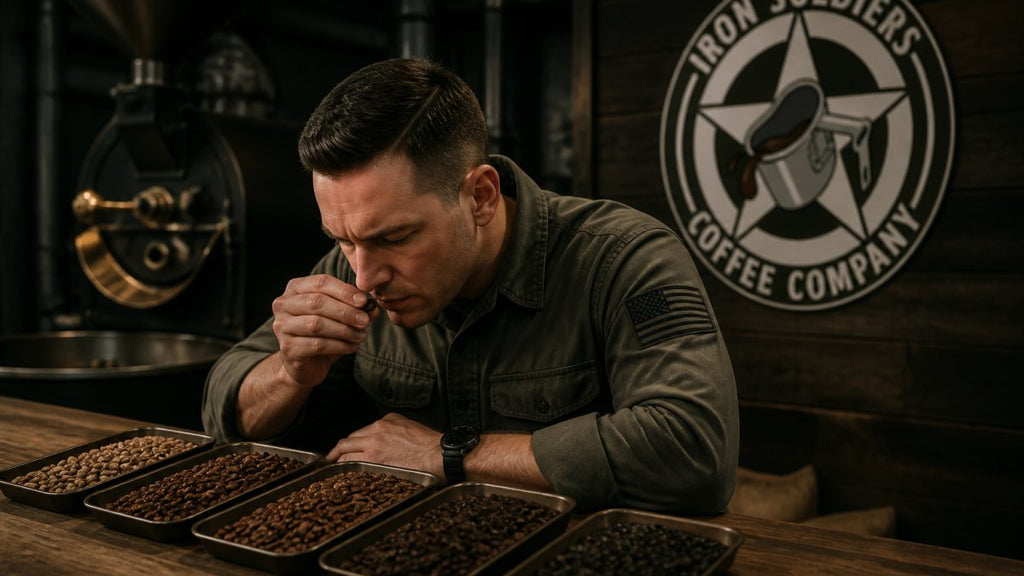
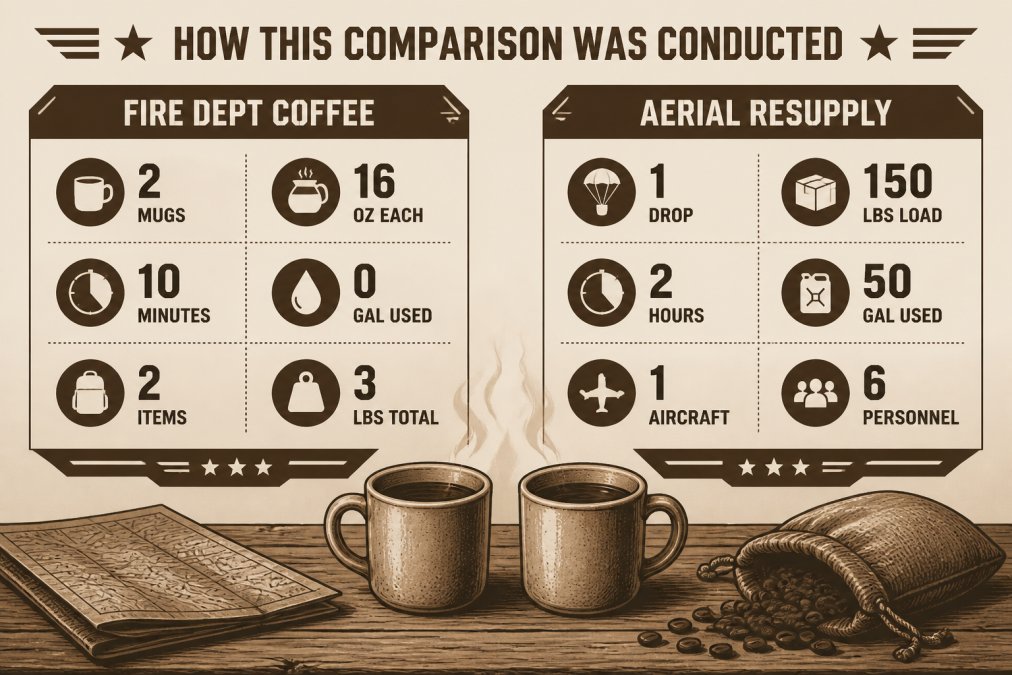
A comparison is only worth the paper it is printed on if the method is repeatable. This one was run like a supply inspection: same conditions, same measures, same record sheet for every sample. No branding on the cups, no labels on the bags during tasting, and no changing the rules halfway through the exercise.
The Evaluation Protocol
Each core offering was brewed on the same day, with the same water source and the same grinder, then logged against a fixed scorecard. The sequence ran as follows:
- Intake inspection. Record roast date, bag condition, and aroma straight off the seal. Note any visible defects in the whole-bean sample before grinding.
- Grind and dose. Weigh a fixed dose for each method, grind to the target setting, and confirm the bed looks even before water hits it.
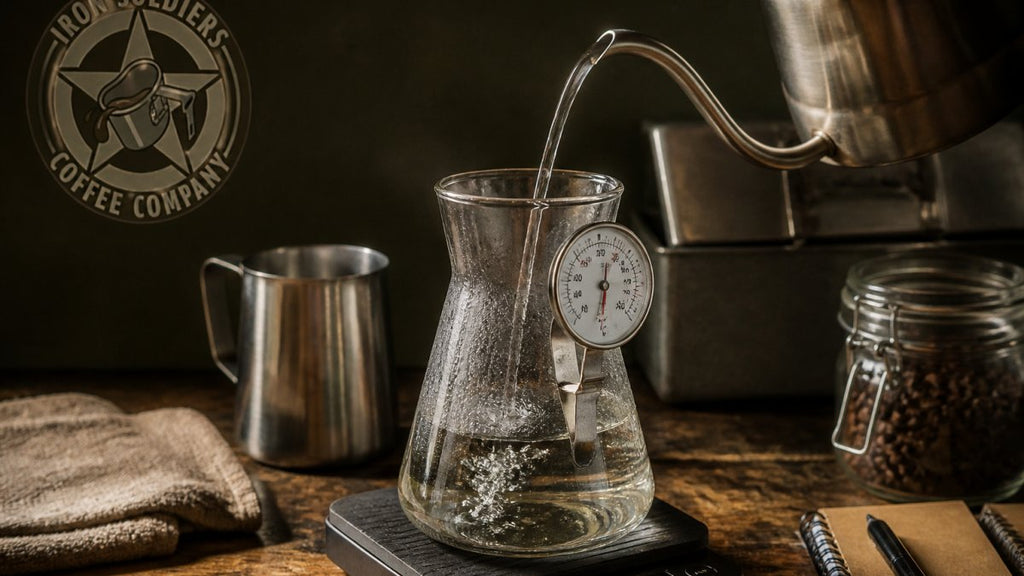
- Controlled extraction. Brew drip, pour-over, and French press back to back at the same water temperature, timing each pull with a stopwatch.
- Blind tasting. Two tasters score each cup independently, then compare notes. Where scores diverged, the cup was re-brewed and re-scored.
- Repeat run. The full sequence was repeated a second time, weeks apart, to test whether the bag performed the same way twice.
The criteria were simple and repeatable:
- Bean quality: specialty-grade sourcing, freshness at delivery, and visible defects
- Roast execution: evenness of color, oil development, and consistency bag to bag
- Brewing performance: extraction behavior across common methods
- Value: what you pay versus what lands in the cup
- Mission transparency: how clearly each brand explains where support dollars go
What the Scorecard Measures
Each category is scored on a five-point scale, and the total is what separates a daily drinker from a shelf ornament. The weighting is deliberate: roast consistency and brewing performance carry the most points, because those are the two variables a drinker actually tastes every morning. Sourcing and mission transparency carry fewer points but still count, since a bag that tastes fine and funds nothing is only half a win.
Why Roast Consistency Is the Deciding Measure
A roast that drifts from bag to bag breaks the routine. If the same beans pull sweet and balanced in March and flat and ashy in June, the drinker has to re-learn the grind and dose every time a new bag arrives. Consistency is what lets a coffee earn a permanent spot on the shelf. That is why the repeat run matters more than any single tasting session.
Pro Tip
Run your own version of this inspection at home. Brew the same beans three days in a row without changing anything, and note whether the cup tastes the same each time. If it does, the roast is consistent and your method is dialed in.
Aerial Resupply Coffee Alternative Options for Every Mission
Alternative options matter because not every coffee drinker wants a full bag and a grinder. Some need a fast cup in a forward operating position, others want a no-fuss pod for the office. Iron Soldiers Coffee Company covers both lanes.
Instant Coffee - Field Ration Edition
The Instant Coffee - Field Ration Edition is built for speed without sacrificing the brew. Each 3oz resealable pouch holds specialty-grade instant coffee made from 100% specialty Arabica beans, processed with a gentle freeze-dried method to preserve flavor. It mixes instantly in hot or cold water, which makes it a genuine field option rather than a compromise. Add one to two teaspoons to a canteen cup, stir, and you are back on the line.

Original Roast Single Serve Pods
For the home front, the Original Roast - Single Serve Coffee Pods deliver the signature blend in a sealed capsule with no oxygen inside, so the coffee stays fresh. An improved filter design stops the water from shooting straight through the middle, pulling more from the grounds without slowing the brew. Available in a 12 pack and a 60 pack for heavier rotations.


| Option | Format | Best For | Brew Time |
|---|---|---|---|
| Instant Coffee - Field Ration Edition | 3oz resealable pouch | Field, travel, cold brew | Under 1 minute |
| Original Roast Pods (12 Pack) | Single serve capsules | Office, quick daily cup | 1-2 minutes |
How to Choose the Right Coffee Roast for Your Daily Routine
Choosing the right coffee roast starts with matching the roast profile to how you brew and how much caffeine you want. Medium roasts keep more of the bean's origin character; dark roasts push smoke and body forward. Neither is "better," but they behave differently in the cup, and the method you use decides which one shows up.
Roast Profile and Caffeine Content
A common mistake is assuming darker means stronger. By weight, caffeine content barely shifts between medium and dark roast. What changes is flavor: medium roasts hold onto acidity levels and flavor notes like dried orange and sweet berries, while dark roasts trade those for deeper body and mouthfeel. If you want brightness, go medium. If you want a heavy, low-acid cup, go dark.
Instant Coffee - Field Ration Edition →
Match the Roast to the Method
Most guides stop at the roast description. The part that actually changes your morning is how the roast behaves in your brewer. Here is the field-tested pairing:
- Medium roast + pour-over. The paper filter holds back oils and lets the brighter notes come through. Use a medium-fine grind and a slow, steady pour. This is the setup for drinkers who want to taste the origin.
- Medium roast + drip. A medium grind and a standard basket give you a balanced, forgiving cup. Best for daily volume when you are not chasing every nuance.
- Dark roast + French press. The metal mesh lets the oils through, so the heavy body and low acidity land where they should. Use a coarse grind and a full four-minute steep.
- Dark roast + cold brew. A coarse grind steeped cold for twelve to eighteen hours pulls sweetness without the bite. Works well when you want a smooth, low-acid concentrate.
- Instant + canteen cup. The Field Ration Edition dissolves in hot or cold water, so it needs no grinder and no timer. One to two teaspoons, stir, and you are moving.
A Quick Reference for Dialing In
| Roast | Best Method | Grind | What You Taste |
|---|---|---|---|
| Medium | Pour-over | Medium-fine | Bright acidity, fruit and citrus notes |
| Medium | Drip | Medium | Balanced, easy daily cup |
| Dark | French press | Coarse | Heavy body, low acidity, deep finish |
| Dark | Cold brew | Coarse | Smooth, sweet, low-acid concentrate |
The Variables That Beat the Roast
If your coffee tastes bitter or sour, the roast is rarely the culprit. Grind size and extraction time cause most off-flavors. A grind that is too fine over-extracts and turns bitter; too coarse under-extracts and turns sour. Water temperature matters too: water just off a boil works for most methods, while a full rolling boil scalds the grounds and flattens the cup. Adjust grind and time before you switch beans.
Pro Tip
Change one variable at a time. If you adjust grind, keep the dose and water the same. If you adjust water, keep the grind the same. Changing two things at once tells you nothing about which one fixed the cup.
Watch Out
Do not store beans in the freezer and pull them out daily. The temperature swings introduce moisture and stale the beans faster than a cool, dark cabinet would.
Sourcing, Roast Profiles, and Quality Control
Sourcing and quality control decide whether a roast profile ever reaches its potential. Specialty-grade beans with visible defects will disappoint no matter how well they are roasted, which is why the best roasters control the supply chain from farm to bag.
Brewing Consistency and Method Recommendations
Brewing consistency is the difference between a coffee you love and one you tolerate. The same beans can taste completely different depending on grind size, water temperature, and extraction time, so dial in your method before you blame the roast.
- Drip: medium grind, steady and forgiving, best for daily volume
- Pour-over: medium-fine grind, highlights acidity levels and flavor notes
- French press: coarse grind, full body and mouthfeel, ideal for dark roasts
- Cold brew: coarse grind, low acidity, works well with the Field Ration Edition instant
Mission and Community Impact
Mission and community impact separate brands that talk about service from brands that fund it. Many coffee companies wave a flag in their branding; fewer can show you exactly where the money goes.
Key Takeaway
The clearest test of a mission-driven brand is whether the giving is specific and repeatable. A fixed dollar amount per bag beats a percentage you can never verify.
Conclusion
Picking the right approach comes down to what you want your daily cup to do. If you want fast, field-ready caffeine, start with the Instant Coffee - Field Ration Edition. If you want a consistent home brew, the Original Roast pods and Doc Sims Brew cover the routine. Iron Soldiers Coffee Company pairs specialty-grade beans and small-batch roasting with $1 per bag donated to a volunteer-only nonprofit, so every cup pulls double duty.
Frequently Asked Questions
What should I look for when choosing a coffee brand that supports a mission?
Look for clear donation language and a specific nonprofit partner. Iron Soldiers Coffee Company donates $1 from every bag sold to a volunteer-only nonprofit supporting veterans and their families. Ask how the money moves, whether the nonprofit is named, and whether the brand publishes any impact updates. A concrete, repeatable donation tied to each bag is easier to verify than a vague promise of community support.
How does roast profile affect the caffeine content in my morning cup?
Roast level changes flavor more than caffeine. A medium roast like Doc Sims Brew or Colombia keeps more of the bean's natural character, with smooth chocolate and caramel notes and a clean finish. Dark roasts taste bolder and smokier, but the caffeine difference is small. If you need a serious kick, focus on brew strength and serving size rather than roast color alone.
Is there a noticeable difference between mass-produced and craft-roasted beans?
Yes. Small-batch roasting gives the roaster tighter control over each batch, so flavor notes stay consistent from bag to bag. Specialty-grade beans like those in Doc Sims Brew and Colombia are graded for defects and grown at higher elevations, which shows up as more acidity, body, and a longer aftertaste. Mass-produced coffee often trades that nuance for shelf stability.
How do you properly store coffee to maintain peak freshness?
Keep beans in an airtight container away from light, heat, and moisture. A resealable pouch like the 3oz Field Ration Edition works well for instant coffee on the move. For whole bean or ground coffee, buy in sizes you will finish within a few weeks, and avoid storing beans in the fridge where condensation can dull the roast profile. Grind right before brewing when you can.
Related post


08
Oct