How to Improve Coffee Extraction Quality at Home
Table of Contents
- The Field Manual: Why Coffee Extraction Quality Decides Every Cup
- Coffee Grind Size for Better Extraction: The Primary Adjustment
- Coffee-to-Water Ratio: Building a Repeatable Brew Recipe
- How to Fix Under-Extracted Coffee: Sour, Thin, and Salty Cups
- How to Fix Over-Extracted Coffee: Bitter, Dry, and Hollow Cups
- Water Temperature, Chemistry, and Even Saturation on the Coffee Bed
- Espresso vs. Non-Espresso: Separate Extraction Battle Plans
- Measuring Extraction Yield with a Refractometer and TDS
- Frequently Asked Questions
Last Updated: October 9, 2026
The Field Manual: Why Coffee Extraction Quality Decides Every Cup
Coffee extraction is the process of dissolving flavor compounds from ground coffee into water. Get it right, and you taste sweetness, clarity, and balance. Get it wrong, and you get sour, bitter, or hollow cups. At Iron Soldiers Coffee Company, we've brewed enough bad pots to know the difference matters. This guide shows you how to improve coffee extraction quality at home, step by step.
What Extraction Actually Means in the Cup
Think of extraction like a supply drop. Water is the transport. Ground coffee holds the cargo: acids, sugars, and plant fibers.
The fast movers are fruit acids and sugars. They dissolve first. The slow movers are bitter plant compounds. They come out last.
Pull too little, and your cup tastes sour and thin. Pull too much, and it turns bitter and dry.
The Four Variables You Control
Four levers decide every brew:
- Grind size - how fast water moves through the coffee bed
- Coffee-to-water ratio - how strong the brew turns out
- Water temperature - how much energy the water carries
Change one lever at a time. That's the whole game.
Key Takeaway
Fix one variable per brew. If you change grind and ratio at once, you won't know which fix worked.
Coffee Grind Size for Better Extraction: The Primary Adjustment
Coffee grind size for better extraction is your first and most powerful adjustment. Finer grounds expose more surface area, so water pulls flavor out faster. Coarser grounds slow the process down.
If your coffee tastes weak and sour, grind finer. If it tastes bitter and harsh, grind coarser. Simple as that.
Grind Consistency and Particle Size Distribution
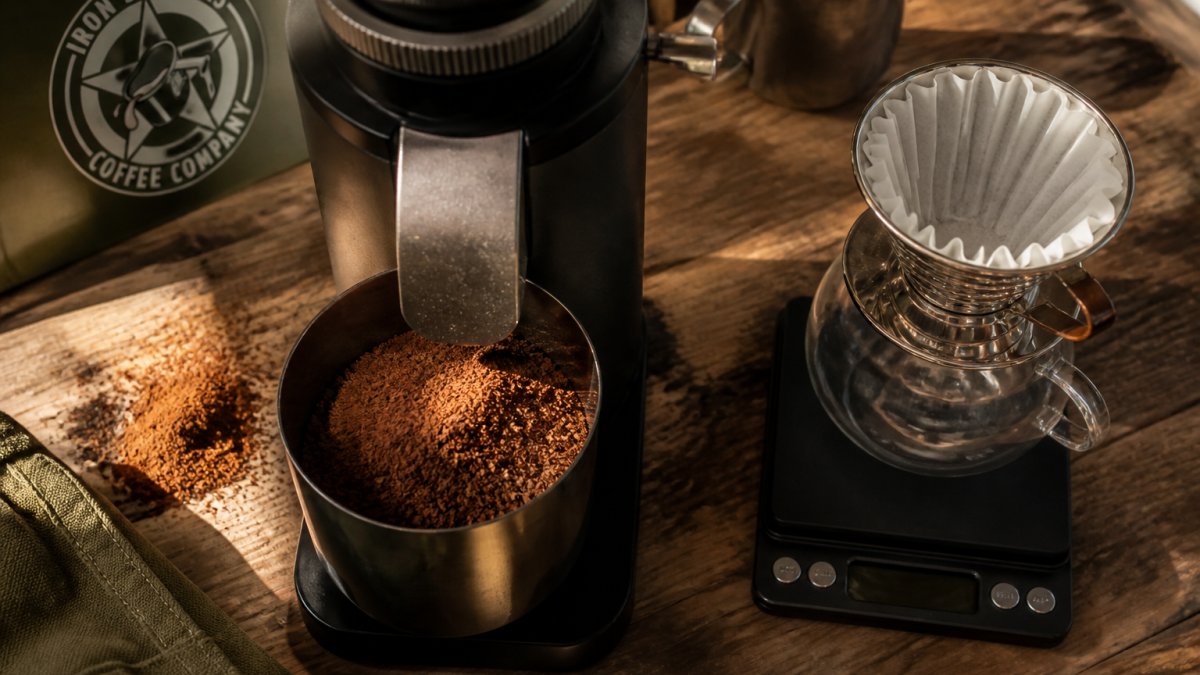
A burr grinder beats a blade grinder every time. Blade grinders chop unevenly, leaving boulders mixed with dust. Those boulders under-extract while the dust over-extracts. One cup, two problems.
Burr grinders crush beans to a uniform particle size. Uniform grounds extract at the same rate. That's how you get a balanced cup.
Coffee-to-Water Ratio: Building a Repeatable Brew Recipe
A repeatable coffee-to-water ratio is the backbone of good extraction. Weigh your coffee. Weigh your water. Stop eyeballing it.
A common starting point is 1 gram of coffee to 16 grams of water. That's roughly 2 tablespoons of ground coffee per 6 ounces of water. Adjust from there.
- Want a stronger cup? Tighten the ratio toward 1:15
- Want it lighter? Loosen it toward 1:17
- Always use a scale for consistency
Write down every recipe. A logbook turns guesswork into repeatable results.
How to Fix Under-Extracted Coffee: Sour, Thin, and Salty Cups
Under-extraction means the water pulled out the fast-moving acids and sugars but left the heavier sweetness and body behind. The cup tastes sour, thin, and sometimes salty or metallic. The water left the coffee bed too early, or it never touched part of the bed at all.
Before you touch a single dial, run this field check. It takes thirty seconds and saves you from chasing the wrong variable.
- Taste the cup at three temperatures. Sourness that fades as the cup cools usually means the brew is close and just needs a small nudge. Sourness that sharpens as it cools means you are well under target.
- Look at the spent bed. A pour-over bed that looks like a crater with a dry ring around the edge means channeling, not under-extraction. Those are different problems with different fixes.
- Check the clock. If your brew finished two minutes faster than your recipe calls for, the grind is too coarse. If it ran long and still tastes sour, the problem is uneven saturation, not grind.
The Diagnostic Order for Sour, Thin Cups
Change one variable per brew. Log the result. Move to the next only if the cup did not improve.
- Step 1, Grind finer. This is the fix for the majority of sour cups. On a pour-over, go one or two clicks finer on a stepped burr grinder. On a drip machine, step down one setting. On espresso, tighten the grind until the shot runs about two seconds slower than before.
- Step 2, Raise water temperature. Move from 195°F toward 200°F in two-degree steps. Water below 195°F simply does not carry enough energy to dissolve sugars efficiently.
- Step 3, Extend contact time. For pour-over, slow the pour rather than adding water. For French press, add thirty seconds to the steep. For espresso, a shot that finishes in under 20 seconds is almost always under-extracted.
Method-Specific Starting Points
| Method | Symptom | First Move | Typical Target |
|---|---|---|---|
| Pour-over | Sour, thin, fast drain | Grind finer one step | 3-4 min total brew |
| Drip | Sour, watery | Grind finer, raise temp to 200°F | 4-5 min brew cycle |
| French press | Sour, gritty | Grind finer, steep 4:30 | 4-5 min steep |
| Espresso | Sour, gushing shot | Grind finer, target 25-30 sec | 1:2 ratio in 25-30 sec |
Watch Out
Do not fix under-extraction by adding more coffee. That masks the sourness and throws off your ratio, so the next brew tells you nothing. Fix the grind first, then the temperature, then the time.
What Under-Extraction Is Not
A sour cup is not always an under-extracted cup. Very light roasts and naturally acidic single origins can taste bright and fruity even at a correct 20% extraction yield. If your numbers are on target and the cup still reads sharp, the bean is doing that, not your technique. Adjust the recipe to the bean instead of chasing a fault that is not there.
How to Fix Over-Extracted Coffee: Bitter, Dry, and Hollow Cups
To fix over-extracted coffee, you need to slow the extraction down. Over-extraction tastes bitter, dry, and hollow. The water stayed too long and pulled out harsh compounds.
Your counter-moves:
- Grind coarser
- Lower water temperature a few degrees
- Shorten contact time
- Check that your brew bed isn't clogged
Bitterness that lingers on the back of your tongue is the tell. That's over-extraction, every time.
Water Temperature, Chemistry, and Even Saturation on the Coffee Bed
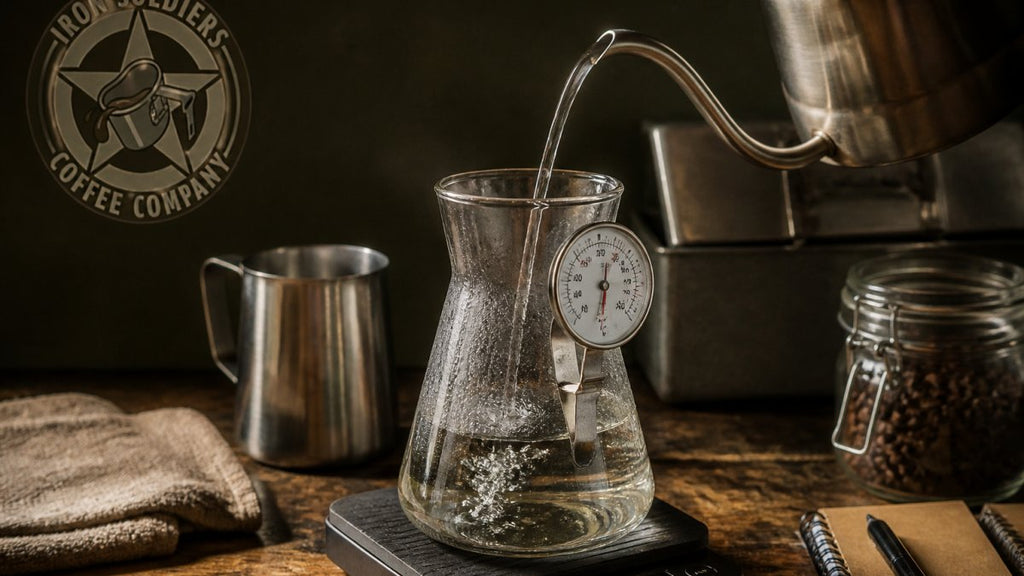
Water temperature for coffee should land between 195°F and 205°F. Below that range, you under-extract. Above it, you scorch the grounds and pull out bitterness.
Water chemistry matters too. Very hard water mutes flavor. Very soft water makes coffee taste flat.
Even saturation is the other half of the job. If water channels through one spot, the rest of the coffee bed never gets touched.
To prevent it:
- Level the coffee bed before brewing
- Pour in slow circles, not one spot
- Stir gently during the bloom to release air pockets
Pro Tip
Pour your bloom water in a spiral, then wait 30 seconds. The grounds will puff up and release trapped gas. That's your sign the bed is ready for the main pour.
Espresso vs. Non-Espresso: Separate Extraction Battle Plans
Espresso and gravity-fed methods pull flavor out of coffee in fundamentally different ways, so they need different playbooks. Espresso forces water through a packed puck at roughly nine bars of pressure in under thirty seconds. Drip, pour-over, and French press rely on gravity and time, with no pressure to compensate for a bad grind.
That difference changes which variable you adjust first, and it changes how much each adjustment moves the cup.
Espresso: Dial In Grind, Then Dose, Then Yield
Espresso is unforgiving because pressure amplifies every error. A grind that is one step too coarse does not just taste thin, it gushes through the puck in fifteen seconds and tastes sour and watery.
Dial in this order:
- Grind. Adjust until a shot with your standard dose runs in the 25-30 second window. This is the single biggest lever.
- Dose. Once the time is right, adjust the amount of coffee in the basket. A common starting point is 18 grams in a double basket.
- Yield. Aim for a 1:2 ratio, so 18 grams of coffee yields about 36 grams of liquid espresso. Weigh the output on a scale, not by eye.
- Taste and adjust one step. Sour and fast means grind finer. Bitter and slow means grind coarser. Change one thing, pull again, log it.
Gravity Methods: Grind and Pour Control the Cup
Without pressure, contact time does the heavy lifting. That makes grind size and pour technique the two variables that matter most.
- Pour-over. Medium grind, 1:16 ratio, 3-4 minutes total. Control the pour in slow spirals. A pour that finishes in two minutes will taste sour no matter how good the beans are.
- Drip. Medium grind, 1:16 ratio, 4-5 minutes. Most drip machines run a bit cool, so a sour cup often means the machine, not the grind. Check the brew temperature before you change anything else.
- French press. Coarse grind, 1:15 ratio, 4-5 minute steep. Because the grounds stay in contact the whole time, grind consistency matters more here than anywhere else. Fines will over-extract while boulders under-extract.
| Method | Grind | Ratio | Contact Time | First Adjustment |
|---|---|---|---|---|
| Espresso | Fine | 1:2 | 25-30 sec | Grind, then dose |
| Pour-over | Medium | 1:16 | 3-4 min | Grind, then pour speed |
| Drip | Medium | 1:16 | 4-5 min | Grind, then machine temp |
| French press | Coarse | 1:15 | 4-5 min | Grind consistency |
Pro Tip
Keep a brew log for each method separately. An espresso recipe and a pour-over recipe are not comparable, and mixing them in one notebook makes it harder to spot the pattern in your adjustments.
Freshly ground coffee matters more than any gadget. Whole beans hold their flavor far longer than pre-ground, and oxygen is coffee's enemy. Grind right before you brew, store beans in an airtight container away from light and heat, and your extraction starts from a better position no matter which method you use.

Measuring Extraction Yield with a Refractometer and TDS
A refractometer measures total dissolved solids, or TDS, in your brew.
Here's the formula:
Extraction Yield = (TDS × Brew Weight) ÷ Coffee Dose
Example: 1.35% TDS × 350g brew weight ÷ 21g dose = 22.5% extraction yield.
Most brewers aim for 18% to 22% extraction yield. Below 18% means under-extraction.
A refractometer costs money, but it removes the guesswork.
You don't need one to brew well. Your tongue is still the final judge.
Great extraction takes practice, and the variables never stop shifting. Our lineup includes dark roast blends, single origin sample packs, and espresso blends forged for consistency.

Frequently Asked Questions
How do I know if my coffee is under-extracted or over-extracted?
Taste is your first instrument. Under-extracted coffee tastes sour, salty, and thin because the water pulled acids and caffeine but left sugars and body behind. Over-extracted coffee tastes bitter, dry, and hollow because the water stripped harsh compounds from the grounds. A quick field test: if the cup makes you pucker, grind finer or extend brew time. If it makes you wince, grind coarser or shorten contact time. Write down each change so you build a record of what works with your beans and equipment.
What grind size produces better coffee extraction?
There is no single correct grind size. The right setting depends on your brew method: coarse for French press, medium for drip and pour-over, fine for espresso. What matters more than the exact number is grind consistency and matching the grind to your contact time. A coarse grind in an espresso machine will gush and taste sour; a fine grind in a French press will clog and taste bitter. Start with the manufacturer's recommendation for your brewer, then adjust one click at a time until the cup tastes balanced.
What is the 15-15-15 coffee rule?
The 15-15-15 rule is a simple drip coffee starting point: a 1:15 coffee-to-water ratio, a 15-gram dose per cup, and roughly 15 minutes total from grinding to drinking. It is not a law, just a repeatable baseline. From there you adjust. Want a stronger cup? Tighten the ratio to 1:14. Tasting sourness? Grind finer or extend brew time by 15 seconds. Treat the rule as your initial formation, then march toward the flavor you actually want.
How does water temperature affect coffee extraction?
Water temperature controls how aggressively the water dissolves compounds from the coffee grounds. The Specialty Coffee Association recommends brewing between 195°F and 205°F. Below that range, extraction slows and the cup tastes sour and weak. Above it, you risk scalding the grounds and pulling out harsh bitterness. If your brewer runs cool, preheat it with hot water before brewing. If you boil water and pour immediately, let it rest 30 to 45 seconds to drop into the target range.
Related post

08
Oct