Benefits of Supporting Veteran Nonprofits: A 2026 Guide
Table of Contents
- Why Your Support for Veteran Nonprofits Matters Now
- The Transition Gap: Where Donations Make the Biggest Difference
- Tactical Support: Housing, Employment, and Mental Health Resources
- How to Verify Charity Coffee Donations Before You Buy
- Best Practices for Vetting Veteran Charities
- The Tax Benefits of Charitable Giving to Veterans
- Your Daily Mission: Brewing Coffee That Gives Back
- Conclusion: Join the Ranks of Informed Supporters
- Frequently Asked Questions
Last Updated: September 8, 2026
Why Your Support for Veteran Nonprofits Matters Now
The transition from military service to civilian life is one of the most critical and challenging missions a veteran will ever undertake. Supporting veteran nonprofits addresses the unique needs that arise during this period, from housing stability to mental health resources. At Iron Soldiers Coffee Company, we believe every American has a role in this cause, and understanding the benefits of supporting veteran nonprofits strengthens our entire nation.
The benefits of supporting veteran nonprofits extend far beyond the immediate financial assistance these organizations provide. When you contribute to these groups, you are investing in social connectedness, community integration, and the long-term well-being of those who served. Below, we will show you exactly how your contribution creates a tangible difference, where your money goes, and how to ensure your generosity is well-placed.
The Transition Gap: Where Donations Make the Biggest Difference
A common misconception is that federal programs fully cover a veteran's needs after service. In reality, a significant "Transition Gap" exists between leaving active duty and successfully integrating into civilian life. This period is often marked by uncertainty regarding employment services, healthcare navigation, and building new support networks. Nonprofits are uniquely positioned to bridge this gap with individualized care and advocacy that government systems often cannot provide.
Your donations are most effective when they target this critical window. Organizations that focus on the Transition Gap typically offer mentorship, resume building, and peer support, connecting veterans with others who have successfully made the jump. This focus on community is vital; a sense of isolation is a primary challenge during reintegration. By funding these specific programs, you are not just offering a handout, but a hand up during the months and years when veterans are re-establishing their lives.
Key Takeaway
The Transition Gap is a critical period where targeted donations have the highest impact on a veteran's long-term success and community integration.
Tactical Support: Housing, Employment, and Mental Health Resources
The most effective veteran-serving organizations operate on three main fronts: housing stability, employment, and mental health. But understanding the benefit of your donation requires seeing how these programs actually function on the ground, not just what they claim to do.
Housing: From Crisis Beds to Permanent Keys
Housing support is not a single service. It is a staged campaign. The most robust nonprofits run a continuum that begins with emergency shelter or rapid re-housing assistance, often covering security deposits and first month's rent to get a veteran off the street within days, not months. From there, transitional housing programs offer a stable base for 12 to 24 months while veterans secure income. The gold standard, however, is Permanent Supportive Housing (PSH), which pairs a long-term housing voucher with ongoing case management. The mechanism matters: a veteran with untreated mental health challenges placed directly into independent housing without wraparound support is far more likely to cycle back into homelessness. Donations that fund the case-management side of PSH, the social worker, the transportation stipend, the utility bridge payment, are often the difference between a permanent exit and a revolving door.
Employment: Beyond the Job Board
Employment programs fail when they stop at resume writing. The nonprofits that move the needle operate effectively. They conduct skills translation, converting a Navy Corpsman's medical training into civilian EMT or nursing credentials, or an Army signal officer's network management experience into IT certifications. They run mock interview panels with civilian hiring managers who can flag the communication habits that read as "too military" to a corporate recruiter. And critically, they maintain employer partnerships with companies that have made a public commitment to hiring veterans, not just a one-time job fair, but a pipeline with dedicated recruiters and retention support. When you donate to an employment program, ask whether it tracks not just "job placements" but 12-month retention rates. That metric tells you whether the nonprofit is fitting a square peg into a round hole or building a genuine career path.
Mental Health: The Peer-to-Peer Advantage
Mental health services for veterans are not a monolith. The most effective organizations recognize that the clinical model alone, a therapist's office, a 50-minute hour, often fails to reach a population trained to mask distress and distrust outsiders. The unique value proposition of many veteran nonprofits lies in peer support: structured programs where veterans who have navigated their own PTSD, traumatic brain injury, or moral injury are trained and certified to walk alongside a newly transitioning service member. This is not a coffee chat; it is a formalized intervention model. Your donation to these programs funds the training, the supervision, and the 24/7 availability that makes peer support a clinical complement, not a feel-good substitute.
Key Takeaway
When evaluating a nonprofit's mental health or housing program, ask for the operational details: What is the average time from intake to a stable housing placement? What is the 12-month job retention rate? How are peer supporters trained and supervised? The organizations that can answer these questions with data are the ones where your dollar does the heaviest lifting.
A holistic approach across these three fronts is not just efficient, it is essential. A veteran cannot focus on a job interview while sleeping in a car, and cannot maintain housing stability without addressing untreated trauma. The nonprofits that succeed treat the veteran as a whole person on a single campaign plan, and your support enables that coordinated mission.
How to Verify Charity Coffee Donations Before You Buy
When purchasing mission-driven products like coffee, it is crucial to know how to verify charity coffee donations to ensure your money truly serves veterans. The first step is to look for transparency on the brand's website. A reputable company will clearly state the donation amount, the specific nonprofit it supports, and the mechanism for the transfer. Be wary of vague claims like "a portion of proceeds" without specifying the percentage or the recipient organization.
Next, you should research the nonprofit itself to confirm it is legitimate and effective. This involves checking their status and financial health, which is a core part of best practices for vetting veteran charities. Look for organizations that have a clear mission and can demonstrate their impact. A trustworthy brand will often share stories or reports from the field, showing the tangible difference your purchase makes.
Watch Out
Be cautious of brands that use patriotic imagery but provide no clear details on their giving process. If a company cannot tell you exactly where the money goes, it is likely a marketing tactic rather than a genuine commitment to veteran support.
Best Practices for Vetting Veteran Charities
Before donating, it is wise to apply a clear set of criteria to evaluate any veteran nonprofit. This diligence ensures that your charitable giving achieves the maximum impact. A key indicator of a healthy organization is the percentage of its budget spent directly on programs versus overhead and fundraising. While ratios vary, a high program-expense ratio is a positive signal of efficiency.
Beyond financials, look for evidence of sustainability and long-term planning. Organizations that invest in capacity building and strategic planning are better positioned to serve veterans effectively over time. Consider the difference between short-term relief and long-term impact. While emergency aid is essential, programs that offer sustained support, such as multi-year employment training or ongoing mental health care, often create more durable outcomes. The following table outlines key vetting criteria for donors:
| Vetting Criterion | What to Look For | Why It Matters |
|---|---|---|
| Financial Transparency | Publicly available annual reports and audited financials | Confirms funds are used as promised |
| Program Efficiency | High percentage of budget spent on direct services | Ensures your donation has a greater impact |
| Mission Focus | Clear, specific goals for veteran support | Prevents dilution of resources and effort |
| Outcome Reporting | Evidence of successful veteran outcomes | Shows the organization is effective and accountable |
The Tax Benefits of Charitable Giving to Veterans
Beyond the moral imperative, there are practical financial advantages to your generosity. The tax benefits of charitable giving to veterans can provide a valuable deduction on your federal income tax return, but only if you understand the specific rules and plan your giving accordingly.
The Standard Deduction Hurdle
For the current tax year, the standard deduction is a significant amount for single filers and married couples filing jointly. To claim any charitable deduction, your total itemized deductions, including mortgage interest, state and local taxes (capped at $10,000), and medical expenses, must exceed that threshold. For many donors, this means the charitable deduction only becomes valuable if you "bunch" your giving. Instead of donating $1,000 every year, you might contribute $5,000 every fifth year, allowing you to itemize in that year and take the standard deduction in the others. This strategy, known as "donor bunching," is a legitimate planning tool that maximizes the tax benefit of your generosity.
Qualified Organizations and Substantiation Rules
To qualify for a deduction, your donation must go to an organization recognized as tax-exempt under Section 501(c)(3) of the Internal Revenue Code. Not every group that claims to support veterans holds this status, some operate as 501(c)(4) social welfare organizations, which are not eligible for tax-deductible contributions. Before you give, verify the organization's status using the IRS Tax Exempt Organization Search tool. The name of the charity and its EIN will be listed if it is in good standing.
Documentation is equally critical. For any single cash donation of $250 or more, you must obtain a written acknowledgment from the charity that states the amount of your contribution and whether you received any goods or services in return. For donations under $250, a bank record or credit card statement is sufficient. If you donate $500 or more in non-cash property, you must file IRS Form 8283 and, for items valued over $5,000, obtain a qualified appraisal.
Deduction Limits and the Charitable Mileage Rate
Cash contributions to public charities are generally deductible up to 60% of your adjusted gross income (AGI) in a single year. If you exceed that limit, the excess carries forward for up to five years. For donations of appreciated assets, such as stocks or real estate held for more than one year, the deduction is limited to 30% of AGI, but you avoid paying capital gains tax on the appreciation, which can make this the most tax-efficient way to give. If you volunteer your time, you cannot deduct the value of your services, but you can deduct out-of-pocket expenses directly related to your volunteer work, including the charitable mileage rate, which the IRS sets each year. For the current year, that rate is set by the IRS.
Pro Tip
Before year-end, review your giving plan. If you are close to the itemization threshold, consider making a multi-year pledge in a single tax year to maximize your deduction. And always request a written receipt from the nonprofit, a formal acknowledgment letter is required for any single donation of $250 or more to substantiate your deduction, a detail many donors overlook.
For specific guidance on current deduction limits and documentation rules, you should consult the IRS guidelines on charitable contributions or a qualified tax professional. The tax code rewards informed generosity, and the veterans who benefit from your support deserve a donor who has done the homework.
Your Daily Mission: Brewing Coffee That Gives Back
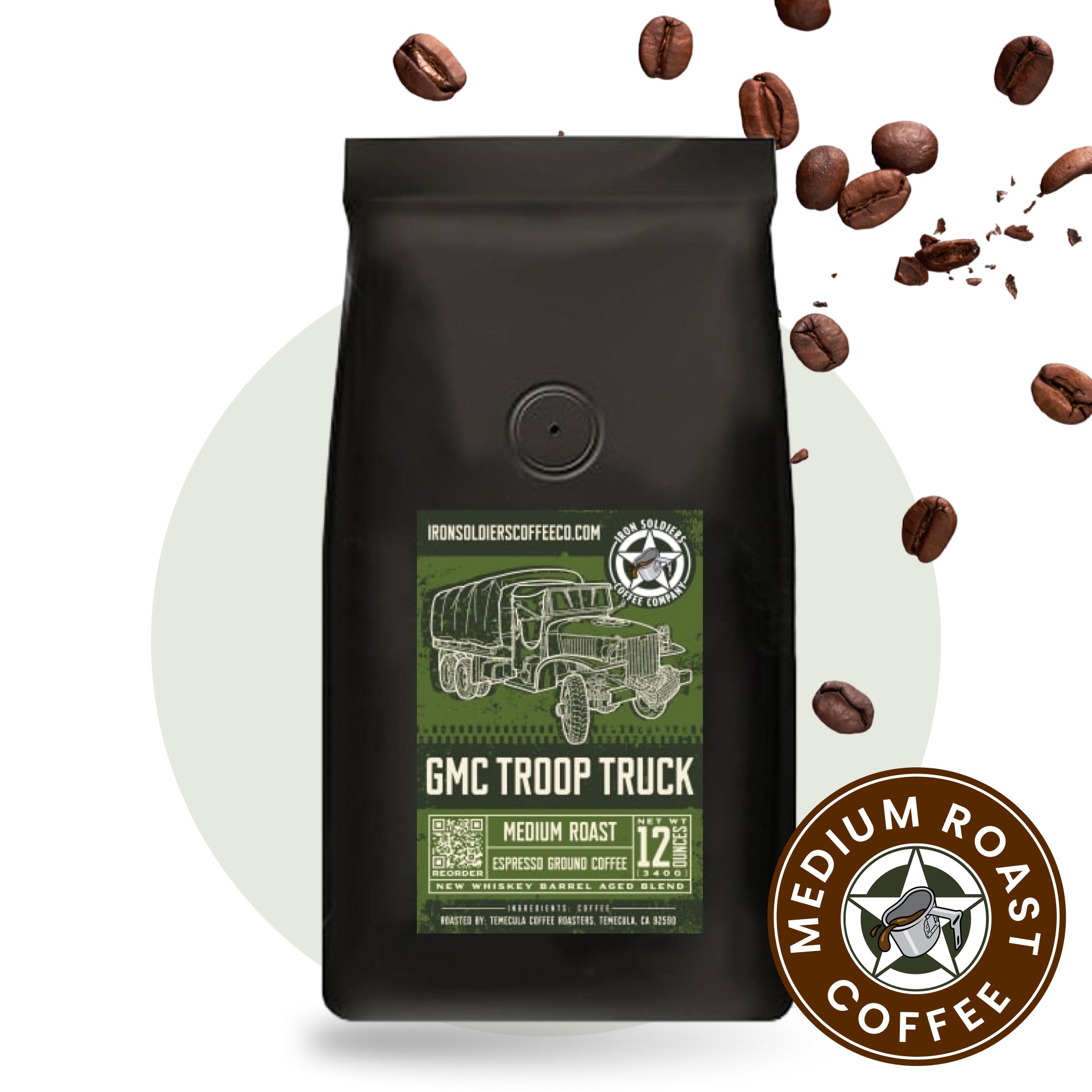
Your daily coffee ritual can become a powerful act of service. Choosing a brand that is committed to veteran causes allows you to contribute to the mission with every cup. With each bag of our fresh-roasted coffee, a $1 donation is directed to a volunteer-only nonprofit dedicated to supporting veterans and their families. This simple act transforms a morning routine into a daily contribution to the welfare of those who served.
Consider the Doc Sims Brew, a mission-ready Honduran coffee crafted in partnership with combat-wounded veteran and author Matthew Sims. Sourced from the highlands of Honduras, this medium roast offers a rich, balanced profile with chocolate notes and a clean finish. Every bag stands as a tribute to the warriors who carried the mission forward, making it a dependable cup worthy of the name it carries. It is coffee with a purpose, designed to fuel your day while honoring a legacy of resilience and brotherhood.


Conclusion: Join the Ranks of Informed Supporters
The benefits of supporting veteran nonprofits are clear, from bridging the critical transition gap to providing essential mental health and employment services. Your role is to be an informed supporter, ensuring your generosity creates a genuine impact. By practicing due diligence and understanding the landscape, you become a powerful ally in the fight for veteran well-being.
Answer the call to service. Explore our mission-driven blends and discover how your daily cup can make a tangible difference. Get started with Iron Soldiers Coffee Company and join a community that honors history and serves those who have served us all.
Frequently Asked Questions
How can I verify the legitimacy of a veteran nonprofit?
Start by checking the organization's status on IRS records or charity watchdog sites like Charity Navigator. Review their annual report and look for transparent financial disclosures. Confirm how much of each dollar goes directly to programs versus administrative costs. Ask specific questions about their mission and request examples of recent work. A legitimate organization will welcome scrutiny and provide clear answers about their impact.
What are the primary ways that donations help veterans transition to civilian life?
Donations fund employment services like resume workshops and job placement programs, housing assistance to prevent homelessness, and mental health resources including counseling and peer support groups. Support also goes toward physical rehabilitation, financial assistance during difficult periods, and community integration programs that build social connectedness. These services address the most critical needs veterans face when leaving active duty.
How do volunteer-only nonprofits maximize the impact of every dollar?
Volunteer-only nonprofits direct nearly all contributions to programs rather than overhead. Without salaried staff, more of your donation reaches veterans directly. These organizations often rely on skilled volunteers who bring professional expertise in counseling, legal aid, and career coaching. This structure creates efficiency and demonstrates deep commitment from the community supporting the mission.
What should I look for in a veteran charity's annual report?
Examine the program expenses ratio to see what percentage of funds goes directly to services. Look for measurable outcomes like numbers of veterans housed, employed, or completing treatment programs. Review donor transparency practices and leadership compensation. A strong annual report will show both financial responsibility and tangible results from their work.
Related post




21
Oct

20
Oct