How to Choose Fresh Roasted Coffee for Pour Over
Table of Contents
- Step 1: Read the Coffee Roast Date, Not the Best-By Date
- Step 2: Match the Roast Level to Your Pour Over Setup
- Step 3: Pick the Best Grind Size for Pour Over
- Step 4: Choose Single-Origin Beans That Fit Your Flavor Profile
- Step 5: Understand Degassing and the Bloom Phase
- Fresh Roasted Coffee vs Grocery Store Coffee: What Changes in the Cup
- Step 6: Nail Your Brew Ratio and Water Temperature
- Common Mistakes to Avoid When Selecting Beans
- Frequently Asked Questions
Last Updated: September 21, 2026
Step 1: Read the Coffee Roast Date, Not the Best-By Date
Learning how to choose fresh roasted coffee for pour over starts with one field on the bag: the roast date. That stamp tells you when the beans left the roaster. The best-by date tells you almost nothing useful.
Most grocery bags carry a best-by date set months out. That range exists for shelf stability, not flavor. Coffee hits peak flavor days after roasting, then fades. A bag roasted six weeks ago brews flat and papery no matter how good the farm was.
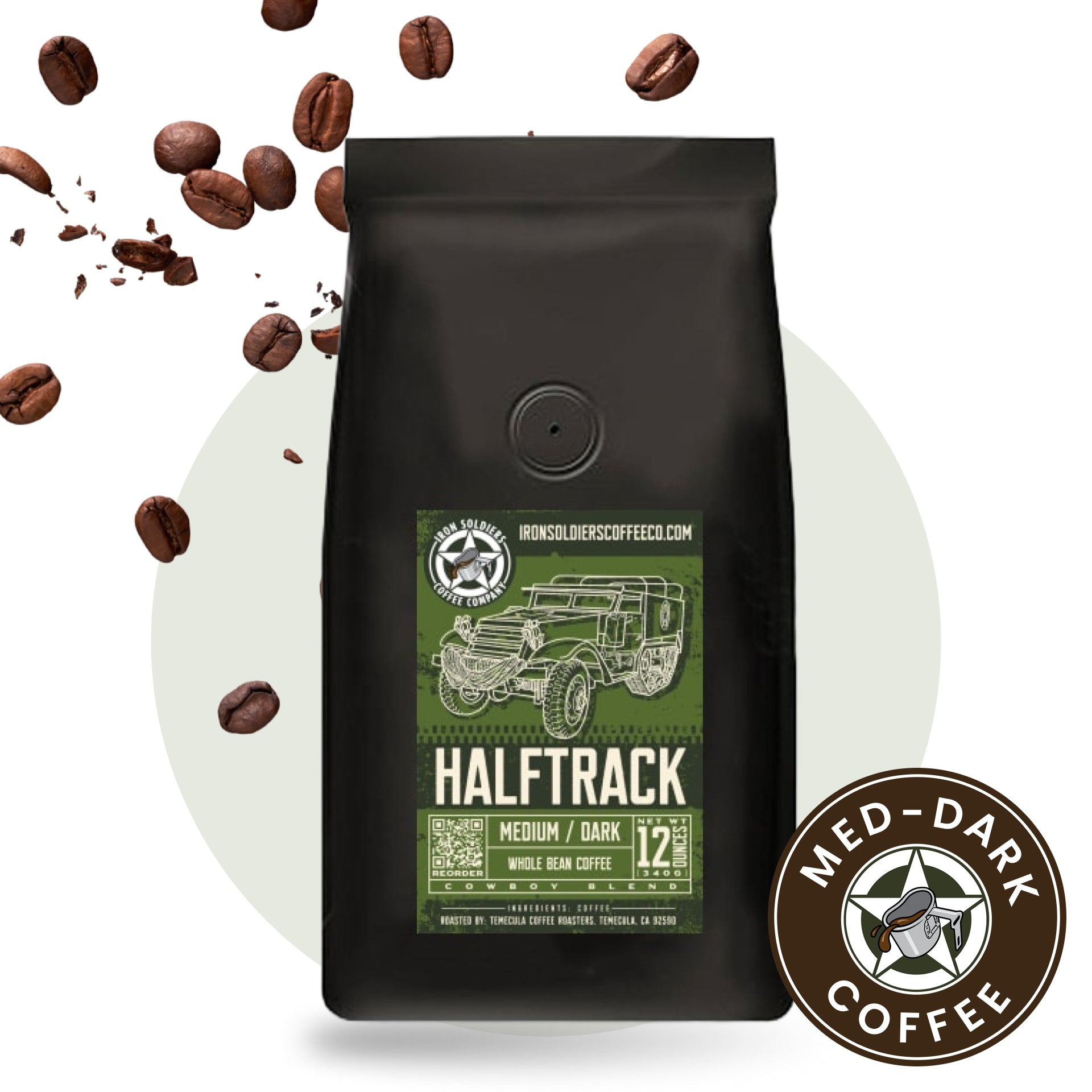
At Iron Soldiers Coffee Company, we print roast dates because a pour over rewards beans at their best. Buy within two to four weeks of roasting when you can.
How to Spot a Truly Fresh Bag
Check the bag before you check the price:
- A printed roast date, not just a best-by stamp
- A one-way degassing valve on the front
- Whole beans, since pre-ground coffee loses aroma fast
- A roaster name you can trace to a real operation
No roast date means no purchase. Simple as that.
Step 2: Match the Roast Level to Your Pour Over Setup
Roast level decides how your pour over tastes and how forgiving it is. Light roasts reward precision. Dark roasts forgive sloppy technique. Medium sits between and suits most kitchens.
Here is how the three compare in the cup:
| Roast Level | Flavor Profile | Best For | Brew Difficulty |
|---|---|---|---|
| Light | Floral, citrus, tea-like | Precise brewers chasing acidity | High |
| Medium | Balanced, sweet, chocolate | Everyday pour over | Moderate |
| Dark | Bold, smoky, bittersweet | Strong morning cups | Low |
Light, Medium, and Dark Roast Compared
Light roasts keep more of the bean's origin character. You taste the coffee cherry, the varietal, the altitude. They also punish bad grind and cool water.
Dark roasts taste of the roast itself: cocoa, smoke, caramelized sugar.
Step 3: Pick the Best Grind Size for Pour Over
The best grind size for pour over lands between medium and medium-fine, close to table salt. Too coarse and water races through, leaving sour, weak coffee. Too fine and the bed clogs, giving you bitter, muddy cups.
Pro Tip
Grind right before you brew. Ground coffee starts losing aroma within minutes, so a $30 hand burr grinder beats a $200 machine grinding yesterday's beans.
Step 4: Choose Single-Origin Beans That Fit Your Flavor Profile
Single-origin coffee comes from one growing region, which lets you taste what that place does well. A washed Colombia tastes clean and bright. A natural Ethiopia leans fruity and wild. Blends smooth out those edges, but single-origin teaches you what you actually like.
Pick by flavor, not by label hype:
- Want citrus and floral notes? Try a washed light roast.
- Want chocolate and nuts? Look at medium roasts from Latin America.
- Want big fruit? Go natural process.
Washed vs. Natural Process
Washed process removes the fruit before drying. The result is clean flavor, clear acidity, and a predictable cup.
Step 5: Understand Degassing and the Bloom Phase
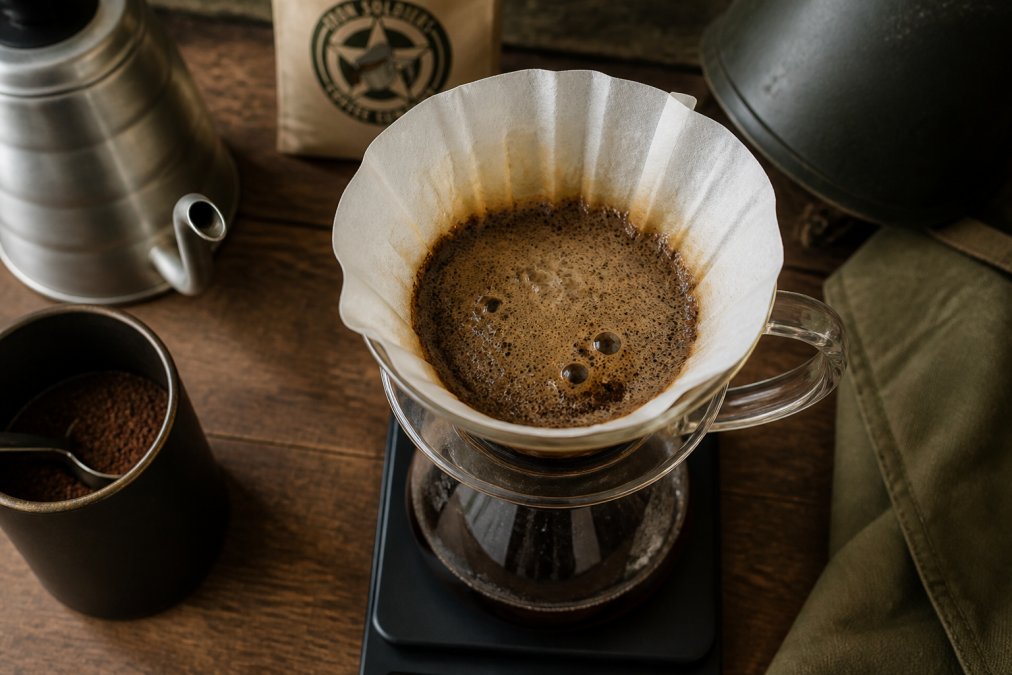
Degassing is the release of carbon dioxide trapped inside beans after roasting. Fresh beans hold gas, and that gas fights water during brewing. The bloom, that bubbling swell when hot water first hits the grounds, is degassing you can watch. If you brew too soon, the gas pushes water away from the grounds and you get a sharp, foamy, under-extracted cup.
Rest Periods by Roast Level
Fresh-off-the-roaster coffee is not ready for the pour over. It needs a rest period, sometimes called a degassing window, before it brews at its best. The darker the roast, the faster the gas leaves. The lighter the roast, the longer the beans hold it.
| Roast Level | Rest Period Before First Pour | Peak Window | Bloom Behavior |
|---|---|---|---|
| Dark | 3 to 5 days | 5 to 14 days | Small, fast bloom |
| Medium | 5 to 10 days | 10 to 21 days | Moderate, steady bloom |
| Light | 10 to 14 days | 14 to 28 days | Large, slow bloom |
How to Read the Bloom Like a Field Report
- A vigorous bloom with a thick dome means the beans are still gassy. Give them another day or two.
- A moderate bloom that settles within 30 seconds means the beans are in the zone.
- A weak bloom with little movement means the beans have degassed past their peak. Brew them soon or move them to cold brew.
Watch Out
Brewing beans the day they were roasted gives you a flat, foamy, under-extracted cup. Rest medium roasts at least five days before your first pour. Rest light roasts at least ten.
Why the Bloom Matters for Pour Over
Pour over depends on even water contact. If gas is still escaping, water channels through the bed instead of saturating every particle. That channeling leaves some grounds under-extracted and others over-extracted, which is why a too-fresh cup tastes both sour and bitter at once. The bloom is not a ritual. It is a controlled release of pressure before the main assault.
Fresh Roasted Coffee vs Grocery Store Coffee: What Changes in the Cup
The gap between fresh roasted coffee vs grocery store coffee shows up in aroma, sweetness, and body. Fresh beans smell alive when you open the bag. Stale beans smell like cardboard.
Step 6: Nail Your Brew Ratio and Water Temperature
A solid starting brew ratio is 1:16, one gram of coffee to sixteen grams of water. That lands near 22 grams of coffee and 350 grams of water for a single mug. Stronger palates push toward 1:14. Lighter cups stretch to 1:18. Pick one ratio, brew it three times, then adjust by one step. Changing ratio and grind at the same time muddies your read on what actually improved the cup.
Water Chemistry: The Hidden Variable
Most guides stop at temperature. Water chemistry is where fresh beans either sing or stall. Coffee is roughly 98 percent water, so the minerals in that water decide how much flavor you extract.
Two minerals matter most:
- Magnesium binds to fruity and bright acids. It pulls out the citrus, berry, and floral notes that fresh light roasts are prized for.
- Calcium adds body and sweetness but can mute acidity if it dominates.
- Bicarbonate acts as a buffer. Too much and it flattens acidity, leaving a chalky, dull cup. Too little and the cup tastes sharp and hollow.
A Practical Water Plan
- Start with filtered tap water. Brew a cup. Note the brightness and body.
- If the cup tastes flat or chalky, the water is likely too hard. Switch to a lower-mineral bottled water or a mix of filtered and distilled.
- If the cup tastes sharp and thin, the water is likely too soft. Add a small amount of mineral-rich water or use a brewing water packet designed for coffee.
- Keep the change small. Water adjustments are fine tuning, not a rebuild.
Key Takeaway
Lock in three numbers: 1:16 ratio, 200°F water, and a 30-second bloom. Then treat water chemistry as your fourth variable. Fresh light roasts reward good water more than any other bean.
Why This Matters for Fresh Beans
Fresh light roasts carry delicate acids that degrade quickly. If your water lacks the minerals to extract those acids, you lose the very flavors you paid for. If your water has too much bicarbonate, it neutralizes them. Matching water to bean is the step most brewers skip, and it is the step that separates a good cup from a great one.
Common Mistakes to Avoid When Selecting Beans
Most bad pour over starts at the bag, not the brewer. Here are the traps that catch new brewers:
- Buying by best-by date instead of roast date
- Choosing pre-ground coffee for a method that needs fresh grind
- Brewing beans the same day they were roasted
- Storing beans in the fridge, where moisture and odors creep in
- Chasing dark roast for caffeine, when roast level barely changes it
Frequently Asked Questions
Which coffee roast is best for pour over?
Medium roasts work best for most pour-over setups. They balance sweetness, acidity, and body without the oiliness that can clog paper filters. Light roasts highlight floral and citrus notes but need a finer grind and higher water temperature to extract properly. Dark roasts can taste bitter and ashy in a pour over because the beans are already roasted past the point where bright flavors survive. A medium roast single-origin like a Colombian or Guatemalan gives you the most room to dial in your technique.
How can you tell if coffee beans are truly fresh roasted?
Check the roast date printed on the bag, not the best-by date. Fresh roasted coffee is typically at its peak 4 to 14 days after roasting. Bags with only a best-by date usually sit on shelves for months. You can also look at the beans: fresh beans have a matte surface and smell vivid when you open the bag. If the beans are shiny with oil and smell flat or papery, they have been sitting a while. Buy from roasters who print the actual roast date.
What grind size should I use for pour over coffee?
A medium-fine grind, similar to table salt, is the standard starting point for pour over. If your brew drains too fast and tastes weak or sour, go finer. If it stalls and tastes bitter or dry, go coarser. The best grind size for pour over depends on your dripper, filter type, and water temperature, so treat the starting point as a baseline and adjust one variable at a time. A burr grinder gives you consistent particle size, which matters more than the exact setting.
Does the origin of the bean matter for pour over brewing?
Yes. Origin shapes acidity, sweetness, and body in ways that survive brewing. A Colombian coffee often brings dried orange, berry, and chocolate notes with a balanced body. A Guatemalan natural leans toward dark chocolate, fruit, and butterscotch. A Peruvian coffee can deliver salted caramel and citrus. The pour-over method rewards clarity, so single-origin beans from high-altitude farms tend to show more distinct flavor than blends. Try a few origins side by side to find what suits your palate.