Are Caffeine-Free Loose Leaf Teas Right for Bedtime?
Quick Summary
Yes, a caffeine-free loose leaf tea can suit a bedtime routine, because herbal blends built from rooibos, fruit, flowers and peel carry no stimulant. It is a sensible choice for a calm evening, though it is not a guaranteed sleep aid. Brew at the right temperature and steep time to keep the cup smooth.
- Caffeine is a stimulant that can interfere with sleep and linger for several hours.
- Apple Cider Rooibos offers a warm, spiced cup for cozy evenings.
- Peach Paradise and Mango Treat are fruit-forward options that also work iced.
- Start with 2.5g to 3g of leaf per 12oz of water and adjust to taste.
- Talk with a doctor before using herbal products if you take other medicines.
Want a caffeine-free evening cup?Iron Soldiers Coffee Company offers caffeine-free loose leaf teas, with $1 from every bag sold donated to a volunteer-only veterans nonprofit.
Shop Loose Leaf Teas
Table of Contents
- Why Caffeine-Free Loose Leaf Tea Makes Sense at Night
- Comparing the Iron Soldiers Caffeine-Free Blends
- Caffeine-Free Sleep Tea Ingredients and Who Should Use Caution
- How to Brew Loose Leaf Tea for the Evening Cup
- How Long Before Bed to Drink Tea
- Choosing Your Evening Blend and Placing Your Order
- Frequently Asked Questions
Are Caffeine-Free Loose Leaf Teas Right for Bedtime?
Last Updated: November 22, 2026
Winding down at night takes discipline, and so does choosing what goes into your cup. A caffeine-free loose leaf tea is the right kind of mission for the evening, but only if you pick the right blend and brew it correctly. At Iron Soldiers Coffee Company, we have spent time looking at which herbal blends hold up after dark, and where the trade-offs lie.
Why Caffeine-Free Loose Leaf Tea Makes Sense at Night
Caffeine is the first thing to check. FDA guidance on caffeine intake and its effects notes that caffeine is a stimulant that can interfere with sleep, and it can linger in the body for several hours after a single cup. A caffeine-free herbal infusion removes that variable.
That is the core appeal. Herbal blends built from rooibos, fruit, flowers and peel carry no stimulant, so an evening cup will not work against you. Expectations matter, though. A caffeine-free tea is a sensible choice for a calm routine, not a guaranteed sleep aid.
Comparing the Iron Soldiers Caffeine-Free Blends
Several of our loose leaf teas are naturally caffeine-free, which makes them suitable candidates for the evening. Each one takes a different approach to flavor, so the right pick depends on what you enjoy before bed.

Our current caffeine-free loose leaf options are priced at $18.99 each.
Apple Cider Rooibos for Warm, Spiced Evenings
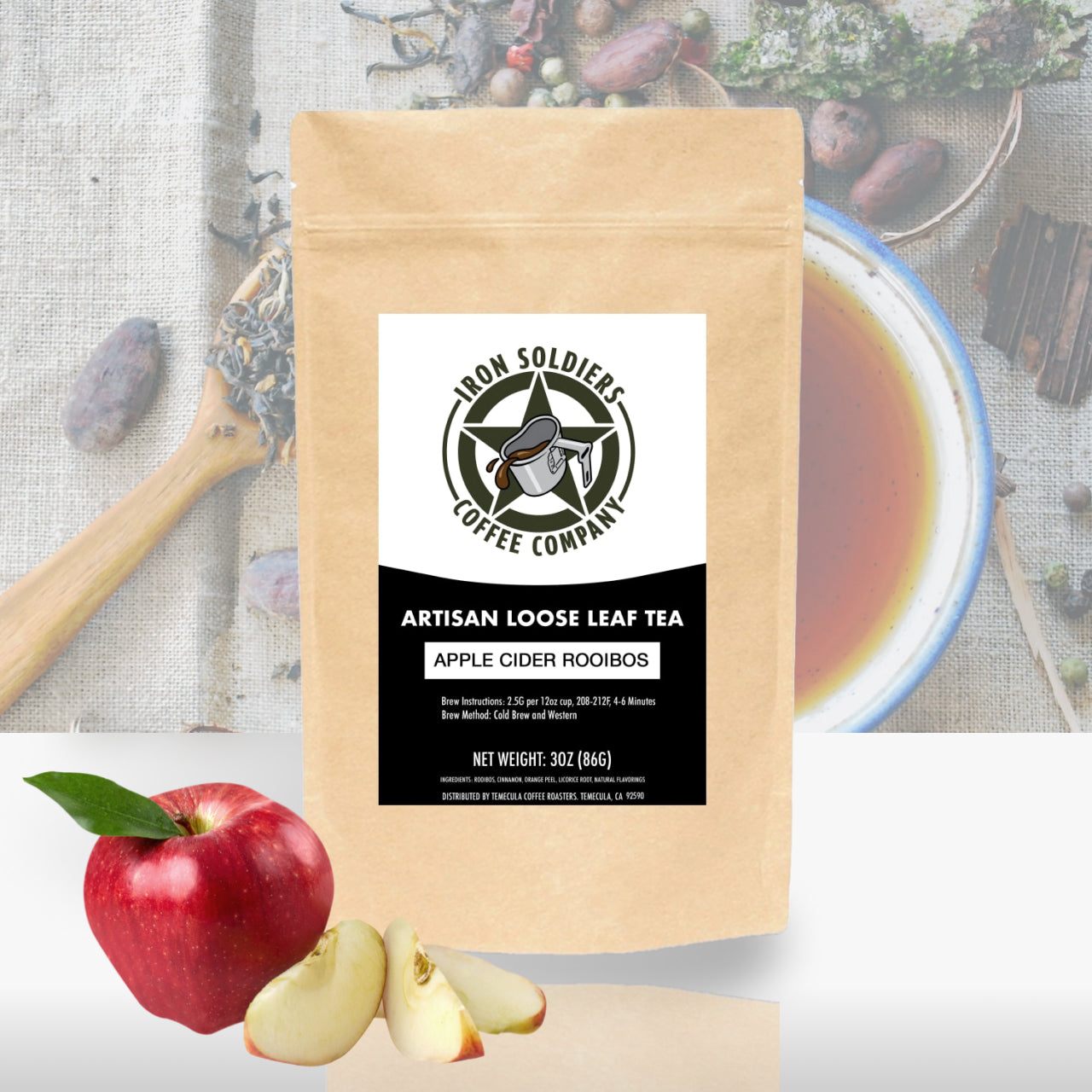
If you want something that feels like a cozy night in, Apple Cider Rooibos is our strongest evening pick. The rooibos base is caffeine-free, and cinnamon and orange peel give it a warm, spiced character.
Pros: Warm, comforting flavor. Caffeine-free. Cons: The spice profile is bold, so it may not suit someone who prefers a light, delicate tea.
Best for: Drinkers who want a warm, spiced cup to close out the day. Skip if: You prefer gentle floral or fruit flavors.
Explore the full blend on the Apple Cider Rooibos product page before deciding.
Peach Paradise and Mango Treat for a Lighter Finish
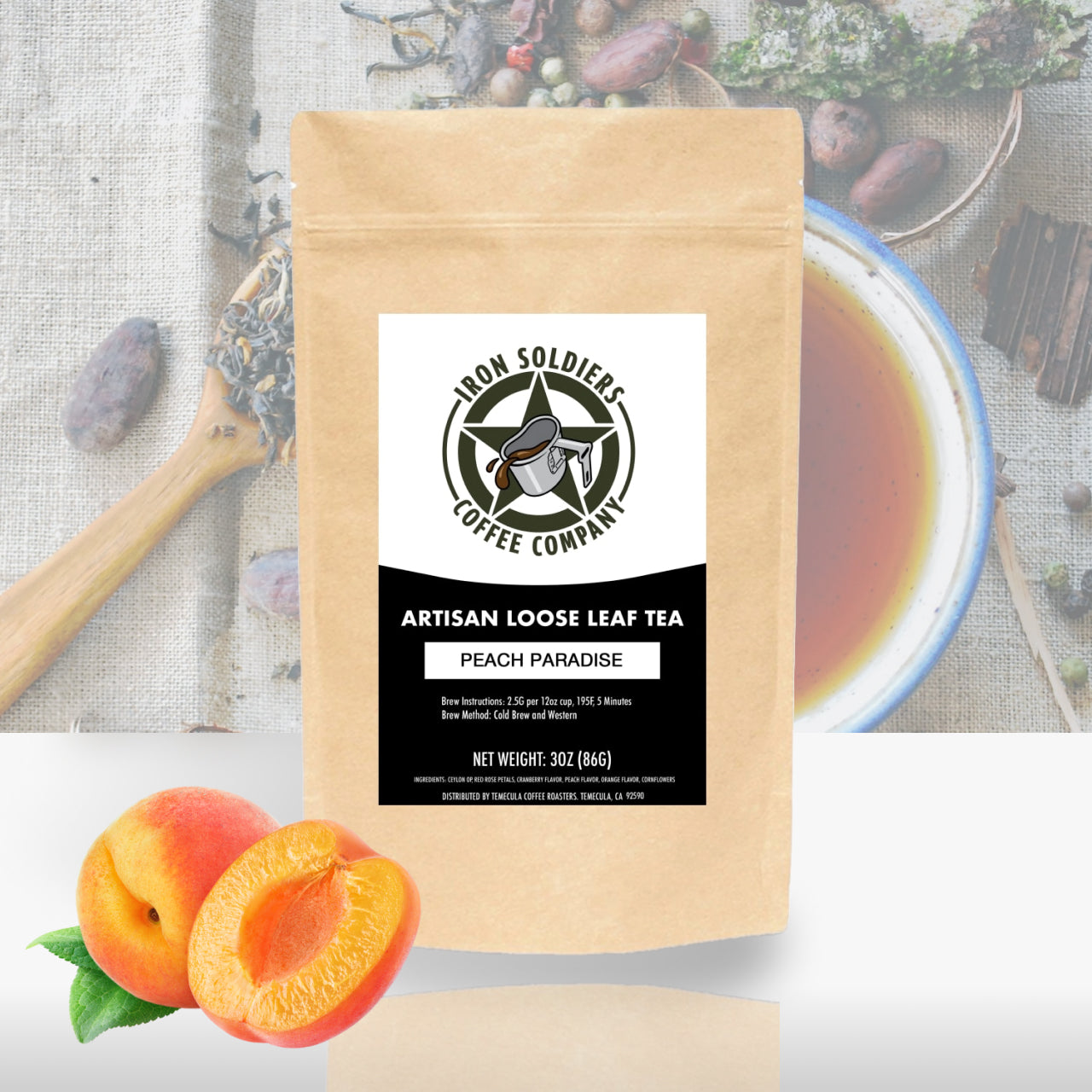
For a lighter finish, Peach Paradise and Mango Treat are the fruit-forward options. Peach Paradise brings ripe peach, sour cranberry and rose, while Mango Treat offers a sweet, smooth mango note. Both are caffeine-free and work hot or iced.
Pros: Bright, fruity flavor. Caffeine-free. Works hot or iced. Cons: Fruit-led blends taste sweeter and lighter than a traditional evening tea.
Best for: Anyone who wants a fruity cup that still fits a late-night routine. Skip if: You want a deep, grounding flavor.
You can compare the Peach Paradise blend and the Mango Treat blend side by side on their product pages.
Here is how the caffeine-free options stack up at a glance, so you can match a blend to your evening.
| Blend | Best for | Key difference |
|---|---|---|
| Apple Cider Rooibos | Warm, spiced evenings | Cinnamon and orange peel give a bold spice profile |
| Peach Paradise | A lighter finish | Ripe peach, sour cranberry and rose; works hot or iced |
| Mango Treat | A fruity late-night cup | Sweet, smooth mango note; works hot or iced |
Caffeine-Free Sleep Tea Ingredients and Who Should Use Caution
"Caffeine-free" does not automatically mean "sleep aid," so it pays to read the ingredient list before you buy.
What the common sleep herbs actually are
Most bedtime blends draw from a short roster of traditional ingredients.
Traditional use versus clinical evidence
This is where expectations need calibration.
Watch out: if you are dealing with persistent sleeplessness, a tea is not a substitute for a conversation with a healthcare professional.
Reading an ingredient list like a label check
Before you buy any bedtime blend, read the full ingredient list rather than the front-of-package claims. Look for the base ingredient first, then the flavoring components, then any added herbs. A blend that leads with rooibos or fruit will taste different from one that leads with valerian, and the two serve different expectations.
Who should use caution
Herbal ingredients can interact with medications and are not automatically appropriate for everyone. NIH National Center for Complementary and Integrative Health guidance on herbal supplements recommends talking with a doctor before using herbal products if you take other medicines. That advice is a sensible baseline.
- Pregnancy and nursing: check with a provider before trying any herbal blend, including familiar ones like chamomile.
- Prescription medication: some herbs can affect how medicines are processed; ask a pharmacist or doctor.
- Known allergies: plant allergies, especially to the daisy family, can extend to chamomile and similar herbs.
- Sensitivity to strong herbs: valerian in particular has a strong earthy aroma and taste that some drinkers find unpleasant.
How to Brew Loose Leaf Tea for the Evening Cup
Brewing is the part of the evening cup you actually control, and small adjustments change the result more than most drinkers expect. For a step-by-step walkthrough, see our detailed guide to steeping loose leaf tea. The goal is a cup that tastes full without turning sharp or bitter, and that you can repeat night after night.
The four variables that matter
Every loose leaf brew comes down to four settings: the tea-to-water ratio, the water temperature, the steep time, and the leaf size. Change one at a time and you can dial in a blend to your taste.
- Ratio: a common starting point is 2.5g to 3g of leaf per 12oz of water. More leaf means more body and more flavor; less leaf means a lighter cup.
- Temperature: rooibos and hibiscus blends stand up to a full boil at 212°F. Lighter leaf, such as jasmine, does better at 175°F, where it releases aroma without turning bitter.
- Steep time: start at the low end of the range and taste as you go.
- Leaf size: finer leaf extracts faster, so a broken-leaf blend may need less time than a whole-leaf one at the same ratio.
Our blend-by-blend brew guidance
Use these as starting points, then adjust to your own taste:
- Apple Cider Rooibos: 2.5g to 3g per 12oz of water, steeped 5 to 6 minutes at 212°F.
- Peach Paradise: 2.5g to 3g per 12oz of water, steeped 5 minutes at 195°F to 212°F.
- Mango Treat: 2.5g to 3g per 12oz of water, steeped 5 to 10 minutes at 195°F to 212°F.
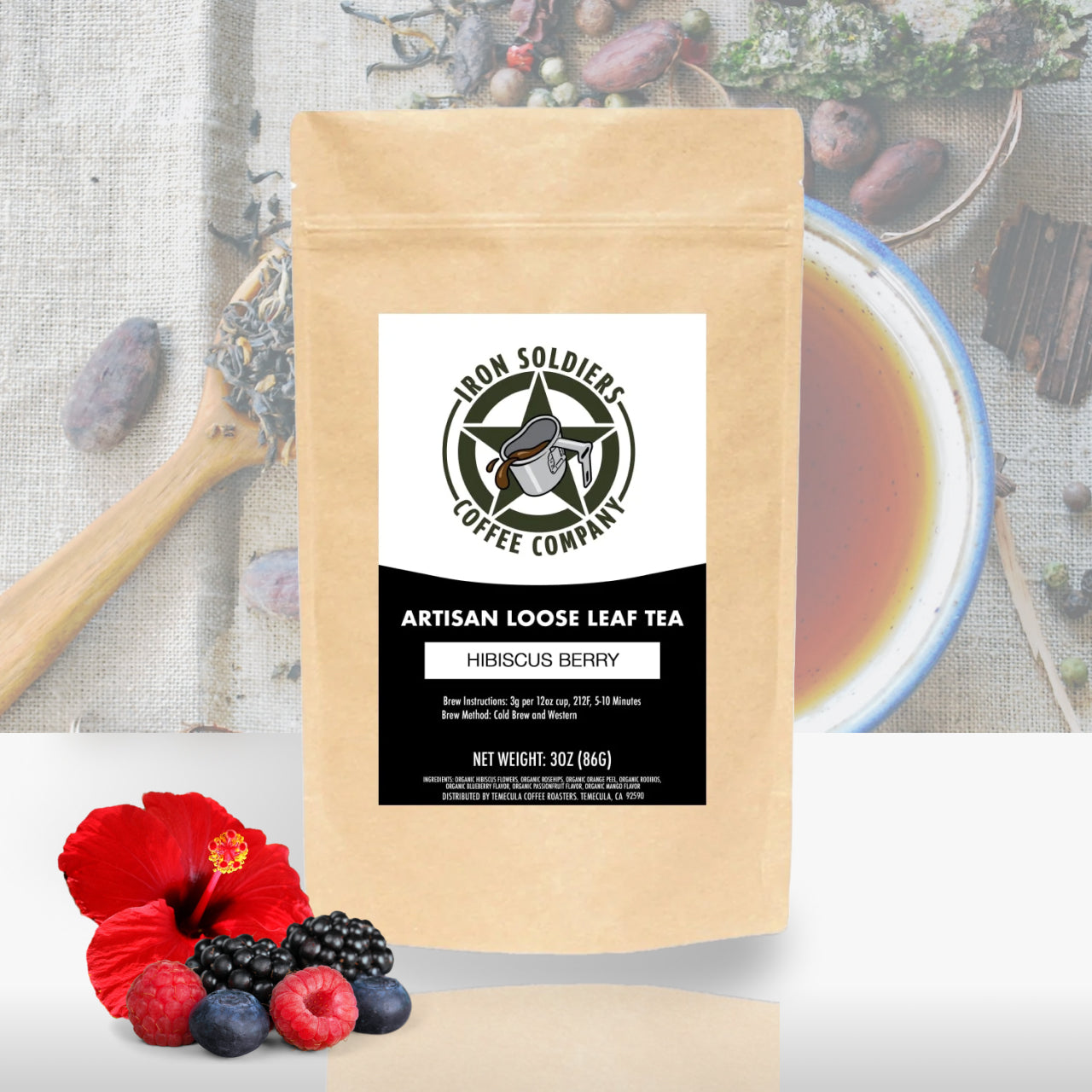
- Hibiscus Berry Rooibos Tea: 3g per 12oz of water, steeped 5 to 10 minutes at 212°F.
- Jasmine: 3g per 12oz of water, steeped 4 to 6 minutes at 175°F.
How to adjust strength without ruining the cup
For a lighter evening cup, use the low end of the ratio and the short end of the time range. For a fuller cup, increase the leaf by half a gram at a time until it suits you.
Equipment and storage
A simple infuser basket or a teapot with a strainer is enough; you do not need specialty gear.
Brewing as part of the wind-down
The brewing itself is part of the routine. Boiling the water, measuring the leaf, and waiting through the steep gives you a built-in pause before bed.
How Long Before Bed to Drink Tea
Timing is a practical question, and the answer depends on your own sleep.
Pair the tea with a consistent wind-down routine: dim the lights, put screens away, and keep the room cool. A tea ritual works best as one habit within that routine, not as the whole plan.
Choosing Your Evening Blend and Placing Your Order
Start with taste. Choose spiced if you want warmth, fruit if you want brightness, and a floral or green option if you prefer something delicate. Our Jasmine and Moroccan Mint blends offer a different profile, and the Loose Leaf Tea collection lets you compare the full range.
Once you have a favorite, order a single tin first, then try it over a few evenings to see whether it fits your routine.
Frequently Asked Questions
What is the best caffeine-free loose leaf tea for bedtime?
For many evening drinkers, a caffeine-free rooibos blend is a good starting point. Apple Cider Rooibos from Iron Soldiers Coffee Company is naturally caffeine-free and carries warm cinnamon and orange peel notes that suit a quiet evening. It is listed at $18.99 and brews at 212°F for 5 to 6 minutes using 2.5g to 3g per 12oz of water. Readers who prefer a lighter, fruitier cup may prefer Peach Paradise, which is also listed at $18.99. Choose by taste first, since the best bedtime tea is one you will actually enjoy drinking.
Which loose leaf teas are naturally caffeine-free?
Rooibos and most herbal infusions contain no caffeine because they are not made from the Camellia sinensis tea plant. Iron Soldiers' Apple Cider Rooibos, Hibiscus Berry Rooibos Tea, and Peach Paradise are each listed as caffeine-free. Jasmine is a green tea, and Hojicha is listed with a lower caffeine content. Check each product listing before buying, because a blend can be sold as herbal yet still combined with true tea leaves.
Does caffeine-free tea mean the same thing as decaffeinated tea?
No. Caffeine-free teas, such as rooibos and most herbal blends, never contained caffeine because their plant source does not produce it. Decaffeinated tea begins as a caffeinated tea that has been processed to remove most of its caffeine, so trace amounts can remain. For a cup you plan to drink close to bedtime, a naturally caffeine-free herbal or rooibos blend avoids that uncertainty.
How long before bed should you drink herbal tea?
Most people find that a warm cup about 30 to 45 minutes before bed works well as part of a wind-down routine. Drinking a large volume right before lying down can lead to a middle-of-the-night bathroom trip, so keep the serving moderate. Brew at a steady pace, sip slowly, and pair the cup with dimmed lights and a screen-free hour for the most consistent evening routine.