Are Decaf Coffee Pods Worth It for Lower Caffeine Intake?
Last Updated: November 19, 2026
Quick Summary
Decaf coffee pods are single-serve capsules packed with decaffeinated coffee, designed for pod brewing machines so you can pour a lower-caffeine cup without measuring, grinding, or guesswork. They keep the taste, warmth, and routine while cutting most of the stimulant, and a fixed pod portion gives you a clean, repeatable serving every time.
- Decaffeination removes most caffeine from green beans before roasting, but not all of it.
- The same decaf pod brewed as a large cup carries more residual caffeine than a short shot.
- Swap your afternoon cup for a decaf pod first and hold that step for seven days.
- Check the label for a named decaffeination method, roast level, and freshness date.
- A mild headache or fatigue dip in the first days of each step means slow the pace.
Ready to cut caffeine without losing the ritual?Fresh-roasted decaf and specialty coffee, with $1 from every bag supporting veterans and their families.
Shop Decaf Pods
Table of Contents
- Why Decaf Coffee Pods Make Sense for Lower Caffeine Intake
- Caffeine in Decaf Coffee Pods: What the Numbers Really Say
- How to Gradually Reduce Caffeine Intake with Decaf Coffee
- Best Decaf Coffee Pods for Lower Caffeine Intake: What to Check First
- Decaffeinated Coffee Side Effects: What to Expect
- Decaf Pods vs. Tea, Cola, and Regular Coffee
- Loading Your Rucksack: Picking Your First Decaf Pod
- Frequently Asked Questions
Why Decaf Coffee Pods Make Sense for Lower Caffeine Intake
Decaf coffee pods are single-serve capsules packed with decaffeinated coffee, designed for pod brewing machines so you can pour a lower-caffeine cup without measuring, grinding, or guesswork. At Iron Soldiers Coffee Company, we see the same pattern in our inbox: readers love the ritual of a daily brew but want to dial back the jolt. Pods make that switch simple because the portion is fixed before you ever press the button.
The case for switching is straightforward. You keep the taste, the warmth, and the routine. You cut most of the stimulant. And unlike a vague promise to "drink less coffee," a pod forces a clean, repeatable serving every single time.
FDA guidance on caffeine and how much is too much
What Decaffeination Actually Removes
Decaffeination removes most of the caffeine from green coffee beans before roasting, not all of it. The process typically strips the majority of the stimulant while leaving the bean's oils and flavor compounds largely intact. Most decaf is processed before the roast, which is why a good decaf still tastes like coffee rather than hot brown water.
The method matters. The Swiss Water Process is one example of a water-based method that draws caffeine out of the bean without chemical solvents. Check a decaf label for the decaffeination method it uses.
Caffeine in Decaf Coffee Pods: What the Numbers Really Say
Caffeine in decaf coffee pods is not zero, and any brand that claims otherwise is overselling. Decaf is legally defined as coffee with most of its caffeine removed, but a small residual amount remains. The exact figure depends on the bean, the decaffeination method, the pod format, and how the pod is brewed. Treat decaf as a low-caffeine drink, not a caffeine-free one, if you are highly sensitive, the difference between one pod and two still matters.
Residual Caffeine by Pod, Brew Size, and Machine
General per-cup estimates mislead pod users because the pod is fixed but the brew is not. The same pod run as a small concentrated shot and as a large mug delivers different total caffeine, since more water extracts more of everything left in the grounds. A practical way to think about it:
- Small concentrated brew (roughly 1-2 oz): lowest total caffeine per serving; flavor is dense and the dose is small.
- Standard cup (roughly 6-8 oz): the common pod setting; moderate residual caffeine.
- Large-cup setting (roughly 10-12 oz): more water through the same pod; higher total caffeine even though the cup tastes weaker.
- "Strong" or "bold" setting: usually slows flow rather than adding water, concentrating flavor and keeping total caffeine closer to a standard cup.
A common pattern is that a decaf pod brewed as a large cup can carry noticeably more residual caffeine than the same pod pulled as a short shot. If you are tapering, match your brew size to your target dose before you change pods.
How to Verify Caffeine Claims on Pod Packaging
Labels use terms loosely, so read them like a quartermaster reads a manifest:
- "Decaf" or "decaffeinated": most caffeine removed, but residual remains.
- "Low caffeine" or "reduced caffeine": often partially decaffeinated; residual can be higher than full decaf.
- "Caffeine-free" or "zero caffeine": treat with suspicion for coffee; even decaf carries trace amounts.
Look for a stated decaffeination method (water process is a strong signal), a roast level, and a freshness date. If a pod gives no method and no caffeine figure, assume standard decaf residual and brew a smaller cup until you know how you respond.
FDA guidance on caffeine and how much is too much
Watch out: a large-cup setting on a partially decaffeinated pod can push a single serving close to the caffeine of a small regular cup, measure your actual brew before you trust the label.
How to Gradually Reduce Caffeine Intake with Decaf Coffee
The safest way to cut caffeine is a gradual taper, not a cold stop. Dropping caffeine abruptly can bring headaches, fatigue, and irritability for a few days. A slow swap lets your body adjust while you keep the ritual you enjoy. A step-down of one serving at a time, held for about a week, is often easier to sustain than a fast cut.
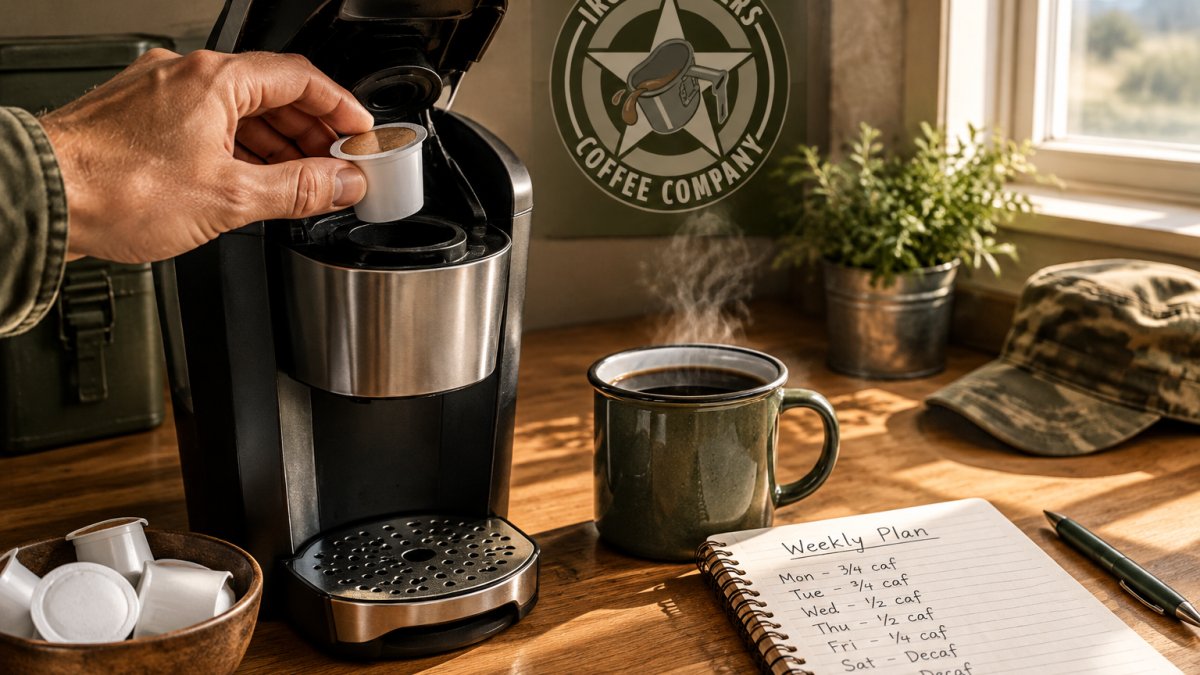
A Four-Week Pod Taper Plan
Start by logging your current intake: how many pods, what time, and what brew size. Then step down one serving at a time.
- Week 1: Swap your afternoon or late-day cup for a decaf pod. Keep the morning cup regular. Hold this for seven days.
- Week 2: Swap a second cup. If you drink three or more, choose the one after lunch. Keep the morning cup regular.
- Week 3: Make your morning cup a 50/50 blend of regular and decaf pods, or alternate days. Keep the afternoon cups decaf.
- Week 4: Move fully to decaf pods, or hold at one regular cup if that is your target.
Tracking and Adjusting the Taper
Use a simple log: date, pod type (regular, decaf, or blend), brew size, time of day, and how you felt. A mild headache or fatigue dip in the first few days of each step is possible; if it hits, slow the pace rather than pushing through. If you feel fine after a week, take the next step. If you feel worse, hold the current step another week before advancing.
Watch out: swapping the morning cup first may increase withdrawal symptoms for heavy drinkers, start with the cup you miss least, usually the late-day one.
If sleep is your main concern, our guide on whether caffeine timing really affects your sleep breaks down how late-day caffeine works against you.
Best Decaf Coffee Pods for Lower Caffeine Intake: What to Check First
The best decaf coffee pods for lower caffeine intake are the ones that tell you how they were decaffeinated, what bean they use, and how they are roasted, then back it up with a consistent grind and a compatible pod format. Skip any pod that stays vague about its process.
Run this checklist before you buy:
- Decaffeination method named on the label (water process is a strong signal)
- Single origin or clearly stated blend
- Roast level listed (medium and dark tend to hold flavor better in decaf)
- Pod compatibility confirmed for your machine
- Freshness date, not just a "best by" stamped years out
- Caffeine claim stated as "low" or "reduced," never "zero"
Our own Peru Decaf checks every box: a medium roast single origin from the Piura and Amazonas highlands, Swiss Water Process decaffeinated, with notes of salted caramel, silky sweetness, and a touch of citrus.
Decaffeinated Coffee Side Effects: What to Expect
Decaffeinated coffee side effects are usually tied to the switch itself. Some readers notice a withdrawal headache in the first few days as their body adjusts to less caffeine, and fatigue can follow, especially for heavy drinkers.
Some people notice a slightly different flavor after switching to decaf. If you are sensitive to caffeine, decaf is a gentler option, but it is not a free pass to drink it all evening.
Decaf Pods vs. Tea, Cola, and Regular Coffee
Decaf pods sit in a useful middle ground. Regular coffee delivers the full jolt. Green tea lands lower and gentler. Cola carries a modest dose with sugar alongside it. Decaf pods give you the coffee experience with the stimulant mostly stripped out.
| Drink | Relative Caffeine | Best For |
|---|---|---|
| Regular coffee | High | Morning focus, shift work |
| Decaf coffee pod | Low | Evening cups, sensitivity |
| Green tea | Low to moderate | Gentle daytime lift |
| Cola | Low to moderate | Occasional treat |
If you want a decaf option outside coffee, our Masala Chai gives you a spiced, tea-based alternative to weigh against pods.
Loading Your Rucksack: Picking Your First Decaf Pod
Picking your first decaf pod comes down to three questions: how you brew, how you take it, and how much you want to spend. Answer those and the field narrows fast.
Start with compatibility. Confirm the pod fits your machine before anything else. Then match the roast to your taste: medium if you like balance, dark if you want a heavier cup. Finally, check the decaf method, because that is where flavor lives or dies.
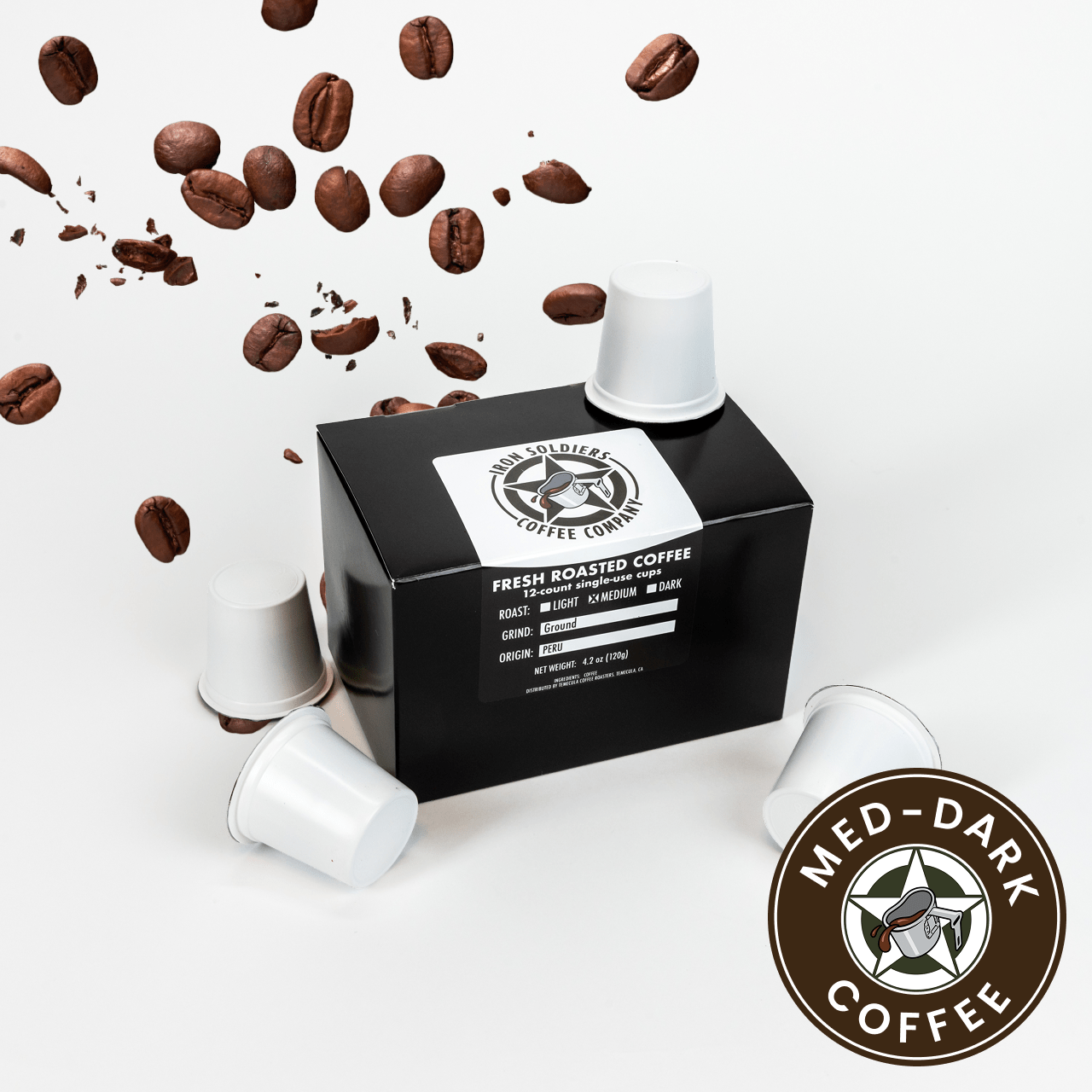
For a first order, our Peru Coffee Pods are a clean starting point, and if you are tapering, pair them with our notes on single origin coffee for morning focus so your regular cup still earns its place.
Cutting caffeine does not mean giving up the brew you love. It means choosing a pod that respects the ritual and the mission behind it. Iron Soldiers Coffee Company roasts fresh coffee with a purpose, and $1 from every bag sold goes to a volunteer-only nonprofit supporting veterans and their families. Explore blends, single origins, and flavored roasts, and make your next cup count for something. Get started with Iron Soldiers Coffee Company and brew a cup that honors the past while you cut back on caffeine.
Frequently Asked Questions
Do decaf coffee pods still contain caffeine?
Yes, in most cases. Decaffeination removes the large majority of caffeine but rarely all of it, so a cup brewed from decaf coffee pods usually carries a small residual amount. The exact figure depends on the pod, the brew size, and the machine. If you are highly caffeine-sensitive, treat decaf as low-caffeine rather than caffeine-free and check whether the packaging states a decaffeination method and any caffeine figure.
How much caffeine is in decaf coffee compared with regular coffee?
Decaf carries a fraction of the caffeine in regular coffee, but the gap varies by bean, roast, and brew strength. A larger brew size from the same pod extracts more caffeine, so a big cup of decaf can land closer to a small cup of regular than you might expect. Track your daily intake in milligrams and compare like-for-like servings rather than assuming all decaf is equal.
What is the downside of decaffeinated coffee?
The main trade-offs are residual caffeine if you are sensitive, a flavor profile that some drinkers find less bold than regular, and the decaffeination method itself, which can affect body and aroma. Water-processed decafs tend to preserve flavor well. Sudden switches can also bring caffeine withdrawal symptoms such as headaches, which is why a gradual taper works better than going cold turkey.
How can I gradually reduce my caffeine intake with decaf coffee?
Blend rather than switch. Brew one regular pod and one decaf pod together, or alternate them through the day, then shift the ratio week by week until you are on decaf only. Keep your total daily intake steady at first so the change is in strength, not volume. A four-week slide from full regular to full decaf gives your body time to adjust and keeps withdrawal manageable.