Is Cold Brew Stronger Than Hot Coffee?
Table of Contents
- Cold Brew vs. Hot-Brewed Coffee: The Strength Showdown
- Understanding Cold Brew Caffeine Content
- How Brewing Temperature Affects Extraction and Strength
- Cold Brew Concentrate Dilution Ratio and Serving Size
- Cold Brew vs. Iced Coffee: Know the Difference
- How Much Caffeine Is Safe Per Day
- Choosing Your Battle-Ready Brew
- Frequently Asked Questions
Last Updated: October 10, 2026
Cold Brew vs. Hot-Brewed Coffee: The Strength Showdown
When we ask whether cold brew is stronger than hot coffee, we're really asking two different questions: caffeine content and perceived strength, and understanding why cold brew stronger matters depends on how you prepare it. At Iron Soldiers Coffee Company, we help our community understand what "stronger" actually means in the cup.
Cold brew concentrate contains more caffeine per ounce than hot-brewed coffee. But strength isn't just about caffeine, it's about extraction method, serving size, and dilution. A shot of cold brew concentrate tastes bold and intense; diluted with water, it tastes smooth and mellow.
The real answer depends on serving size and how you prepare it. A typical 8-ounce cup of hot coffee contains roughly 95-200 milligrams of caffeine. An 8-ounce serving of cold brew (undiluted concentrate) can contain 150-240 milligrams. But most people don't drink cold brew concentrate straight, they dilute it. Once diluted, the caffeine per cup often falls in line with hot coffee.
If you want maximum caffeine in a single serving, cold brew concentrate wins. If you want the smoothest, least acidic cup, cold brew diluted properly is your answer.
Understanding Cold Brew Caffeine Content
Cold brew caffeine content depends on the coffee-to-water ratio and steep time. A typical 1:4 ratio steeped 12-24 hours pulls more caffeine and flavor compounds than hot water can extract in minutes.
The result is a concentrate that's genuinely potent. Many commercial cold brew concentrates deliver 150-240 milligrams of caffeine per 8 ounces before dilution. When you dilute that concentrate with water or milk for drinking, you're reducing the caffeine concentration but keeping it substantial.
Cold brew's strength is consistency. Hot-brewed coffee varies based on brew time, temperature, and grind size. Cold brew extracts steadily over many hours, delivering predictable caffeine, critical when fueling demanding work.
Pro Tip
If you're brewing cold brew at home, use a 1:4 ratio (one part coffee to four parts water) for a concentrate that holds its strength when diluted. This gives you control over the final caffeine content in your cup.
How Brewing Temperature Affects Extraction and Strength
Temperature controls both how fast caffeine dissolves and which compounds dissolve alongside it, the tactical difference between cold brew and hot coffee.
Hot water (195-205°F) extracts 90 percent of caffeine within 3-5 minutes but also pulls tannins and bitter compounds, creating high acidity. For shift workers and those with sensitive stomachs, this acidity creates discomfort despite solid caffeine content.
Cold water (40-50°F) extracts caffeine slowly over 12-24 hours while leaving behind bitter and acidic compounds. The result is high caffeine per ounce with a smoother, less astringent profile, why cold brew tastes "cleaner."
Hot coffee's rapid absorption produces sharp energy spikes and crashes. Cold brew's slower release and lower acidity produce steadier energy and reduce digestive stress during long work hours.
At 200°F, hot water extracts nearly all caffeine within minutes. At 70°F, cold water needs hours to reach the same level. A 12-hour cold steep and 4-minute hot brew yield similar caffeine but different flavor and acidity profiles.
For shift workers, this distinction matters. Hot coffee delivers fast caffeine but may trigger stomach irritation or volatility. Cold brew delivers caffeine gradually with less digestive impact and smoother energy.
Cold Brew Concentrate Dilution Ratio and Serving Size
Cold brew concentrate isn't meant to be drunk straight. Dilution transforms it into a balanced beverage; your dilution ratio determines final caffeine content and flavor.
A standard 1:1 ratio (concentrate to water or milk) creates moderate caffeine and smooth flavor. Use 1:0.75 for stronger, 1:2 for lighter. Each ratio produces different strength from the same concentrate.
The serving size matters just as much. An 8-ounce cup of diluted cold brew might contain 80-100 milligrams of caffeine. A 12-ounce cup of the same dilution contains 120-150 milligrams. A 16-ounce serving pushes toward 160-200 milligrams. You control the final strength through two levers: dilution ratio and cup size.
| Dilution Ratio | Water Added | Caffeine per 8 oz | Best For |
|---|---|---|---|
| 1:0.5 (Concentrate) | Minimal | 150-240 mg | Maximum caffeine, bold taste |
| 1:1 (Standard) | Equal water | 75-120 mg | Balanced strength and flavor |
| 1:2 (Light) | Twice water | 40-60 mg | Smooth cup, lower caffeine |
| 1:3 (Very Light) | Triple water | 25-40 mg | Mild flavor, minimal caffeine |
This flexibility is why cold brew appeals to professionals with varied schedules. On a demanding day, you can make it strong. On a lighter day, you can dilute it more. The same batch of concentrate serves multiple strength preferences.
Cold Brew vs. Iced Coffee: Know the Difference
Cold brew and iced coffee are not the same thing, and this distinction changes the strength conversation entirely. Iced coffee is hot-brewed coffee poured over ice. Cold brew is coffee steeped in cold water for hours. The brewing method is completely different, which affects both caffeine content and flavor.
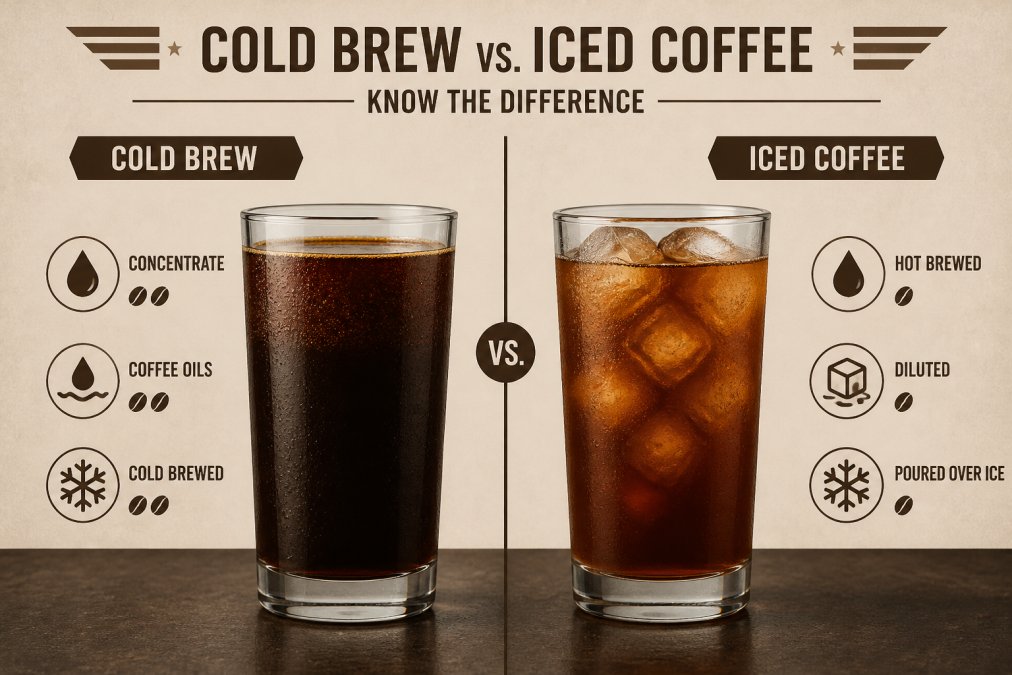
Iced coffee delivers higher caffeine per serving because hot brewing extracts more caffeine faster. A cup of iced coffee (hot coffee over ice) typically contains 95-200 milligrams of caffeine, the same as a hot cup. The ice doesn't change the extraction that already happened. You're just chilling what you already brewed.
Cold brew, steeped for 12-24 hours, extracts differently. The concentrate contains more caffeine per ounce, but you dilute it before drinking. A standard cold brew cup often ends up with similar or slightly lower caffeine than an iced coffee, depending on dilution.
The real difference is taste and stomach impact. Iced coffee tastes sharper and more acidic because hot extraction pulled those compounds. Cold brew tastes smoother and cleaner because cold extraction was gentler. For people with sensitive stomachs, cold brew wins. For people chasing maximum caffeine in a quick drink, iced coffee (made from a strong hot brew) might be the faster choice.
Watch Out
Don't confuse "cold brew" with "iced coffee" when ordering. Ask whether the shop brews cold or pours hot coffee over ice. The caffeine and flavor profiles are distinctly different, and your preference matters.
How Much Caffeine Is Safe Per Day
The Food and Drug Administration establishes 400 milligrams per day as a safe caffeine ceiling for healthy adults.
Body Weight and Sensitivity
Caffeine sensitivity scales with body weight. A 120-pound person and a 200-pound person metabolize the same 8-ounce cup of coffee differently. The lighter individual experiences a stronger effect per milligram consumed.
Timing and Shift Work
When you consume caffeine matters as much as how much. A 200-milligram cup of cold brew at 6 a.m. has a different impact than the same cup at 3 p.m.
For shift workers, especially those rotating between day and night shifts, timing becomes a tactical tool. A cold brew cup early in a night shift can sustain alertness without lingering into the morning sleep window.
Medication and Health Interactions
Certain medications and health conditions lower your safe caffeine threshold. Stimulant medications (prescribed for ADHD or narcolepsy) compound caffeine's effects, reducing your safe limit significantly. Blood pressure medications, some anxiety treatments, and certain heart conditions also interact with caffeine.
Pregnancy and breastfeeding also lower the safe limit to around 200 milligrams per day, according to medical guidance. Adolescents and children should avoid or severely limit caffeine entirely, as their bodies are still developing caffeine tolerance.
Practical Daily Limits
For reference, 400 milligrams typically equals:
- Two to three 8-ounce cups of hot-brewed coffee (95-200 mg per cup)
- Three to four 8-ounce cups of cold brew diluted 1:1 (75-120 mg per cup)
- Four to five 8-ounce cups of weak cold brew diluted 1:2 (40-60 mg per cup)
Most people can safely consume two cups without approaching the daily ceiling. If you're a heavy coffee drinker or rely on caffeine across multiple shifts, tracking your daily intake prevents accidental overdose.
Individual Tolerance and Adjustment
Your caffeine tolerance changes over time. Regular consumption builds tolerance, meaning the same dose produces a weaker effect after weeks or months of daily use. This is why many shift workers find they need stronger or more frequent doses as time goes on.
The safest approach is to start with a known dose, monitor how your body responds, and adjust based on your individual reaction. Cold brew's flexibility, you can dilute it to any strength, makes it easier to dial in your personal safe limit without guessing.
Choosing Your Battle-Ready Brew
So is cold brew stronger than hot coffee? The answer is: it depends on what you mean by stronger. Cold brew concentrate contains more caffeine per ounce. Hot coffee delivers caffeine faster and tastes sharper. A properly diluted cold brew cup often contains similar caffeine to a hot cup, but with a smoother, less acidic profile.
For professionals and shift workers, the choice comes down to what you need from your coffee. If you want maximum caffeine in a single, smooth serving, cold brew concentrate diluted 1:1 is your answer. If you need quick caffeine absorption and don't mind the acidic edge, hot-brewed coffee or iced coffee works faster. If you have a sensitive stomach but still need sustained energy, cold brew's gentle extraction is the tactical advantage.
Iron Soldiers Coffee Company offers single-origin coffees like Colombia, Costa Rica, Guatemala, Mexico, and Peru, all medium roasts that shine in both hot and cold brewing. Each origin delivers distinct flavor notes that change based on your brewing method. Colombia's dried orange and berries come through smooth in cold brew. Guatemala's dark chocolate and butterscotch taste bold whether hot or cold.


The real strength isn't in the caffeine alone. It's in choosing the brew method that fuels your specific mission. Whether you're running long hours on shift work, tackling a demanding project, or simply honoring the tradition of a quality cup, the choice is yours to make.
Your daily coffee ritual deserves more than generic grocery-store beans. Iron Soldiers Coffee Company delivers specialty-grade, fresh-roasted coffee with a mission: every bag supports veterans and their families. Choose Colombia for balanced brightness, Guatemala for bold complexity, or any of our single-origin selections brewed hot or cold. Shop All Coffee and join a community that values quality, history, and those who've served.
Frequently Asked Questions
Is cold brew stronger than hot coffee?
Cold brew is stronger in caffeine concentration per ounce because of its extended steeping time, but a typical serving of hot coffee may contain more total caffeine depending on serving size. A standard 8-ounce cup of hot coffee contains roughly 95-200 mg of caffeine, while the same volume of cold brew concentrate can exceed 150-240 mg. The key difference: cold brew concentrate is meant to be diluted, so how you serve it determines its final strength.
What is the ideal cold brew concentrate dilution ratio?
Most cold brew concentrate works best at a 1:1 or 1:2 ratio of concentrate to water or milk. A 1:1 ratio creates a strong, bold cup similar to espresso, while 1:2 (one part concentrate to two parts liquid) delivers a cup closer to regular drip coffee in strength. Start with 1:2 and adjust based on your preference. For shift workers and those needing sustained energy, a 1:1 ratio with minimal dilution delivers maximum caffeine impact.
How much caffeine is safe per day?
The FDA recommends limiting caffeine intake to 400 mg per day for most healthy adults. That's roughly equivalent to four 8-ounce cups of hot coffee or two to three cups of undiluted cold brew concentrate. Individual tolerance varies; some people metabolize caffeine faster than others. If you're relying on coffee to power through demanding shifts or long hours, track your total daily intake across all sources to stay within safe limits and avoid jitters or sleep disruption.
What's the difference between cold brew and iced coffee?
Cold brew steeps ground coffee in cold water for 12-24 hours, creating a smooth concentrate with naturally low acidity. Iced coffee is hot-brewed coffee that's cooled and poured over ice. Cold brew has higher caffeine concentration and a smoother taste profile, while iced coffee tastes closer to regular hot coffee but dilutes as the ice melts. For sustained energy and stomach-friendly drinking, cold brew wins; for quick preparation, iced coffee is faster.
Does brewing temperature really affect caffeine extraction?
Yes. Hot water extracts caffeine and flavor compounds faster than cold water, which is why hot coffee reaches peak strength in minutes while cold brew requires hours. However, cold water's extended contact time eventually extracts comparable or higher caffeine levels. The trade-off: hot brewing also pulls out more acids and bitter compounds, while cold brewing creates a smoother, less acidic cup, important for those with sensitive stomachs or who drink coffee throughout the day.
Related post
10
Oct


08
Oct