7 Tactics to Choose High Quality Mushroom Extracts
Last Updated: October 26, 2026
Quick Summary
High quality mushroom extracts require a clearly stated extraction method and ratio, third-party testing with a matching batch number, and transparent sourcing information including species identity and beta-glucan content. Verify the lab is independent and accredited, and confirm the material is fruiting body rather than grain-based mycelium whenever possible.
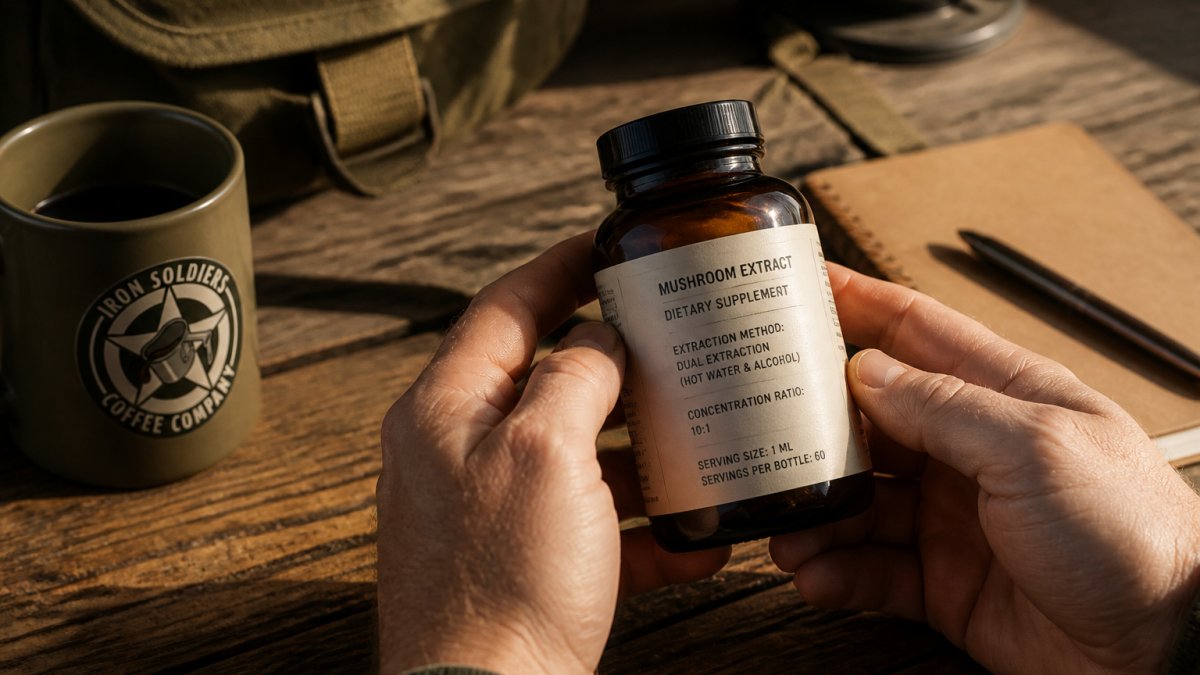
- Check that the extraction method (hot water, alcohol, or dual) and ratio (10:1, 8:1) are clearly displayed on the label.
- Verify the certificate of analysis matches your product's batch number and includes beta-glucan percentage and contaminant screening.
- Confirm the mushroom species is identified by scientific name, not generic terms like mushroom extract.
- Fruiting body extracts contain higher beta-glucan content and active compounds than grain-based mycelium alternatives.
- Avoid products with no third-party testing, in-house lab results only, or vague quality claims.
Table of Contents
- Inspect the Extraction Method and Concentration Ratio
- Understand Fruiting Body Versus Mycelium in Your Extract
- Verify Mushroom Supplement Third-Party Testing Standards
- Decode Beta-Glucans and Active Compounds on the Label
- Compare Mushroom Extract Versus Mushroom Powder for Your Mission
- Assess Mushroom Supplement Safety and Side Effects
- Stock Your Arsenal: Selecting the Right Blend for Your Needs
- Frequently Asked Questions
Inspect the Extraction Method and Concentration Ratio
The extraction method determines what active compounds end up in your mushroom extracts. This is the foundation of quality, and the place where labels most often mislead.
What to look for:
- Extraction method clearly stated (hot water, alcohol, or dual)
- Extraction ratio displayed (10:1, 8:1, or similar) alongside beta-glucan percentage
- Dual extraction noted if applicable
- Solvent named, water and food-grade ethanol are the standard; avoid unlabeled solvent residues
- No vague language like "concentrated" without specifics
Trade-offs to weigh:
- Hot-water-only extracts are excellent for beta-glucans but leave triterpenes behind.
- Alcohol-only extracts capture triterpenes but miss many polysaccharides.
- Dual extracts cost more but cover both, worth it when the species is known for both compound classes.
- Ratio chasing without beta-glucan data is a trap; a high ratio on a low-quality substrate means little.
Iron Soldiers Coffee Company's Mushroom Coffee - Frontline Focus Blend uses specialty-grade coffee paired with Lion's Mane, Cordyceps, and Reishi mushrooms.
Understand Fruiting Body Versus Mycelium in Your Extract
Not all mushroom material is created equal. The fruiting body is the visible mushroom you see above ground. The mycelium is the underground root network that supports growth.
Fruiting body advantages:
- Higher beta-glucan content
- More concentrated active compounds
- No grain filler
- Better value per serving
Mycelium trade-offs:
- Lower active compound concentration
- Often grain-based substrates included
- Cheaper upfront cost
- Less potent results
Verify Mushroom Supplement Third-Party Testing Standards
How to read a certificate of analysis
A COA is only as good as the information it contains. When you open one, check these fields in order:
- Batch or lot number. The COA must match the batch number on the bottle you are holding. A COA for a different lot tells you nothing about your product.
- Identity confirmation. The lab should confirm the species, typically by microscopy, DNA barcoding, or chemical fingerprinting. "Mushroom extract" is not an identity; Hericium erinaceus is.
- Beta-glucan content. This is the potency number that matters most for polysaccharide-rich species. It should be reported as a percentage of the finished extract, not of the raw material.
- Contaminant panel. Look for heavy metals (lead, arsenic, cadmium, mercury), microbial counts (total plate count, yeast and mold, E. coli, Salmonella), and pesticide residues. A serious COA reports actual measured values against established limits, not just a checkmark.
- Testing laboratory name and accreditation. The lab should be independent of the seller and accredited to a recognized standard. An in-house lab result is a marketing document, not a verification.
- Date of analysis. A COA from three years ago does not describe this year's batch.
What transparent sourcing information should include
Testing is only half the story. A producer who will not tell you where the mushroom was grown and how it was handled is hiding something. Look for:
Mushroom Coffee – Frontline Focus Blend (Dark Roast) →
- Country and region of origin for each species
- Whether the material is fruiting body, mycelium, or a blend, and the ratio
- Growing method (wild-harvested, indoor cultivated, log-grown)
- Substrate used, if mycelium is included
- Whether the finished product is tested or only the raw material
Red flags to avoid:
- No third-party testing mentioned
- Lab results available only upon request
- Testing by an in-house lab
- Vague claims about "quality testing"
- No contaminant screening listed
- A COA with no batch number, no lab name, or no measured values
- Beta-glucan claims that appear on the label but not on any COA
Decode Beta-Glucans and Active Compounds on the Label
What to examine:
- Beta-glucan percentage clearly stated
- Specific mushroom species identified
- Polysaccharide content noted
- Other active compounds listed
- Serving size and dosage instructions clear
Compare Mushroom Extract Versus Mushroom Powder for Your Mission
Extract and powder serve different purposes. Understanding the difference helps you choose the right format for your needs.
| Format | Potency | Absorption | Best For | Ease of Use |
|---|---|---|---|---|
| Extract | High concentration | Fast | Maximum efficiency | Mix with water |
| Powder | Lower concentration | Moderate | Whole-food approach | Mix into beverages |
Iron Soldiers Coffee Company offers Mushroom Coffee - Frontline Focus Blend (Dark Roast) and Mushroom Coffee - Frontline Focus Blend (Medium Roast), combining specialty-grade coffee with Lion's Mane, Cordyceps, and Reishi mushrooms.


For detailed guidance on selecting coffee products that match your brewing method, explore How to Choose Coffee Beans for Cold Brew at Home.
Assess Mushroom Supplement Safety and Side Effects
Mushroom supplements are generally well-tolerated, but individual responses vary. Understanding potential side effects helps you use them safely.
Safety considerations:
- Start with lower doses to assess tolerance
- Take with food if digestive sensitivity exists
- Consult a healthcare provider if taking medications
- Avoid if pregnant, nursing, or allergic to mushrooms
- Purchase from third-party tested sources only
Stock Your Arsenal: Selecting the Right Blend for Your Needs
Your final choice depends on your specific mission. Different mushroom blends serve different purposes.
Iron Soldiers Coffee Company's Mushroom Coffee - Frontline Focus Blend pairs specialty-grade coffee with Lion's Mane, Cordyceps, and Reishi mushrooms.
Frequently Asked Questions
What should I look for in a high-quality mushroom extract?
Check for fruiting body sourcing, dual extraction methods that capture both water and alcohol-soluble compounds, third-party testing verification, and clearly listed beta-glucan or polysaccharide content. The label should state the extract ratio (like 10:1) and identify the mushroom species by name. Reputable extracts disclose their sourcing and cultivation practices. Avoid products that list only mycelium on grain or provide vague ingredient descriptions.
How does mushroom extract versus mushroom powder affect potency and absorption?
Extracts concentrate active compounds through hot-water or dual extraction, delivering higher potency per serving and better bioavailability than powder. A 10:1 extract means ten pounds of mushroom material were reduced to one pound of extract. Powder contains the whole mushroom but lower concentrations of beta-glucans and polysaccharides. For sustained energy and focus, extracts like those in specialty coffee blends provide faster, more consistent results with smaller serving sizes.
What does third-party testing actually verify in a mushroom supplement?
Third-party labs test for heavy metals (lead, cadmium, mercury), microbial contaminants (E. coli, mold), and potency verification of active compounds. The Certificate of Analysis (CoA) should show beta-glucan percentages and confirm the mushroom species matches the label. Look for testing by accredited labs and ensure the CoA is recent and publicly available. This protects against counterfeit products and contamination risks from poor cultivation or storage.
Are mushroom extracts safe to take daily, and do they interact with medications?
Most medicinal mushroom extracts are well-tolerated daily, but individuals on blood thinners, immunosuppressants, or diabetes medications should consult a healthcare provider first. Reishi and Cordyceps may have mild interactions with certain prescriptions. Start with recommended serving sizes and monitor your response. Pregnant or nursing individuals should seek medical advice before use. Quality extracts from reputable sources minimize contamination risks that could cause adverse effects.