
7 Stages of Military Mess Hall Coffee Through the Ages
Quick Summary
Military mess hall coffee evolved from tin cups brewed over campfires to large steel urns that served whole units at once. In World War II, soluble coffee packets joined roasted coffee in field rations, and the Navy built its own shipboard coffee messes to keep watch crews awake.
- Early soldiers boiled coffee in kettles over open fires because it was portable and quick.
- Large steel urns let cooks brew for thousands and became the center of the mess hall.
- Field rations in the early 1940s packed soluble coffee for use with hot water from a canteen cup.
- Brewing in shifts and cleaning urns between batches kept coffee from turning stale or scorched.
- Navy coffee messes ran around the clock to support watch-standing crews.
Table of Contents
- Coffee Before the Mess Hall: Kettles and Campfires in Early Wars
- The Army Mess Hall Takes Shape: Bulk Brewing and Steel Urns
- U.S. Military Coffee Rations in World War II
- Military Instant Coffee History: From Wartime Experiment to Field Ration
- Navy Coffee Traditions: Galleys, Watches, and the Shipboard Cup
- Military Coffee Cups: From Tin Canteen Cups to Modern Mugs
- Carrying the Tradition Forward: Brewing Your Own Field-Ready Cup
- Frequently Asked Questions
7 Stages of Military Mess Hall Coffee Through the Ages
Last Updated: November 17, 2026
Coffee Before the Mess Hall: Kettles and Campfires in Early Wars
Long before the mess hall existed, a tin cup of hot, black coffee was a soldier's most dependable companion. The story of military coffee starts with a simple need: keep the men fed, warm and alert. Early campaigns relied on whatever could be carried and boiled, usually in a kettle over an open fire.
Coffee was valued because it was portable and it was quick. A handful of roasted beans could be ground with a pestle or a rifle butt, steeped in a pot, and passed around the fire. The result was rough and bitter, but it delivered warmth and a lift at the start of a cold morning. Few other items in a soldier's pack did as much for morale for so little weight.
The Army Mess Hall Takes Shape: Bulk Brewing and Steel Urns
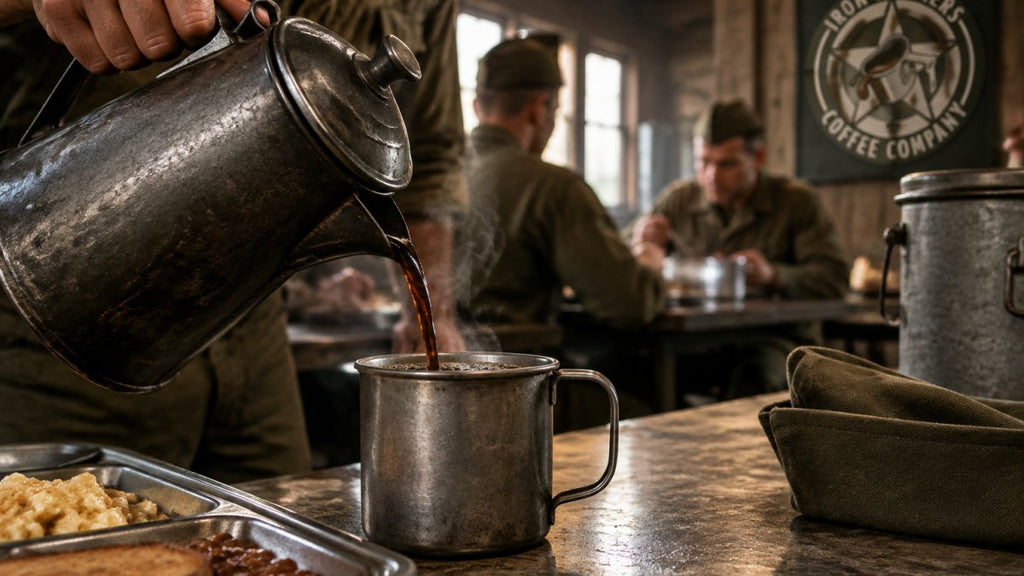
As armies grew, feeding thousands at once demanded a new approach. Cooks shifted from individual pots to large steel urns that could brew coffee in quantities no campfire kettle could match. The mess hall became the place where a unit gathered, and the coffee urn sat at its center.
This change made consistency a challenge. Large batches could turn stale or scorched if they sat too long, so cooks learned to brew in shifts and keep the urns clean. The lesson still applies to anyone brewing at scale: freshness matters more than volume.
U.S. Military Coffee Rations in World War II
When the Quartermaster Corps wrote the books on wartime feeding, coffee earned its own line items. The field ration system of the early 1940s treated coffee as a staple of the morning meal and a morale item worth protecting in the supply chain. Ration planners packed roasted and ground coffee for garrison and field kitchen use, and they packed soluble coffee for the small unit and the individual soldier who could not wait on a urn.
The D ration, the emergency chocolate bar, was never meant to carry coffee. The coffee mission fell to the field ration and to the accessory packs that traveled with it. A common pattern in period manuals was a small packet of soluble coffee, sugar, and a cream substitute, packed so a man could brew a cup with nothing more than hot water from a canteen cup. The mechanics were simple: open the packet, add the contents to hot water, stir, and drink. No urn, no filter, no grounds to police up.
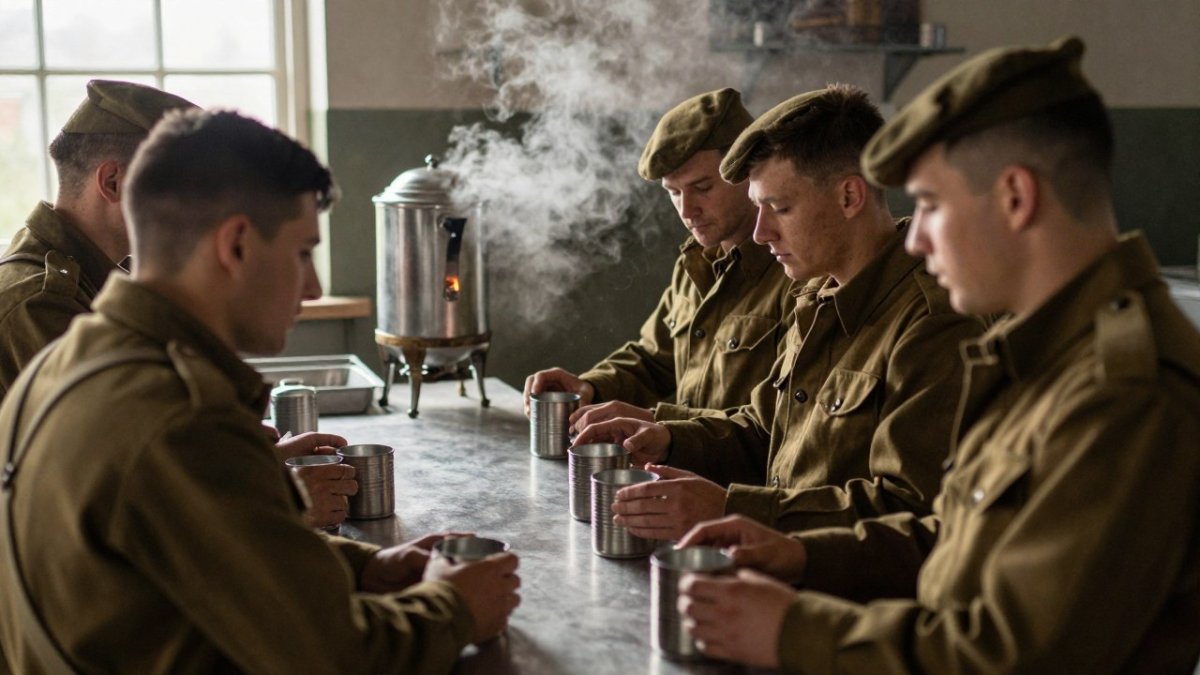
For the field kitchen, the workhorse was the large steel urn, fired by gasoline burners or set over a trench fire. Cooks brewed in batches sized to the unit, then held the coffee warm between meals. The trade-off was the same one every mess steward knew: a urn held too long turns scorched and flat, so the good cooks brewed in shifts and cleaned the urn between batches. The M-1937 field range and its successors gave the company cook a way to boil water and brew at scale, but the coffee itself still depended on the man tending the fire.
Ration policy also shaped what soldiers actually drank. Coffee was a scheduled item, not an unlimited one, and the supply sergeant tracked it the way he tracked ammunition and cigarettes. In forward areas, the soluble packet was often the only coffee a man saw for days. In rear areas and garrison, the urn came back into play. That split between the field cup and the mess-hall cup is one of the clearest lines in the whole story, and it is the line most retellings blur.
The field ration system of the early 1940s treated coffee as a scheduled staple, and the way it reached the soldier depended on where he was. Browse ration-style single serve coffee for a convenient pack of everyday coffee in the same spirit.
| Coffee source | Where it was used | Key detail |
|---|---|---|
| Field ration soluble packet | Forward areas and individual soldiers | Add to hot water from a canteen cup |
| Large steel urn | Field kitchens and garrison | Brewed in batches sized to the unit |
| Roasted and ground coffee | Garrison and field kitchen use | Packed for kitchen brewing |
| Accessory pack | Traveled with the field ration | Soluble coffee, sugar and cream substitute |
| Supply sergeant tracking | Scheduled item, not unlimited | Tracked like ammunition and cigarettes |
Military Instant Coffee History: From Wartime Experiment to Field Ration
Instant coffee grew out of the same need for speed and portability. Soldiers in the field could not always wait for a full brewing process, so a concentrated, quick-dissolving product offered a clear advantage. Over time, that idea became a standard option in field kits.
Today, the principle is the same. Our Instant Coffee - Field Ration Edition delivers specialty-grade instant coffee in a resealable 3oz pouch, built for travel, patrols and long watches. Add one to two teaspoons to a canteen cup, stir and you have a strong cup in seconds.
Navy Coffee Traditions: Galleys, Watches, and the Shipboard Cup
Aboard ship, coffee was never a meal-time beverage alone. It was a watch-standing tool, and the galley brewed around the clock to keep it that way. The mid-watch, the long stretch from midnight to dawn, ran on coffee, and the man coming off duty expected a hot cup waiting. That expectation shaped how the Navy organized its coffee service, and it produced a set of traditions that differ sharply from the Army mess hall.
The center of shipboard coffee was the coffee mess, a small brewing station set up in a work space, a division office, or a ready room, often run by a designated mess attendant or a junior sailor assigned the collateral duty. The coffee mess drew its supplies through the supply officer and brewed on a small urn or a percolator. It was informal, it was constant, and it was the social hub of a division. The galley handled the general mess, but the coffee mess handled the watch.
Equipment followed the environment. Ships used large urns in the galley for general mess feeding, and smaller percolators and urns for the coffee messes scattered through the ship.
Submarines added their own constraint: space and air. A submarine's galley was tiny, and the crew rotated through meals in shifts. Coffee was brewed in small batches and consumed fast, and the smell of it in a closed boat was part of daily life. The same was true on destroyers and amphibious ships, where the galley fed a crew on a watch schedule rather than a civilian meal schedule.
That service-by-service difference is the part most histories skip. The Army's coffee story is a story of scale, of urns and field ranges and ration packets. The Navy's is a story of continuity, of a pot that never quite went cold because someone was always coming off watch. Both are military coffee, but they are not the same tradition, and the men who lived them can tell the difference in a single cup.
Military Coffee Cups: From Tin Canteen Cups to Modern Mugs
The cup has always been as important as the coffee. The tin canteen cup, which could sit on a fire and double as a mess vessel, became a symbol of field life. It was simple, durable and easy to carry on a belt.
Modern drinkers have plenty of options, but the same demands remain: heat retention, durability and a cup that travels well. Our A100 - Iron Soldiers Insulated Coffee Mug, 10oz carries that tradition forward with a stainless steel, double wall body that holds 10oz and includes a clear acrylic snap-on lid for the road.
Carrying the Tradition Forward: Brewing Your Own Field-Ready Cup
The history of military coffee is a history of making the most of what you have. You can apply that same practicality at home or on the trail. Start by deciding how much coffee you need each day, then match your grind to your brewing method. For guidance on dialing in your grind for flavor in the field, see How to Adjust Grind Size for Flavor. You can work out your own daily amount with Determine Your Ideal Coffee Consumption Rate.
If you want a dependable field cup, try the Original Roast Single Serve Coffee Pods (12 Pack) for a convenient, ready-to-brew option that needs no equipment beyond a basic brewer. Whatever method you choose, a mess hall coffee tradition built on steady, dependable brewing is still the standard worth following.
Frequently Asked Questions
Why is a military cafeteria called a mess hall?
The word mess comes from the old practice of soldiers and sailors eating together in small groups, called messes, sharing a table and a common ration. Over time the term moved from the group to the room where they ate. Navy and Marine usage kept the word, and galley came to describe the shipboard kitchen. Mess hall stuck as the everyday term for the dining room where coffee was served alongside every meal, and the phrase still carries that wartime sense of shared duty.
What coffee did the U.S. military use in its rations?
Field rations relied on roasted and ground coffee packed for bulk brewing, and later on soluble instant coffee that could be mixed with hot or cold water. Instant coffee became especially valuable in the field because it required no grinder, filter or extra fuel beyond boiling water. Today's comparable product, such as Iron Soldiers Instant Coffee - Field Ration Edition at $22.00 for a 3oz resealable pouch, follows the same principle of quick, portable preparation for troops on the move.
Did military coffee differ between the Army, Navy and other branches?
Yes. Army units often brewed large batches in field urns and mess-hall kettles, while Navy crews depended on shipboard galleys and watch-rotation schedules that made coffee a constant presence on the bridge and in the engine room. Marines and Air Force personnel drew on whichever dining facility or field kitchen their unit used. The beverage was the same in spirit across branches, but the service, timing and equipment varied with the setting.