Choosing the Right Coffee Container for Field Operations
Table of Contents
- Coffee Container Basics: What Field Operations Demand
- Container Types and Material Comparisons
- Why an Airtight Coffee Canister Wins in the Field
- How to Keep Coffee Fresh Outdoors: Seals, Light, and Temperature
- Coffee Storage for Camping and Crew Operations
- Capacity Planning, Sanitation, and Everyday Handling
- Conclusion
- Frequently Asked Questions
Last Updated: October 19, 2026
Coffee Container Basics: What Field Operations Demand
Choosing the right coffee container for field operations comes down to one principle: the container has to survive the mission, not the other way around. At Iron Soldiers Coffee Company, we treat coffee storage like any other piece of field equipment. It gets packed, dropped, loaded, and unloaded. If it can't take that, it stays in the rear.

A coffee container is a storage vessel designed to protect roasted coffee from oxygen, light, moisture, and heat while keeping it transportable. In a field setting, that definition tightens considerably. The vessel must also resist impact, seal reliably after repeated opening, and be simple enough to clean without a sink full of dish soap.
The Four Enemies of Field-Stored Coffee
Roasted coffee begins losing character the moment it meets air. Four threats do the damage:
- Oxygen exposure, which flattens aroma and turns flavor stale
- Light exposure, especially direct sunlight that degrades oils
- Moisture and humidity, which clump grounds and spoil beans
- Temperature swings, which push condensation inside the container
Field conditions deliver all four at once. That's why a coffee container built for a kitchen shelf rarely holds up in a pack or a truck bed.
Container Types and Material Comparisons
Field crews generally choose among four materials, and each one makes a different trade-off between durability, weight, and cost. But in field operations, the comparison has to go beyond what a kitchen shelf demands.
Stainless steel is the workhorse. It resists dents, blocks light completely, and wipes clean fast. Powder-coated steel adds grip and scratch resistance. The downside is weight and, on cheap models, a lid that loses its seal after a few hundred open-close cycles.

Ceramic looks sharp in a mess hall but cracks under impact. We'd leave it at base. Even thick ceramic is brittle, and a cracked lid or body means a lost seal and a contamination risk from shards.
Glass shows you the contents and holds no odors, but it's the first thing to break in a ruck. Not a field choice.
Plastic is light and cheap, yet it scratches, holds onto stale oils, and offers weaker light protection unless it's fully opaque. High-density polyethylene and polypropylene are common, but repeated washing and UV exposure degrade them over time. A scratched interior gives oxygen and moisture more surface area to work against you.
| Material | Impact Resistance | Light Blocking | Weight | Seal Reliability | Best For |
|---|---|---|---|---|---|
| Stainless steel | High | Complete | Moderate | High with gasket and clamp | Crew operations |
| Powder-coated steel | High | Complete | Moderate | High with gasket and clamp | Rough handling |
| Ceramic | Low | Complete | Heavy | Moderate until cracked | Fixed base use |
| Glass | Low | Partial | Heavy | Moderate until cracked | Home storage |
| Plastic | Moderate | Depends on opacity | Light | Moderate, degrades with wear | Short trips |
Field-ready closure trade-offs matter as much as the body material. A threaded lid with a thick silicone gasket gives the most repeatable seal, but threads can cross-thread in the dark or with gloves on.
Watch Out
A glass or thin ceramic container that shatters in a pack leaves shards mixed with your coffee and gear. In the field, that's a lost ration and a cleanup problem, not just a broken jar.
Packability is the final trade-off. Rigid canisters protect the coffee but take up fixed space and do not compress. Lightweight bags pack down but offer little impact protection and can puncture. Modular containers that nest or stack save space in a ruck but add seams and joints that can fail. Match the container to how it will be carried: a rigid canister for a vehicle-mounted supply, a lighter sealed bag for a dismounted patrol.
Why an Airtight Coffee Canister Wins in the Field
An airtight coffee canister is the single most important piece of field coffee gear after the coffee itself. The reason is simple: freshness is a function of how much oxygen reaches the beans, and a proper airtight seal limits that exposure between pours.
Look for a silicone gasket in the lid. That gasket is what actually holds the seal, and it's the part that fails first on cheap containers. A locking clamp or a threaded lid that compresses the gasket gives you a repeatable seal after every open and close.
Some canisters add a one-way CO2 valve to let gases from freshly roasted beans escape without letting air in. That matters most in the days right after roasting. For longer field storage, the seal and the light protection carry the load.
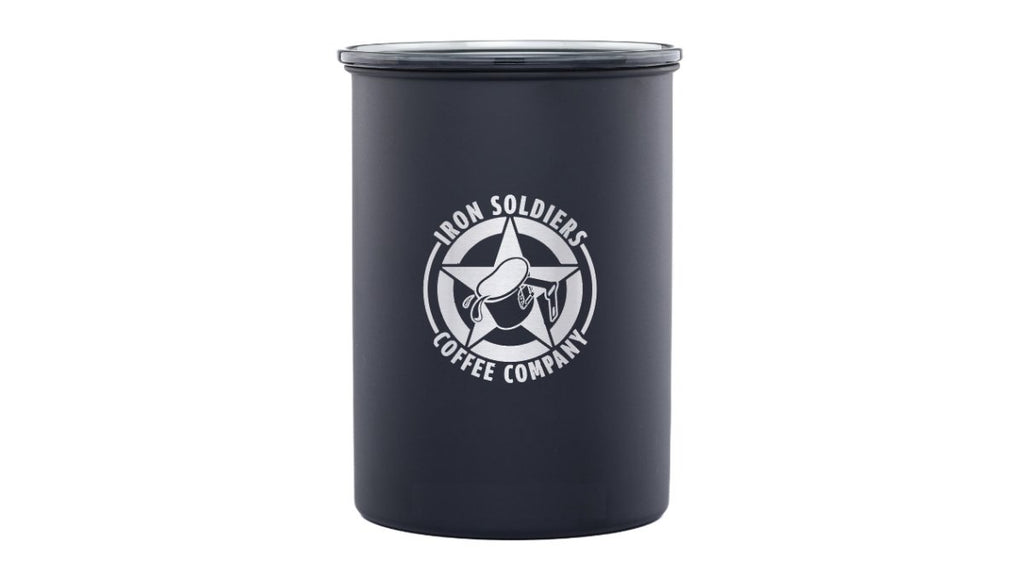
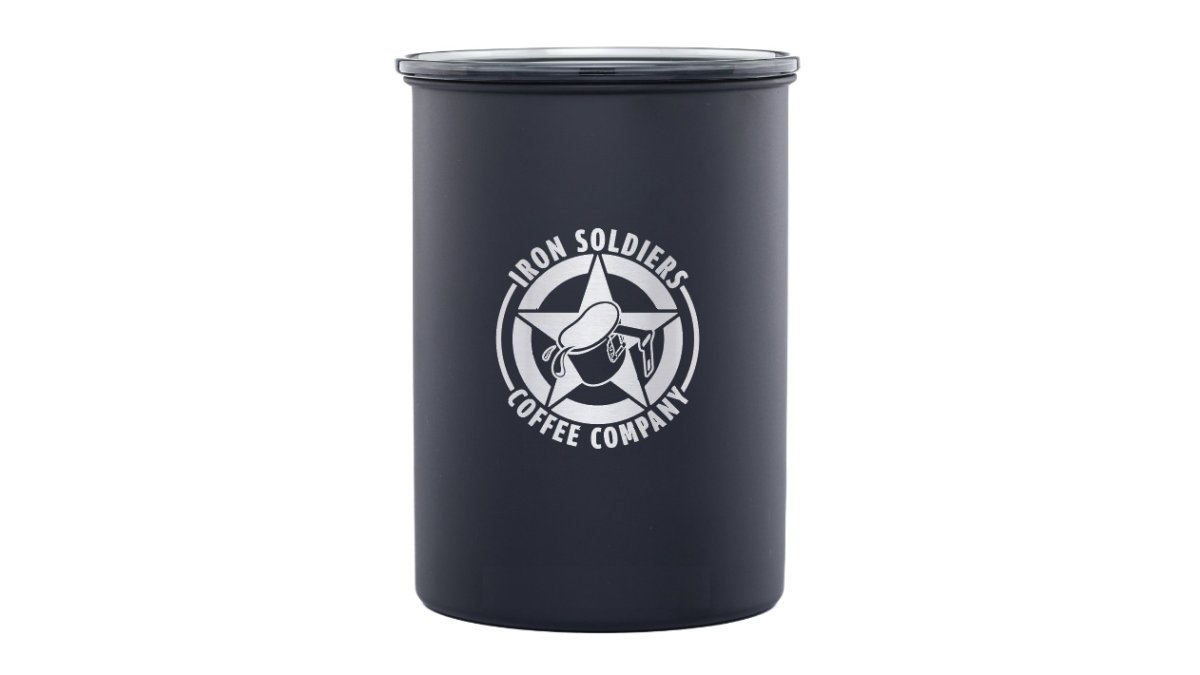
Our own pick for crew use is the A210 Airscape Stainless Steel Medium Coffee Container. Its patented airtight lid presses down to remove oxygen from the container, and the food-grade stainless steel body blocks light and wipes clean. It holds a pound of whole bean coffee, which maps neatly to a small crew's daily draw.
Pro Tip
Press the lid down until it seats against the coffee, not just onto the rim. Removing the air gap above the beans does more for freshness than any label claim on the package.
How to Keep Coffee Fresh Outdoors: Seals, Light, and Temperature
Knowing how to keep coffee fresh outdoors starts with controlling the three variables you can actually manage: air, light, and heat.
- Transfer beans out of the original bag into an opaque, airtight container once the bag is opened.
- Store the container out of direct light, inside a supply crate or under cover.
- Keep it away from heat sources like engines, stoves, and sunny truck cabs.
- Reseal fully after every use, checking that the gasket sits clean and flat.
- Avoid opening the container more than necessary during a shift.
Whole bean coffee holds its character longer than pre-ground, because grinding exposes far more surface area to oxygen. Grind on site if you can. If you must pack ground coffee, use a smaller container and plan to finish it faster.
A210 Airscape Stainless Steel Medium Coffee Container →
Temperature swings deserve special attention. A container that rides from a cold night into a warm cab collects condensation on the inside. That moisture is worse for your coffee than the cold was. Stable storage beats ideal storage.
Coffee Storage for Camping and Crew Operations
Coffee storage for camping and crew operations is really a supply-planning problem dressed up as a packing problem. The container matters, but the plan around it matters more.
Start with headcount and pace of use. Estimate servings per shift, then work backward to daily coffee volume. A pound of whole bean coffee yields roughly 30 to 40 cups depending on strength, so a four-person crew drinking two cups each per shift burns through a pound in about four days. Size your container to that draw so you're refilling on a schedule, not guessing.
Rotation keeps the supply honest. Label containers with the date opened, use the oldest stock first, and keep a sealed reserve for the day the resupply runs late. That reserve is your contingency.
Key Takeaway
Match container capacity to your actual pace of use. An oversized container means more air space and more opening cycles, both of which cost freshness.
Brewed coffee in the field is a short-lived proposition. If you're carrying a thermos or travel mug, preheat it, fill it full to limit air space, and drink it within a few hours. Our stainless steel travel mug with handle is built for exactly that job, with a spill-proof snap-on cap for moving between positions.
Capacity Planning, Sanitation, and Everyday Handling
Capacity planning for crews and shifts is where field coffee setups quietly succeed or fail. The container matters, but the plan around it matters more. Start with headcount, servings per shift, and trip duration, then work backward to daily coffee volume. A pound of whole bean coffee yields roughly 30 to 40 cups depending on strength.
A practical sizing method: multiply headcount by cups per shift by shifts per day to get daily cups, divide by 35 to get pounds per day, then multiply by trip days and add a reserve of one to two days.
Sanitation is where field coffee setups quietly fall apart. Cross-contamination between a container that held grounds and one holding beans, or a scoop that never gets washed, will sour a batch fast. Moisture and residue left in a container breed odor and spoilage. Build a simple cleaning routine into the shift:
- Empty the container fully at the end of each rotation
- Wipe the interior with a dry cloth, then let it air dry open
- Wash the gasket and lid in warm soapy water and dry completely
- Keep one dedicated scoop, washed daily
- Never store coffee next to fuel, cleaning agents, or strong-smelling rations
Separate coffee from fuel, chemicals, and strong-smelling rations. Coffee absorbs odors, and a container stored next to diesel or cleaning agents will pick up those smells. Keep a dedicated storage crate for coffee and coffee gear, and do not use it for anything else.
Handling matters too. Keep the container off the ground, close it before you walk away, and don't leave the lid open while you're distracted. A container that lives open on a tailgate is just a fancy bowl. In limited space or while wearing gloves, practice the open-portion-reseal sequence until it is automatic.
For crews running long shifts, a second smaller container for the day's portion keeps the main supply sealed and reduces opening cycles on the main supply. That is the same logic as splitting rations: you don't open the whole crate to pull one meal.
Best For
Crews of four to eight running multi-day operations who need one main supply container plus a smaller day-use portion.
Conclusion
Field coffee storage punishes shortcuts. The crews that drink well are the ones that treat the container as equipment, plan capacity against real pace of use, and keep the seal and the sanitation honest. It's not glamorous work, but it's the difference between a good cup and a mouthful of stale grounds.
That's the standard we build to at Iron Soldiers Coffee Company. Every bag we sell sends $1 to a volunteer-only nonprofit supporting veterans and their families, and our gear is made to hold up the same way our coffee does. Start with a proper airtight canister, size it to your crew, and keep the rotation tight. Then shop all coffee and put a fresh roast in a container that deserves it.
Frequently Asked Questions
What is the best container for coffee in the field?
A food-grade stainless steel coffee container with a patented airtight lid is the most dependable choice for field use. Stainless steel resists dents and rust, blocks light that degrades beans, and cleans up without absorbing odors. Look for a canister that removes oxygen on closing, such as the Airscape design, which pushes a plunger down over the beans. For crews, a medium 64 fl. oz. unit holds about 1 lb of whole bean coffee, enough for several days of brewing depending on headcount.
Should field crews store whole beans or ground coffee?
Whole bean coffee holds its freshness longer because the oils and aromatics stay locked inside the bean. Ground coffee exposes far more surface area to oxygen and goes stale within days once opened. Pack whole beans whenever the crew has a grinder on site, and grind per pot. If space or equipment forces pre-ground, store it in an airtight coffee canister, keep it out of direct light, and plan to use the supply within a week or two.
How much coffee should a crew pack for a field operation?
Start with servings per shift, then multiply by shifts and headcount. A common field ratio is roughly 1 to 2 tablespoons of ground coffee per 6 oz cup, so a 1 lb bag of whole beans yields about 30 to 40 cups depending on strength. For a 10-person crew running two shifts over five days, plan on 8 to 12 lb of beans plus a margin. Track pace of use daily so inventory rotation stays ahead of demand.
Will coffee stay fresh in a resealable bag during a trip?
A resealable bag is better than an open pouch but rarely airtight enough for field conditions. Once opened, the seal lets oxygen and moisture creep in, and most bags offer no light protection beyond a thin layer. Transfer beans to an airtight coffee canister at the start of the trip and keep the original bag only for labeling or backup. If you must use the bag, squeeze out excess air, reseal firmly, and store it inside a hard-sided container out of direct sun.
Related post
17
Oct