Best Coffee Storage for Field Rations
Table of Contents
- Why Coffee Storage Matters in the Field
- How to Store Ground Coffee for Extended Missions
- Best Coffee Canister for Beans and Grounds
- Coffee Shelf Life Under Field Conditions
- Coffee Storage for Camping and Backcountry Operations
- Whole Beans Versus Ground Coffee for Field Use
- Packing and Rotation Protocol for Field Rations
- Frequently Asked Questions
Last Updated: October 17, 2026
Why Coffee Storage Matters in the Field
When you're deployed in the field or running extended operations, coffee isn't just a beverage, it's a mission-critical supply. The difference between properly stored coffee and degraded rations can mean the difference between staying sharp and hitting a wall. Coffee loses its potency fast. Heat, humidity, oxygen exposure, and light are the enemy. A thermos of stale coffee won't deliver the caffeine reinforcement you need when morale and alertness are on the line.
Best coffee storage for field rations demands a strategic approach. This guide covers the battle-tested methods for keeping your coffee combat-ready, whether you're in the backcountry for weeks or rotating through a forward position.
The stakes are simple: degraded coffee means wasted rations and lost energy when you need it most. Proper storage extends shelf life, preserves flavor, and ensures every cup delivers maximum caffeine impact. We'll walk you through the best coffee storage for field rations, from container selection to rotation protocols that keep your supply mission-ready.
How to Store Ground Coffee for Extended Missions
Ground coffee degrades faster than whole beans because the increased surface area accelerates oxidation. Once you grind beans, the clock starts ticking. For extended field operations, you have two core strategies: minimize air exposure and control environmental conditions.
The enemy of stored coffee is oxygen. When ground coffee sits exposed to air, it loses flavor compounds and caffeine potency within days. Vacuum-sealed containers remove oxygen and create an airtight barrier that halts degradation.
Temperature swings accelerate deterioration. Field conditions often mean temperature fluctuations between day and night, especially in mountainous or desert terrain. Insulated containers and double-wall construction slow these temperature changes. Stainless steel canisters provide superior thermal stability compared to plastic alternatives, keeping internal temperature more stable as external conditions shift.

Moisture is your second major threat. Humid field environments draw moisture into containers, which causes clumping and mold growth. High-barrier bags and vacuum-sealed storage create moisture barriers that prevent water vapor penetration.
Portioning ground coffee into single-use packets reduces exposure every time you access your supply. Instead of opening a large container repeatedly, sealed individual portions stay protected until deployment. This approach is standard in military ration systems for good reason, it minimizes oxidation and contamination risk with each use.
Best Coffee Canister for Beans and Grounds
The A210 Airscape Stainless Steel Medium Coffee Container uses patented airtight technology that removes oxygen from the container, preventing coffee from going stale. The food-grade stainless steel construction provides durability while the double-wall design offers thermal protection.
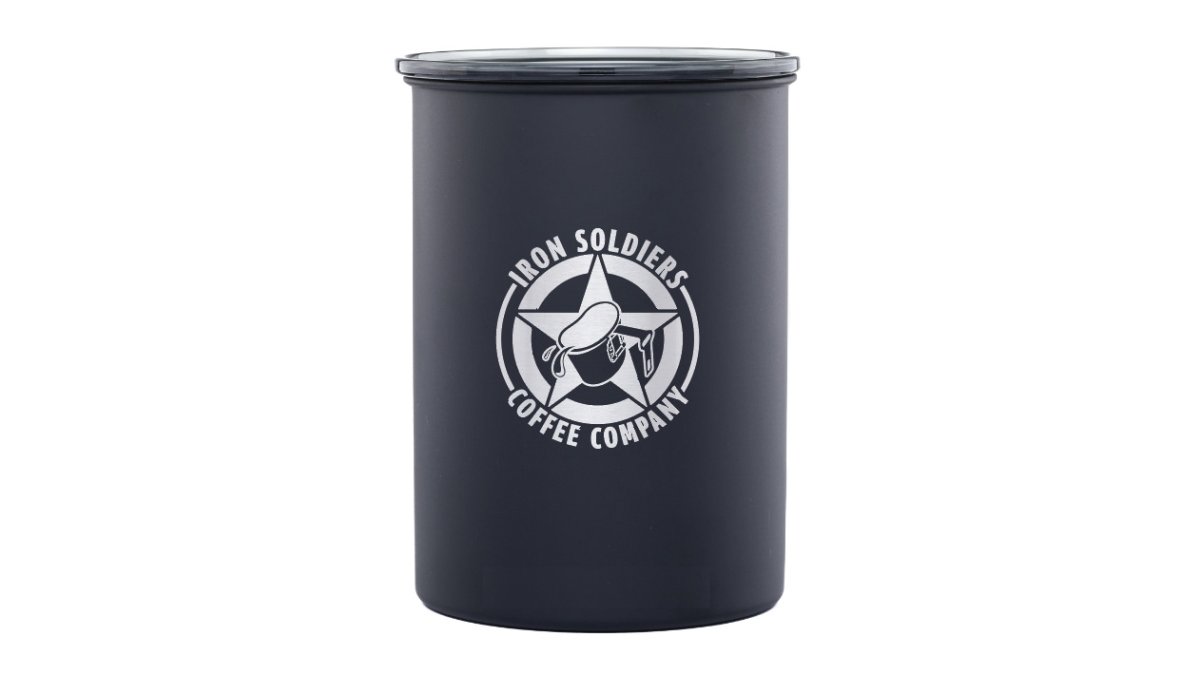
The medium capacity holds 1 pound of whole beans or ground coffee. The included Airscape Cotton Refill Bag lets you fill with fresh beans at a local roaster, then transfer to the sealed container for storage.
Airtight and Vacuum-Sealed Options
Airtight seals are non-negotiable for field coffee storage. The difference between a standard lid and a true airtight seal determines whether your coffee remains mission-ready or degrades into worthless grounds.
Vacuum-sealed jars create aggressive oxygen removal. By extracting air mechanically, vacuum sealing removes the primary agent of degradation. Once sealed, the jar maintains that oxygen-free environment indefinitely, provided the seal remains intact.
Mylar bags with oxygen absorbers offer a lightweight alternative for portable operations. These high-barrier bags resist puncture and moisture penetration while oxygen absorbers consume residual oxygen inside the sealed bag. The combination creates an oxygen-free environment comparable to vacuum sealing but with significantly less weight.
The trade-off: vacuum-sealed jars are heavier but reusable. Mylar bags are lighter but single-use. For semi-permanent field positions, the Airscape canister provides durable, reusable, and effective oxygen removal without the weight penalty of glass jars.
Portable Formats for Compact Packing
Instant coffee in resealable pouches delivers convenience for field operations. Iron Soldiers Instant Coffee - Field Ration Edition comes in a 3-ounce resealable pouch designed for compact packing. Each pouch contains specialty-grade instant coffee that mixes instantly in hot or cold water. The resealable design lets you portion out servings without exposing the entire supply to air.

Single-serve coffee pods represent another portable solution. The Original Roast Single Serve Coffee Pods come sealed with no oxygen inside, so freshness is locked in from production. Each capsule is individually sealed, eliminating the need to open a large container. For field operations where space is critical, pods pack efficiently and deliver consistent brew strength.
The advantage of these formats: they're already portion-controlled. You deploy with exactly what you need, with zero waste and freshness. No grinding, no measuring, no exposure risk. For short-term field operations or when tactical mobility demands minimal weight, instant coffee and pods are mission-optimized.
The drawback: whole beans and ground coffee offer superior flavor and caffeine intensity compared to instant alternatives. If your operation allows for brewing equipment and storage space, whole beans remain a strong choice. If you're traveling light and moving fast, instant formats are a practical option.
Coffee Shelf Life Under Field Conditions
Coffee shelf life depends entirely on storage conditions and coffee format. Whole beans in an airtight container maintain quality for 3-4 weeks under typical field conditions. Ground coffee in sealed storage holds quality for 2-3 weeks. Instant coffee in sealed pouches remains viable for months.
Heat accelerates degradation dramatically. In high-temperature environments, desert operations or summer field deployments, shelf life contracts by 50% or more. A container stored in direct sunlight or near heat sources degrades coffee twice as fast as shaded storage.
Humidity in field conditions varies wildly. Tropical or monsoon environments introduce moisture that penetrates even good containers over time. Arid desert conditions are actually favorable for coffee storage because low humidity slows oxidation and prevents mold growth. In humid environments, vacuum-sealed or mylar storage becomes essential rather than optional.
Temperature swings between day and night cycles create condensation inside containers. When a sealed container cools at night, internal air contracts and moisture condenses on the coffee. This repeated cycle introduces moisture that degrades quality. Double-wall containers like the Airscape reduce this effect by stabilizing internal temperature.
Altitude affects coffee storage indirectly. High-altitude field operations have lower oxygen levels in the atmosphere, which actually slows oxidation. However, temperature fluctuations are often more extreme at elevation, requiring better thermal insulation.
Instant Coffee - Field Ration Edition →
Coffee Storage for Camping and Backcountry Operations
Backcountry coffee storage faces unique constraints: weight, volume, and environmental exposure. Your storage solution must survive pack compression, temperature swings, and potential water exposure.
Instant coffee is a popular choice for backcountry operations. Iron Soldiers Instant Coffee - Field Ration Edition delivers caffeine impact in minimal weight and volume. A single 3-ounce pouch provides multiple servings and takes up space equivalent to a deck of cards.
For shorter trips where brewing equipment is available, single-serve pods offer a middle ground. The pods are compact, individually sealed, and require only hot water. They weigh more than instant coffee but less than whole beans plus grinding equipment.
Whole beans require grinding equipment and storage space that backcountry operations often can't accommodate. The weight-to-benefit ratio makes whole beans impractical unless your operation includes a established base camp with dedicated storage and brewing capability.
Container selection for backcountry storage prioritizes weight and durability. Lightweight stainless steel containers like the A105 Iron Soldiers Stainless Steel Travel Mug with Handle (14oz) serve double duty, they store coffee and brew it.
Enamel mugs like the A108 Iron Soldiers Logo Enamel Mug are lighter still and virtually indestructible. They don't provide sealed storage, but they're ideal for day operations where you consume coffee immediately after brewing.
Whole Beans Versus Ground Coffee for Field Use
Whole beans preserve freshness longer than ground coffee because they present less surface area to oxygen. A sealed container of whole beans remains viable for 4-5 weeks under field conditions. Ground coffee in the same conditions lasts 2-3 weeks. The difference is substantial for extended operations.
Ground coffee brews faster, which matters when you need caffeine reinforcement quickly. In field conditions where time is limited, ground coffee reduces preparation time. You skip the grinding step and go straight to brewing.
Whole beans require grinding equipment, a manual grinder adds weight and complexity to field operations. If your operation is mobile and weight-conscious, grinding equipment becomes a liability. If you're established in a semi-permanent position with dedicated brewing capability, whole beans justify the extra equipment.
Flavor intensity favors whole beans. Freshly ground beans deliver superior taste and caffeine punch compared to pre-ground coffee.
The practical compromise: store whole beans in sealed containers, grind only what you need for immediate consumption. This approach extends shelf life while preserving flavor. For field operations with limited storage space, instant coffee eliminates the choice, it's already processed and ready to deploy.
Packing and Rotation Protocol for Field Rations
Effective coffee storage in field operations requires a rotation protocol that ensures freshness and prevents waste. Deploy coffee with a clear "use by" date marked on each container.
Stack containers so older supplies are accessed first. Label each container with the packing date. When new coffee arrives, place it behind existing supplies rather than in front. This simple discipline prevents accidental consumption of degraded coffee.
Inspect containers regularly for seal integrity. A small leak or puncture can compromise an entire container's worth of coffee.
Portion control reduces waste and maintains freshness. Instead of opening a large container repeatedly, pre-portion coffee into individual servings in sealed bags. This approach is standard in military ration systems because it minimizes exposure and contamination risk.
Temperature-controlled storage extends shelf life. If your field position allows, store coffee in the coolest available location, underground storage, shaded areas, or insulated containers. Every degree of temperature reduction extends viability.
Document consumption rates to predict resupply needs. If your operation consumes 2 pounds of coffee weekly, you know exactly when to request fresh supplies. This prevents both shortages and excess inventory that might degrade before use.
For extended field operations, maintain a rotation schedule:
| Action | Frequency | Benefit |
|---|---|---|
| Inspect seal integrity | Weekly | Catch failures early |
| Check for condensation | Every 3 days | Detect moisture intrusion |
| Rotate stock (FIFO) | Each resupply | Prevent waste |
| Document consumption | Daily | Predict resupply needs |
| Verify storage temperature | Weekly | Optimize conditions |
Coffee storage for field rations isn't complicated, but it demands discipline. The difference between mission-ready caffeine and degraded rations comes down to container choice, environmental control, and rotation protocol.
Frequently Asked Questions
How long does coffee stay fresh in an airtight container for field use?
Coffee shelf life depends on format and storage conditions. Ground coffee holds peak freshness for 2-4 weeks in an airtight container in cool, dry conditions. Whole beans extend to 4-6 weeks. Instant coffee and sealed single-serve pods remain stable for months. In field conditions with temperature swings and humidity exposure, freshness degrades faster. Vacuum-sealed bags and oxygen-absorber packets extend viability significantly. Rotation is essential: mark pack dates and consume oldest stock first to maintain mission-critical caffeine quality.
What is the best way to protect coffee from heat, moisture, and light in field rations?
Use a multi-layer defense: airtight stainless steel containers block oxygen and light; resealable mylar-lined bags add moisture barrier; oxygen absorber packets remove residual air. Store in the coolest location available, shaded pack pockets, buried shallow, or insulated cases. Keep containers away from direct sunlight and heat sources. For extended operations, vacuum-sealed formats offer strong protection. The A210 Airscape Stainless Steel Medium Coffee Container uses patented airtight technology that removes oxygen, preventing staleness and flavor loss, ideal for field ration packs.
Should I pack whole beans or ground coffee for field operations?
Whole beans stay fresher longer but require a grinder in the field. Ground coffee brews faster and takes less weight, critical for mobile operations. Instant coffee is a popular choice: lightweight, zero prep time, and formats like the Instant Coffee - Field Ration Edition deliver specialty-grade quality in compact 3oz resealable pouches. Single-serve pods offer sealed freshness with no air exposure. For extended backcountry missions, instant and pods are a strong option. For base camp or vehicle-supported operations, whole beans justify the grinder weight.
How do I organize coffee storage and rotation in a field ration pack?
Label all containers with acquisition date and contents. Store instant coffee and pods at the top layer for quick access. Ground coffee in airtight canisters goes in secondary layers. Rotate stock using FIFO protocol: first in, first out. Inspect seals weekly in humid conditions. Keep oxygen absorber packets in bulk storage; replace if damaged. For multi-week deployments, separate rations into weekly packs and mark each. Original Roast Single Serve Pods come sealed with no oxygen inside, eliminating rotation worry on shorter missions. Instant Coffee - Field Ration Edition's resealable 3oz pouch supports portion-based rotation.
Related post
17
Oct