Best Coffee for Sustained Focus and Energy in the Morning
Table of Contents
- Quick Comparison: Best Coffee for Sustained Focus and Energy
- How We Evaluated These Morning Coffees
- 1. Frontline Focus Blend (Medium Roast): Best Overall for Sustained Focus
- 2. G503 Jeep Blend: Best Light Roast for a Bright Morning Start
- 3. Sherman Tank Edition: Best Dark Roast for Bold, Steady Energy
- 4. Instant Coffee - Field Ration Edition: Best for Shift Workers and Early Patrols
- How to Brew Strong Coffee for Maximum Morning Focus
- Caffeine and Cognitive Performance: Timing Your Morning Cup
- Frequently Asked Questions
Last Updated: September 13, 2026
Quick Comparison: Best Coffee for Sustained Focus and Energy
Finding the best coffee for sustained focus and energy in the morning comes down to three variables: roast level, caffeine delivery, and what you pair with the bean. Iron Soldiers Coffee Company built its lineup around exactly that problem, and this briefing compares four mission-ready options side by side.
A common mistake is chasing the strongest cup on the shelf. Strength and stamina are not the same thing. A brew that hits hard at 0600 often leaves you running on fumes by 1000, which is why roast selection and brew method matter more than caffeine content alone.
Here is how the four picks stack up before we go deeper:
| Coffee | Roast | Best For | Starting Price |
|---|---|---|---|
| Frontline Focus Blend | Medium | All-day sustained focus | $21.99 |
| G503 Jeep Blend | Medium | Bright, smooth morning start | $18.99 |
| Sherman Tank Edition | Dark | Bold, steady energy | $19.99 |
| Instant Field Ration Edition | Instant | Shift workers, early patrols | $22.00 |
How We Evaluated These Morning Coffees
Every recommendation here was judged on four criteria: how steadily the caffeine lands, how the roast profile affects that curve, how easy the coffee is to brew under time pressure, and whether it holds up black.

What most guides miss is that the roast date and the grind matter as much as the origin. Fresh-roasted beans degas differently, and a burr grinder set for drip will not perform the same as one set for espresso. We weighted brew flexibility heavily because a coffee you cannot make well at 0530 is a coffee you will not drink.
The evaluation also factored in something harder to measure: whether a blend supports a morning routine you can repeat. Consistency beats novelty when the mission is daily.
1. Frontline Focus Blend (Medium Roast): Best Overall for Sustained Focus
The best overall pick for sustained morning focus is the Frontline Focus Blend, a medium roast built on specialty-grade coffee infused with Reishi mushrooms. It is designed to deliver clean caffeine without the jitters that send you crashing mid-morning.
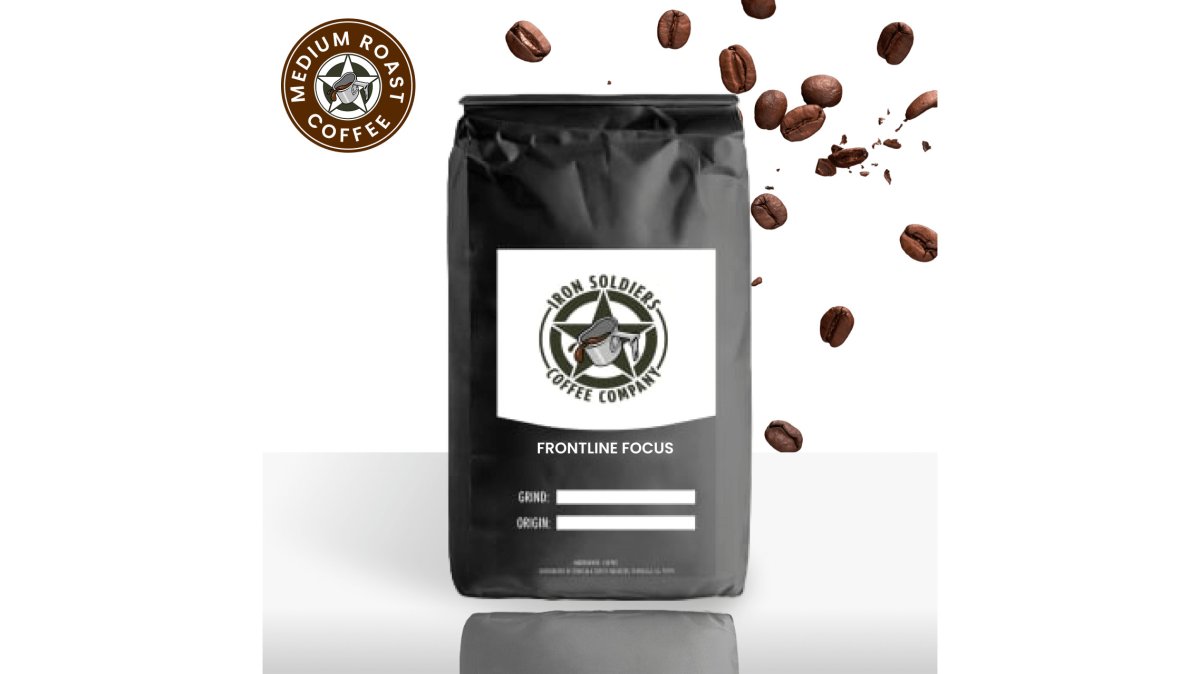
The field formula is straightforward: one scoop, eight ounces of hot water, stir, and report for duty. No special equipment required, which matters when you are moving out the door before sunrise.
Why Reishi and Lion's Mane Matter for Morning Clarity
Reishi mushrooms are traditionally used to support calm focus and steady cognitive performance. Paired with coffee, they soften the sharp edges of a caffeine spike while keeping mental clarity intact.
This is the blend to reach for if your mornings involve sustained concentration rather than a quick jolt. The earthy undertone is not for everyone. If you want a pure, unmodified coffee flavor, the next pick may suit you better.
Pro Tip
Brew this one at a 1:16 ratio and give the grounds a full four-minute steep. Rushing the extraction leaves the mushroom notes sharp instead of smooth.
2. G503 Jeep Blend: Best Light Roast for a Bright Morning Start
The G503 Jeep Blend is a medium house breakfast blend of South American Arabica, and it is the brightest cup in this lineup. Mild acidity, subtle sweetness, and a hint of nutty undertone make it an easy first cup of the day.

Where it wins is drinkability. It works black, with cream, or over ice without losing its character. Where it falls short is endurance: the lighter body means the energy curve is gentler, so heavy caffeine users may want a second cup by mid-morning.
If your morning is a slow reveille rather than a forced march, start here.
3. Sherman Tank Edition: Best Dark Roast for Bold, Steady Energy
The Sherman Tank Edition is a dark roast house blend pulled from beans around the world, and it is built for those who want their coffee to report for duty with authority. Bittersweet cocoa, toasted nuts, and a touch of caramel give it a full-bodied, smoky profile.

Dark roasts like this one tend to suit espresso and moka pot brewing, which concentrates the flavor and delivers a slower, steadier lift than a thin drip cup.
For pure morning horsepower, it delivers.
4. Instant Coffee - Field Ration Edition: Best for Shift Workers and Early Patrols
The Field Ration Edition is the answer for anyone whose morning starts before the kitchen does. Each 3oz resealable pouch holds specialty-grade instant coffee made from 100% specialty-grade Arabica beans, and it mixes in hot or cold water in seconds.
This is the pick for shift workers, early patrols, road warriors, and anyone manning a post where a brewer is not an option. One to two teaspoons in a canteen cup, stir, and you are back in the fight.
What it buys you is reliability when conditions are not ideal.
How to Brew Strong Coffee for Maximum Morning Focus
Brewing strong coffee for maximum morning focus is a matter of control, not volume. Four settings decide the outcome: brew ratio, grind size, water temperature, and contact time. Get those right and a medium roast will out-fuel a badly brewed dark roast every time. Get them wrong and you will chase the deficit with a second and third cup, which is how the mid-morning crash gets built.
Brew Ratio, Grind, and Water Temperature
Start with a 1:15 ratio for a strong cup, meaning one gram of coffee to fifteen grams of water. Tighten it to 1:13 if you want more intensity without adding caffeine from a second serving. A standard 12-ounce mug at 1:15 lands in the range of 120-170 mg of caffeine for a medium roast drip.
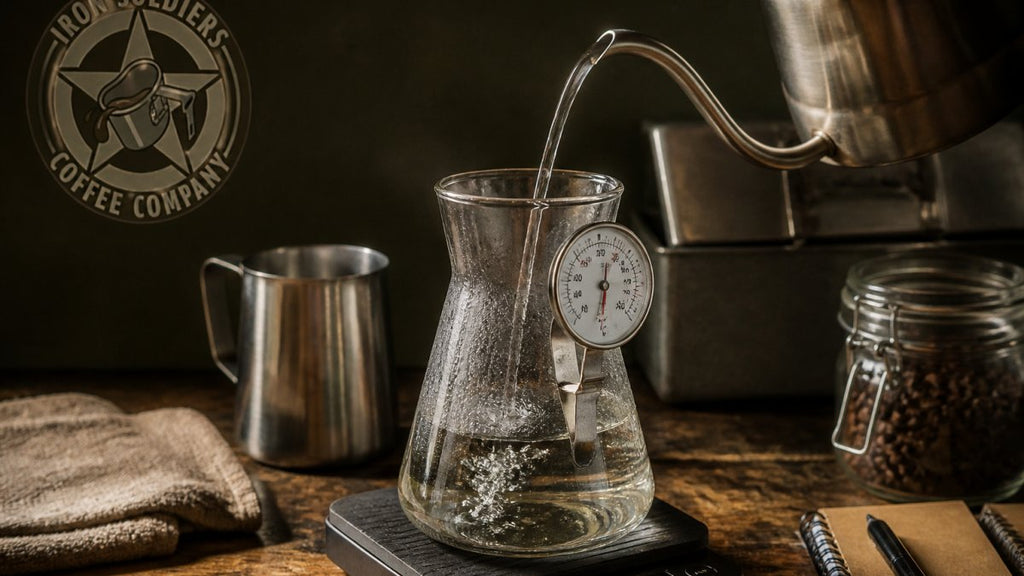
Grind should match your method. Coarse for French press, medium for drip, fine for espresso. Water temperature should sit between 195 and 205 degrees Fahrenheit.
Contact time is the variable most people ignore. Drip runs three to four minutes. French press runs four. Espresso runs 25-30 seconds. Stretch any of those and you extract harsh compounds.
- Weigh your beans instead of scooping them, a level scoop varies by 30% or more depending on grind
- Pre-wet the filter to remove paper taste
- Keep total brew time between three and four minutes for drip
- Drink water alongside your coffee to stay ahead of dehydration
Match the Method to the Mission
Different brew methods deliver caffeine at different rates, and the rate matters as much as the total.
- Drip: steady, predictable extraction. The default for a sustained morning curve.
- Pour-over: similar total caffeine to drip, but a slower sip cadence that naturally paces intake.
- French press: fuller body, more oils, and a slightly higher caffeine yield per ounce because of the longer steep.
- Espresso: concentrated per ounce but small in volume, a single shot is roughly 60-75 mg. Easy to stack without noticing.
- Moka pot: closer to espresso in strength, brewed on a stovetop. Good for a small, dense dose before a short window of high demand.
- Cold brew: lower acidity and a smooth finish, but concentrate ratios vary wildly. Dilute to taste and measure, or you will overshoot without realizing it.
Hydration and Electrolytes: The Missing Half of the Equation
Caffeine is a mild diuretic, and cognitive performance depends on hydration status.
A workable field protocol:
- Drink 12-16 ounces of water on waking, before any coffee.
- Pair each cup with an equal volume of water.
- If you are sweating, PT, a hot commute, a physical job, add an electrolyte source. Sodium and potassium support nerve signaling and muscle function.
- Cap total caffeine for the day at 400 mg, the general guidance from the Food and Drug Administration for healthy adults.
Watch Out
Skipping the water glass is the most common morning mistake. The headache you blame on a caffeine crash is often plain dehydration reporting for duty.
Pro Tip
If your coffee tastes bitter but the caffeine curve feels flat, the problem is usually grind or water temperature, not the bean. Fix the brew before you buy a stronger roast.
Caffeine and Cognitive Performance: Timing Your Morning Cup
Caffeine and cognitive performance are linked, but the timing of your cup changes how well that link works. Cortisol, your body's natural alertness hormone, peaks shortly after you wake.
Circadian Rhythm, Cortisol, and the 90-Minute Window
Wait roughly 60 to 90 minutes after waking before your first cup. That lets your natural cortisol levels begin to fall.
A second window matters too. Cortisol tends to rise again around midday and again in the early afternoon. Scheduling caffeine just before those rises, rather than on top of them, tends to produce a cleaner lift. A cup around 0930-1030 and a smaller one around 1300-1400 can be beneficial.
Individual Caffeine Metabolism: Why the Same Cup Hits Two People Differently
Genetics affect how quickly your liver clears caffeine. The CYP1A2 gene codes for the enzyme primarily responsible for metabolizing caffeine, and variants in that gene are commonly grouped into fast and slow metabolizer patterns.
- Fast metabolizers tend to clear caffeine quickly. They often feel little from a single cup, and may tolerate afternoon coffee without sleep disruption.
- Slow metabolizers clear caffeine slowly. A single cup can linger for six hours or more, and may disrupt sleep even when drunk early.
You do not need a genetic test to get useful signal. Track three things for a week: time of last cup, time you fall asleep, and how you feel two hours after your first cup. If a 1400 cup wrecks your sleep, you are likely on the slower side. If a 1600 cup does nothing, you are likely on the faster side. Adjust cutoff time accordingly.
Micro-Dosing Caffeine: Steadier Focus Without the Jitter Threshold
Micro-dosing means splitting your caffeine across two or three smaller servings instead of one large dose. The goal is to stay below the jitter threshold while keeping blood caffeine levels relatively stable.
A workable field schedule for a 400 mg daily ceiling:
- 0700-0800: 12-16 ounces of water. No coffee yet.
- 0830-0900: First cup, roughly 80-100 mg. Medium roast drip, black.
- 1030-1100: Second cup, roughly 60-80 mg. Smaller than the first.
- 1300-1400: Optional third cup, roughly 40-60 mg, only if the afternoon is still ahead of you.
- After 1400: Switch to water or decaf. Protect the sleep window.
Total lands near 180-240 mg, well under the ceiling, spread across the day, and far less likely to produce the spike-and-drop pattern of a single 200 mg hit at first light.
Key Takeaway
Timing beats dosage. A well-timed smaller cup outperforms a large cup slammed at first light, and knowing your own metabolism tells you which schedule to run.
Frequently Asked Questions
What is the best coffee for energy and focus?
The best coffee for sustained focus and energy combines moderate caffeine with compounds that smooth the curve. Medium roasts with added adaptogens, like Reishi, support mental clarity without the jittery spike. Pair it with a consistent morning routine: hydrate first, delay your cup 60 to 90 minutes after waking, and keep your brew ratio strong but not bitter. This approach fuels concentration for hours instead of a short burst.
What specific roast profile provides the most sustained energy?
Medium roasts generally offer the best balance for sustained alertness. They retain more of the bean's natural oils and caffeine while delivering a smoother, less acidic cup than dark roasts. Dark roasts taste bolder but often contain slightly less caffeine by volume because the longer roasting process burns off some compounds. For steady energy, a medium roast brewed at a 1:15 ratio gives you a reliable, even release.
How does caffeine content impact morning focus and productivity?
Caffeine blocks adenosine receptors, which delays mental fatigue and sharpens focus. But more isn't better. Around 100 to 200 mg per serving supports concentration and cognitive performance; exceeding 400 mg daily can trigger jitteriness and anxiety. Timing matters too. Drinking coffee 60 to 90 minutes after waking aligns with your natural cortisol dip, extending the productive window and reducing the mid-morning slump.
Can brewing methods change the effectiveness of morning coffee?
Yes. Brew method affects extraction, caffeine concentration, and how your body absorbs it. A drip coffee or pour-over produces a clean, consistent cup with predictable caffeine. Cold brew extracts more slowly, yielding a smoother, less acidic drink that some find easier on the stomach and longer-lasting. Espresso delivers a concentrated hit. For sustained focus, a strong drip or cold brew at a controlled brew ratio tends to provide the steadiest energy curve.
What can I drink in the morning for energy instead of coffee?
If you want to reduce caffeine but still support morning focus, try a mushroom coffee blend that mixes a smaller dose of specialty coffee with Reishi. These adaptogens support mental clarity and steady energy without the stimulant load of a full cup. Matcha, yerba mate, and electrolyte-enhanced water are other options. The goal is sustained alertness, not a spike and crash.
Your morning cup should carry you through the mission, not just the first hour of it. Iron Soldiers Coffee Company roasts every bag fresh, offers blends built for sustained clarity, and donates $1 from each bag sold to a volunteer-only nonprofit supporting veterans and their families. Explore the Frontline Focus Blend for all-day focus, the G503 Jeep Blend for a smooth start, or the Field Ration Edition for caffeine that deploys anywhere. Shop All Coffee and fuel your day with purpose.
Related post


08
Oct