Bones Coffee Alternative for Stronger Brew: 2026 Guide
Table of Contents
- Why Flavor-First Coffee Leaves You on Half Rations
- How to Brew Stronger Coffee at Home: Five Field-Tested Methods
- High Caffeine Coffee Beans: What Actually Drives Potency
- A Stronger Brew for the Long Watch: Iron Soldiers Coffee Company Standouts
- Stronger Brew, Cleaner Cup: Managing Acidity and Stomach Sensitivity
- DIY Flavor Infusion: Customize Your Stronger Brew at Home
- Conclusion
- Frequently Asked Questions
Last Updated: September 16, 2026
Why Flavor-First Coffee Leaves You on Half Rations
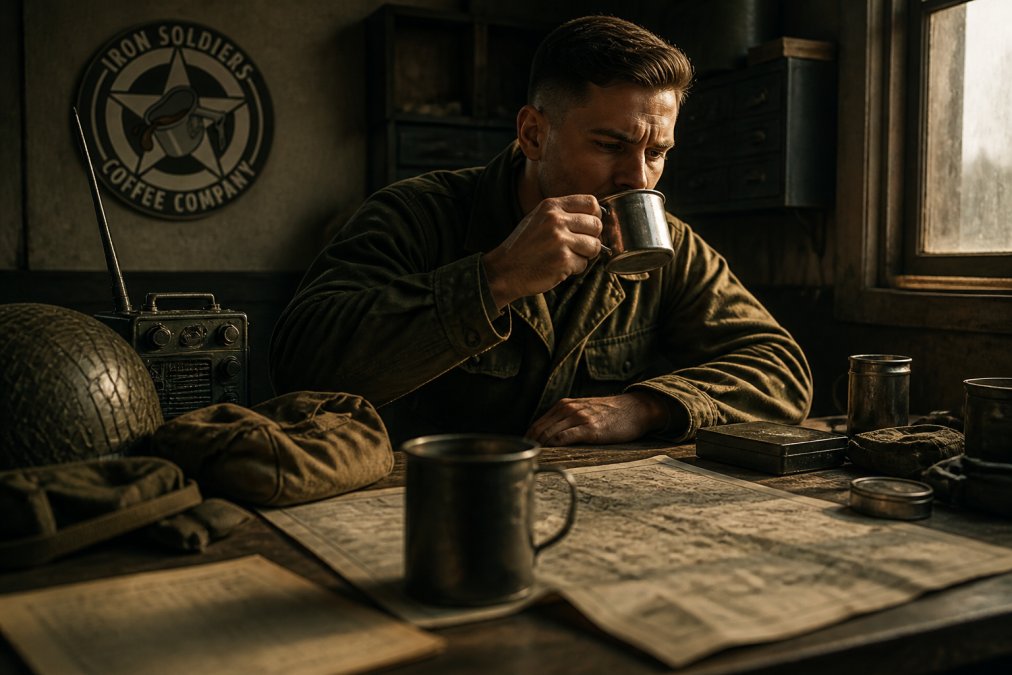
If your current bag trades punch for pastry notes, you are not alone. Many coffee drinkers find that flavor-forward roasts run light on the kick they need to hold a long watch. This guide from Iron Soldiers Coffee Company covers how to build a bones coffee alternative for stronger brew results without surrendering taste.
Watch Out
Doubling your scoop without adjusting grind size is the most common mistake. You get a bitter, over-extracted cup that tastes harsh but delivers no more usable caffeine than a properly dialed brew.
How to Brew Stronger Coffee at Home: Five Field-Tested Methods
The fastest route to a stronger brew is controlling three variables: grind size, water temperature, and contact time. Get those right and any bean performs better.
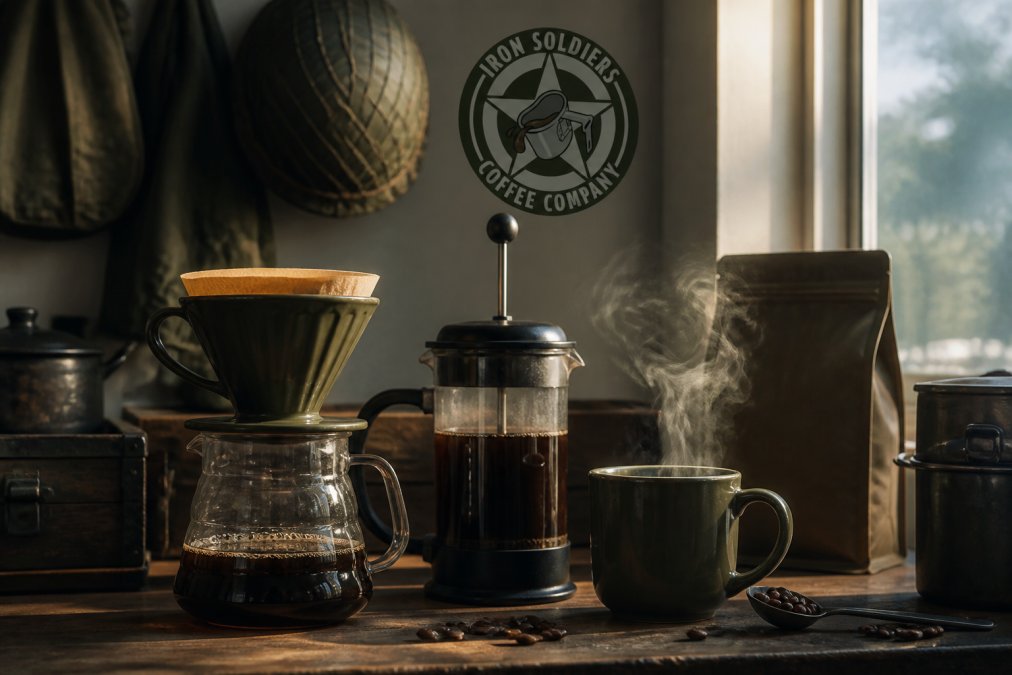
Here is the field order of operations:
- Weigh your coffee. A kitchen scale beats a scoop every time.
- Match grind to method. Fine for espresso, coarse for cold brew.
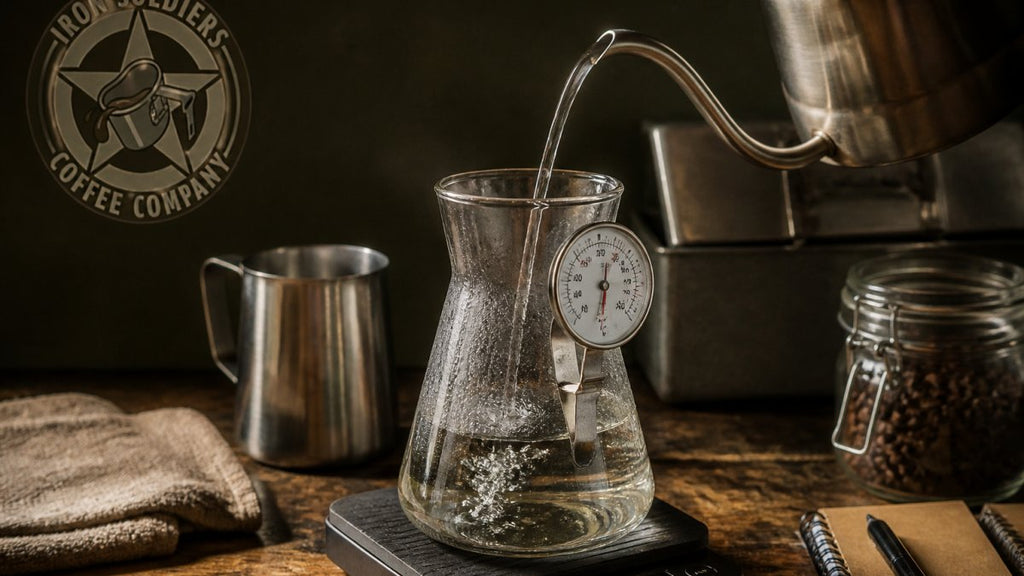
- Hold water between 195°F and 205°F for full extraction.
- Extend contact time before you add more grounds.
- Taste, then adjust one variable at a time.
Dial In Your Grind Size and Water-to-Coffee Ratio
Start with a 1:15 ratio by weight for drip and pour-over, then tighten toward 1:12 if you want more body. Finer grinds extract faster, so a finer setting at the same ratio pulls more from every bean. Go too fine and you hit bitterness, which is a flavor problem, not a strength problem.
Cold Brew and Espresso: Maximum Extraction Tactics
Cold brew rewards patience. A 16-to-18-hour steep at room temperature pulls a smooth, high-extraction concentrate you can dilute to taste. Espresso rewards pressure: a fine grind and a 25-to-30-second shot produce a dense, potent base for any drink.
| Method | Grind | Ratio | Time | Best For |
|---|---|---|---|---|
| Pour-over | Medium | 1:15 | 3-4 min | Clean, bright cup |
| French press | Coarse | 1:12 | 4 min | Full body, oils |
| Cold brew | Coarse | 1:8 | 16-18 hrs | Smooth concentrate |
| Espresso | Fine | 1:2 | 25-30 sec | Dense, potent shots |
| Moka pot | Fine-medium | 1:10 | 5 min | Stovetop intensity |
High Caffeine Coffee Beans: What Actually Drives Potency
Caffeine lives in the bean, not the roast. A dark roast and a light roast from the same green bean carry nearly identical caffeine before roasting. What changes is weight and volume. Darker beans lose moisture and mass during the roast, so a scoop of dark roast can contain slightly more caffeine by weight than the same scoop of light roast. That is a density effect, not a roast effect.
- Species. Robusta (Coffea canephora) carries roughly double the caffeine of Arabica (Coffea arabica) by green weight. Most published ranges put Arabica near 1.2 percent caffeine by weight and Robusta near 2.2 percent.
- Dose, by weight. This is the variable most drinkers ignore. A 20-gram dose of any bean delivers more caffeine than an 18-gram dose of a 'high-octane' bag. A kitchen scale beats a scoop because scoop volume swings wildly with grind and bean density.
- Grind and extraction yield. Finer grinds expose more surface area, and higher extraction yield pulls more caffeine into the cup.
- Roast level. Nearly flat for caffeine. Darker roasts taste bolder and weigh less per scoop, which is why the density effect can nudge caffeine up slightly by volume, but it is a rounding error next to species and dose.
- Freshness. Stale beans lose aroma and flavor long before they lose caffeine. Caffeine is stable; the oils and volatiles that make coffee taste like coffee are not.
Reading a Bag Like a Quartermaster
When you are comparing bags on the shelf, look for these signals in order:
- Species or blend disclosure. If the label names Robusta or a 'high-caffeine blend,' assume the upper end of the range. If it says 100 percent Arabica, assume the lower end.
- Roast level. Treat it as a flavor signal, not a strength signal.
- Net weight and dose guidance. A bag that tells you grams per serving is telling you more about caffeine than any 'bold' badge on the front.
- Origin. Beans grown at higher elevations tend to be Arabica and lower in caffeine; Robusta thrives at lower elevations and is the workhorse of high-caffeine blends.
Key Takeaway
If caffeine is the mission, species and dose are the levers. Roast level is a flavor decision, not a strength decision.
A Stronger Brew for the Long Watch: Iron Soldiers Coffee Company Standouts
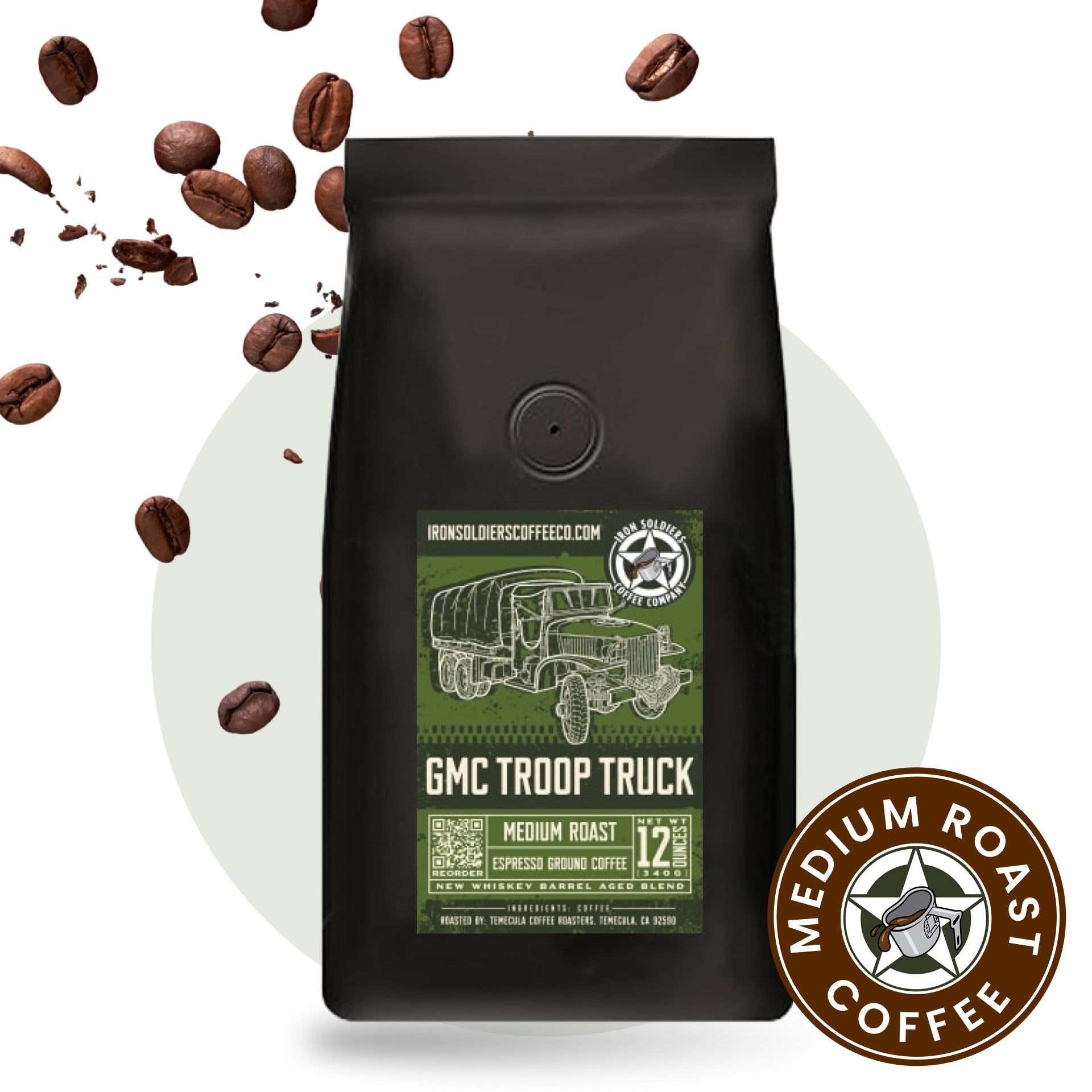
When the mission is a stronger brew that still tastes like coffee and not a chemistry experiment, a few roasts do the heavy lifting. Iron Soldiers Coffee Company roasts fresh and ships direct, and every bag sends $1 to a volunteer-only nonprofit supporting veterans and their families.
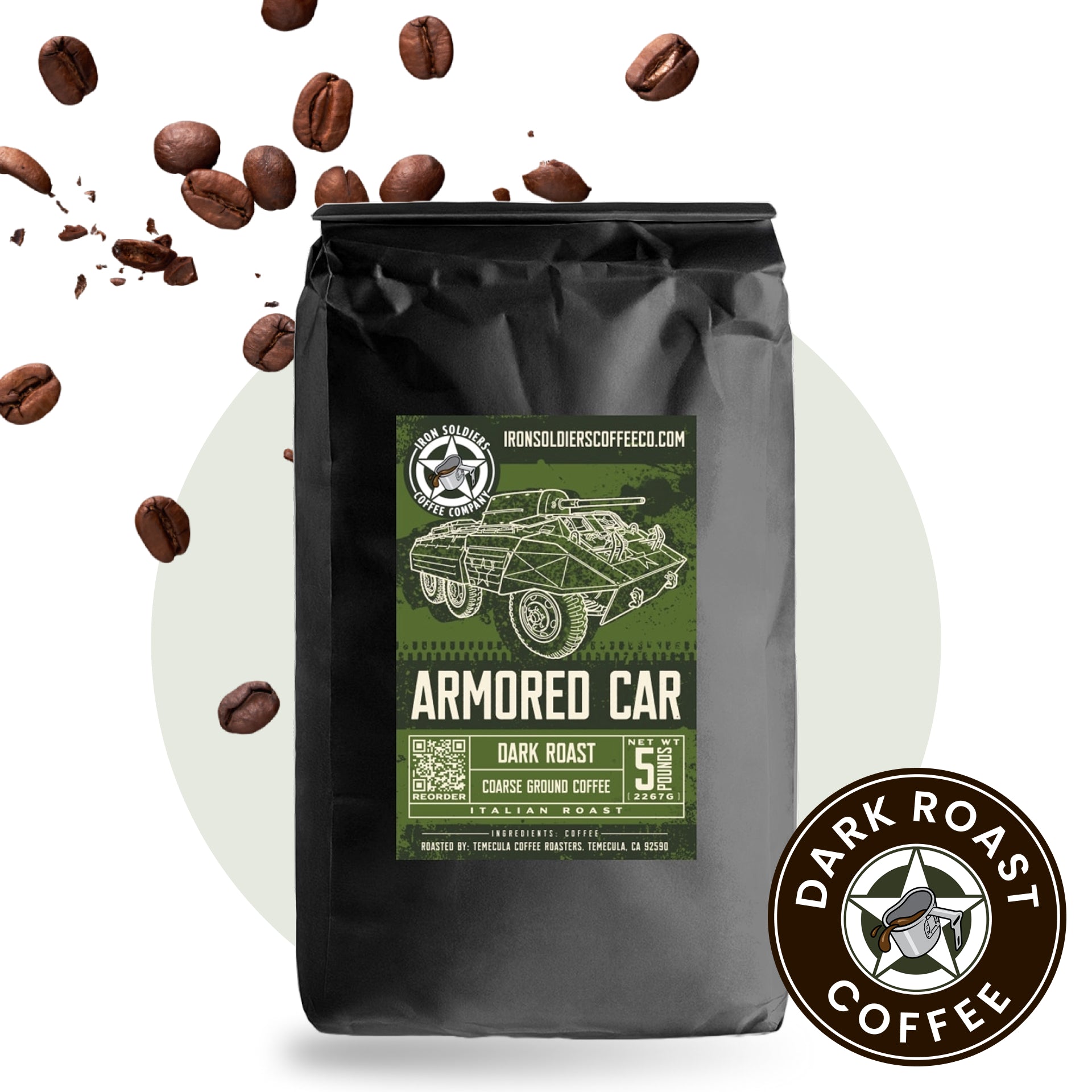
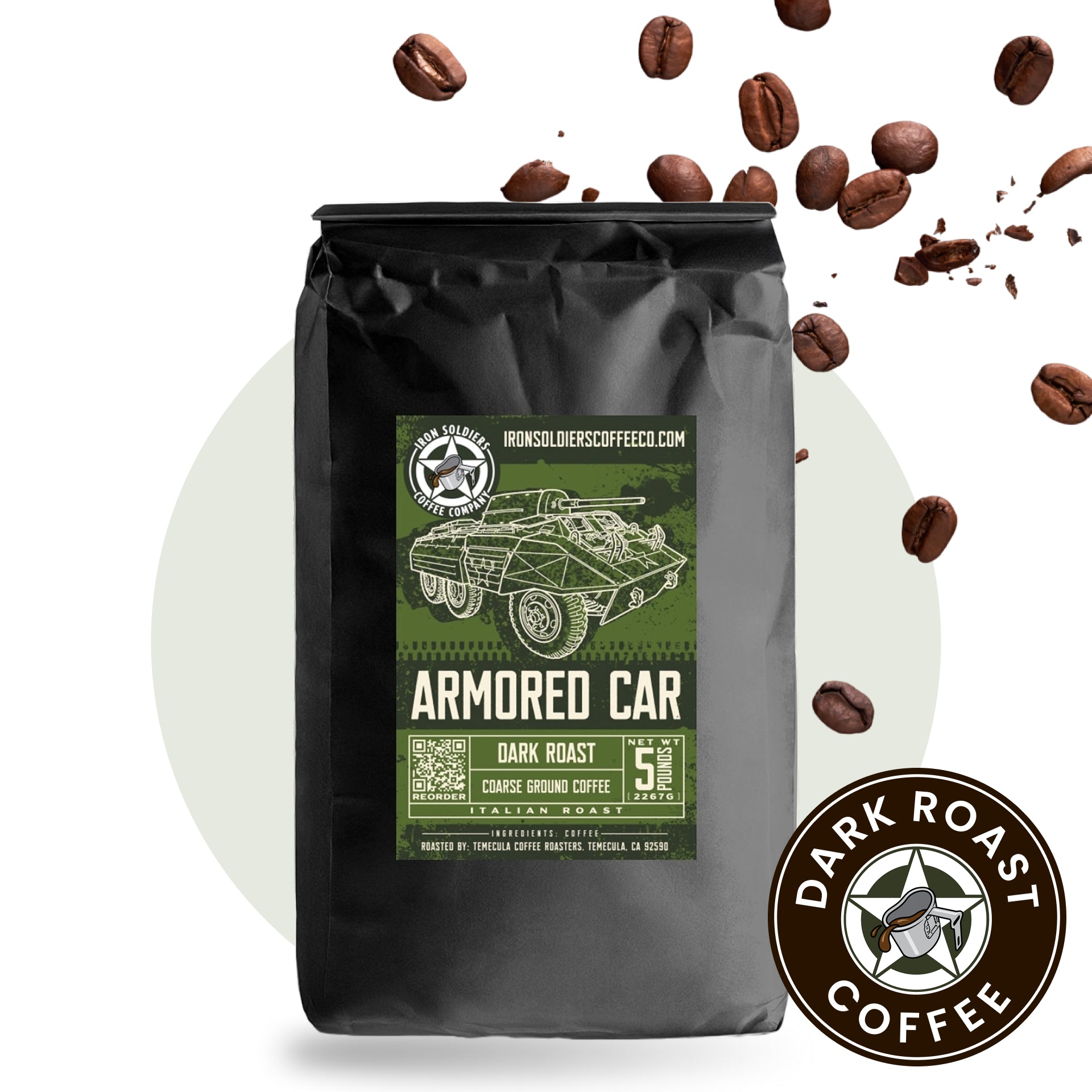
Sherman Tank Edition and Armored Car Edition: Dark Roast Workhorses
The Sherman Tank Edition is a dark roast house blend built for espresso, with bittersweet cocoa, toasted nuts, and a touch of caramel. It is the everyday workhorse.

Mushroom Coffee Frontline Focus Blend: Sustained Energy, No Crash
The Mushroom Coffee Frontline Focus Blend blends specialty-grade coffee with Lion's Mane, Cordyceps, and Reishi mushrooms. It is built for smooth, sustained energy without the jitters, available in medium and dark roast.

Key Takeaway
Dark roast does not mean more caffeine. It means more body and bolder flavor. If you want both intensity and a clean cup, start with a dark roast and a tighter ratio.
Stronger Brew, Cleaner Cup: Managing Acidity and Stomach Sensitivity
A stronger brew can punish a sensitive stomach if you ignore acidity. Acidity levels vary by origin, roast, and brew method. Darker roasts generally carry lower perceived acidity than light roasts, and cold brew extracts with less acid than hot methods because heat pulls more of it out.
Three practical fixes for a smoother cup:
- Choose a dark roast over a light roast.
- Try cold brew concentrate diluted to taste.
- Avoid over-extraction, which amplifies bitterness and harshness.
DIY Flavor Infusion: Customize Your Stronger Brew at Home
Flavor infusion lets you keep the strength and add the taste without buying a flavored bag. Most guides stop at 'add cinnamon.' This one gives you a working recipe, a pairing chart, and the failure modes to avoid so the cup tastes integrated instead of like a candle.
Method 1: Steep-and-Strain (Grounds Infusion)
Add whole spices or dried aromatics to the grounds before brewing. Heat and contact time do the work. This is the best method for flavors that taste 'baked in', cinnamon, cardamom, clove, nutmeg, star anise, dried orange peel.
- Starting ratio: 2 grams of whole spice per 20 grams of coffee. That is roughly a 1:10 spice-to-coffee ratio by weight. Adjust in 0.5-gram steps.
- Grind the spice, not the coffee, finer. Whole spices need a coarse crack to release oils; over-grinding them into dust clogs the filter and turns the cup muddy.
- Works best with: French press, moka pot, and cold brew. Paper-filter pour-over tends to strip the spice oils before they reach the cup.
Method 2: Simple Syrup (Post-Brew Sweetening)
Simmer equal parts sugar and water with your flavoring, strain, and stir into a hot cup. This is the fastest method and the most controllable, you can taste as you go.
- Starting ratio: 1 teaspoon of syrup per 8 ounces of brewed coffee. Scale up or down from there.
- Best for: vanilla, hazelnut, caramel, maple, brown sugar, and any flavor you want to taste sharp and forward.
- Trade-off: Syrup adds sweetness and dilutes the brew slightly. If you are chasing maximum strength, compensate by brewing a touch tighter, a 1:13 ratio instead of 1:15.
Method 3: Cold Infusion (Concentrate Steeping)
Drop split vanilla beans, cocoa nibs, or whole spices into a jar of cold brew concentrate and steep 12 to 24 hours, then strain. Cold extraction pulls aroma without bitterness.
- Starting ratio: 1 split vanilla bean per 32 ounces of concentrate. One bean goes a long way.
- Best for: vanilla, cocoa, cinnamon, and any flavor you want smooth and rounded rather than sharp.
- Trade-off: Slower, and the flavor fades faster than a syrup. Use within a week.
Pairing Chart: Match the Flavor to the Roast
| Flavor | Best Method | Pairs With |
|---|---|---|
| Cinnamon, clove, cardamom | Steep-and-strain | Dark roasts, French roast |
| Vanilla | Cold infusion or syrup | Medium and dark roasts |
| Cocoa nibs | Cold infusion | Dark roasts, espresso |
| Hazelnut, caramel | Simple syrup | Medium roasts, espresso |
| Orange peel, citrus | Steep-and-strain | Medium roasts, African origins |
| Maple, brown sugar | Simple syrup | Dark roasts, cold brew |
Failure Modes to Avoid
- Over-spicing. More spice does not mean more flavor; it means a cup that tastes like potpourri. Start at the low end of the ratio and add.
- Infusing the finished cup with ground spice. Ground spice in a mug turns gritty and keeps extracting. Use whole spice in the grounds or strain it out.
- Mixing too many flavors. Two complementary notes beat five competing ones. Cinnamon plus vanilla works. Cinnamon plus vanilla plus hazelnut plus caramel does not.
- Forgetting the base. Infusion is a multiplier, not a fix. If the underlying brew is weak or over-extracted, no amount of vanilla will save it.
Pro Tip
Infuse the grounds, not the finished cup, when you want the flavor to taste integrated. Adding syrup after brewing gives you a sweeter, sharper result. Both work, but they are different drinks, pick the one that matches the profile you are after.
Conclusion
Building a stronger brew without wrecking the flavor comes down to method, not marketing. Dial your ratio, match your grind, and pick a roast with real body behind it.
Frequently Asked Questions
Is Bones Coffee high quality?
Bones Coffee is known for flavored roasts and novelty packaging, which appeals to drinkers who prioritize taste over strength. If your goal is a stronger brew, focus on roast profile, bean origin, and caffeine content. Iron Soldiers Coffee Company offers specialty-grade blends like the Sherman Tank Edition and Armored Car Edition that deliver bold, full-bodied flavor with a higher extraction potential.
What is the strongest type of coffee brew?
Cold brew and espresso typically yield the highest caffeine concentration per ounce because of their low water-to-coffee ratio and extended extraction time. A 1:4 cold brew concentrate or a double espresso shot can deliver significantly more caffeine than a standard drip cup. For home brewing, increasing your coffee dose to 2 tablespoons per 6 ounces of water and using a fine grind will also boost strength.
Does Bones Coffee have more caffeine?
Caffeine content depends on bean species, roast level, and brewing method, not brand alone. Most commercial flavored coffees use Arabica beans with standard caffeine levels. If you want a stronger brew, look for high caffeine coffee beans like Robusta blends or dark roasts, and brew with a higher coffee-to-water ratio. Iron Soldiers Coffee Company's dark roasts are crafted for a bold, high-extraction cup.
How does bean origin affect the strength of a morning brew?
Bean origin influences flavor, acidity, and body, but caffeine levels vary more by species (Arabica vs. Robusta) and roast profile. Beans from Africa, like those in Iron Soldiers' African Espresso, often have vibrant citrus and wine-like notes, while South American beans deliver smooth chocolate and nutty tones. For maximum strength, choose a dark roast with a fine grind and a slow brewing method.
Are there coffee alternatives that offer a cleaner, more robust flavor profile?
Yes. Mushroom coffee blends, like Iron Soldiers' Frontline Focus Blend, combine specialty-grade coffee with Lion's Mane, Cordyceps, and Reishi mushrooms for sustained energy without jitters. These blends offer a smoother, less acidic cup while still delivering caffeine. For a traditional stronger brew, dark roasts like the Sherman Tank Edition provide a robust, smoky profile with bittersweet cocoa and caramel notes.
Related post


08
Oct