Alternatives to Paper Coffee Filters for Better Taste
Table of Contents
- Why Paper Coffee Filters Mute Your Brew
- Metal Mesh Coffee Filter Benefits: The Durable Workhorse
- Cloth Coffee Filter Maintenance and Performance
- Paper Towels and Other Emergency Substitutes
- How to Brew Strong Coffee Without Paper Filters
- Material Safety, Flavor, and Environmental Impact
- Conclusion: Choosing Your Filter
- Frequently Asked Questions
Last Updated: October 3, 2026
Why Paper Coffee Filters Mute Your Brew
Paper coffee filters trap more than grounds. At Iron Soldiers Coffee Company, we roast for depth and character, and we would rather you taste all of it.
A paper coffee filter is a disposable barrier made from bleached or unbleached wood pulp that catches grounds while letting liquid through.
That trade-off is a design choice, and once you understand it, you can decide what you want from your morning brew.
Key Takeaway
Paper filters deliver clarity and a clean finish. They also remove oils that carry aroma and body. If your coffee tastes flat, the filter may be the reason, not the beans.
Metal Mesh Coffee Filter Benefits: The Durable Workhorse
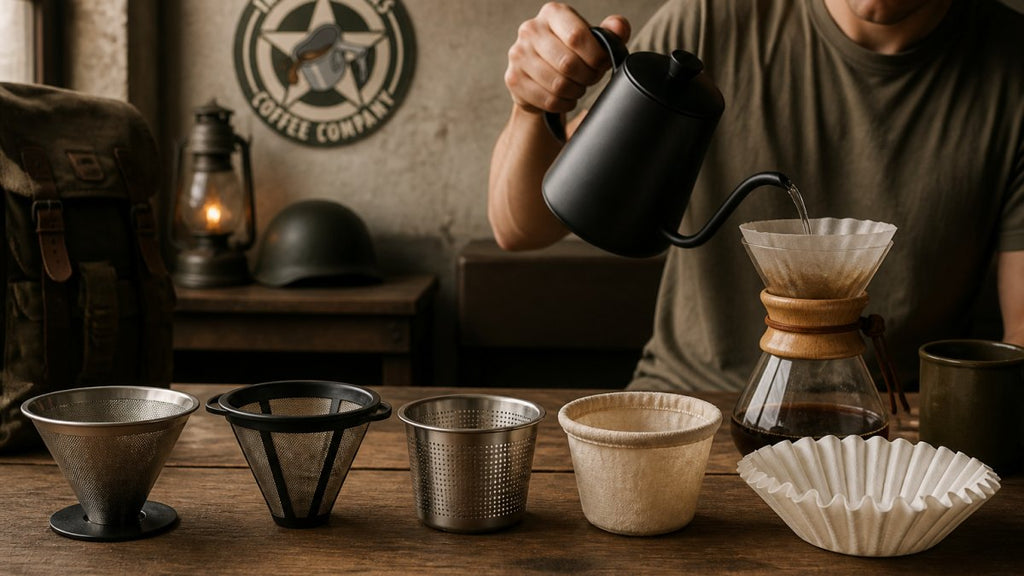
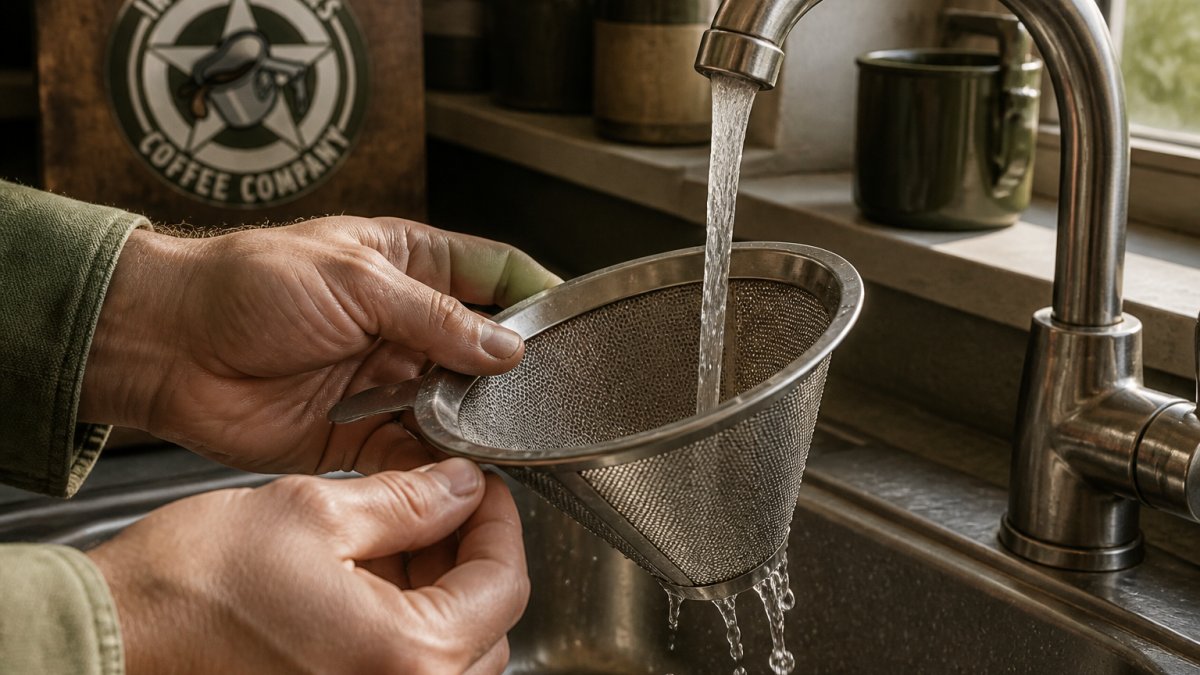
A stainless steel mesh filter is the closest thing to brewing with no barrier at all.
The upside is durability: a fine-gauge mesh sieve lasts for years with basic care. The downside is sediment.
How to Use a Metal Mesh Filter
- Rinse the mesh under warm water before brewing to clear old oils.
- Match your grind to the filter. A medium-coarse grind keeps sediment manageable.
- Add grounds, then pour in slow circles to keep the bed even.
- Let the brew finish, then dump the grounds and rinse the mesh immediately.
- Deep-clean weekly with hot water and a soft brush.
Expected result: a heavier, oilier cup with visible sediment and a longer-lasting aftertaste.
Cloth Coffee Filter Maintenance and Performance
Cotton cloth sits between paper and metal. It catches more sediment than mesh but far less oil than paper, so you get body without the grit.
Proper cloth coffee filter maintenance is simple but non-negotiable. Rinse after every use, then boil the cloth periodically to strip accumulated oils. Skip that step and the fabric turns rancid, ruining the flavor no matter how good your beans are.
How to Use a Cloth Filter
- Rinse the cloth thoroughly before the first brew.
- Use a medium grind, slightly coarser than you would for paper.
- Pour in slow, steady circles and let the bed settle.
- After brewing, rinse the cloth under hot water until the water runs clear.
- Boil the cloth every week or two, then air-dry fully before storing.
Watch Out
Never store a damp cloth filter in a closed cabinet. Trapped moisture breeds mold and bacteria, and no amount of rinsing will save the next cup.
Paper Towels and Other Emergency Substitutes
When the paper filters run out and the coffee is already ground, a paper towel can bridge the gap. It is not permanent, but it works in a pinch.
The problem with paper towels is fibers. They shed into the brew, and a loose weave lets grounds slip through.
U.S. Food and Drug Administration food contact guidance sets the standard for what is considered food-safe material, so check that any substitute you reach for is rated for food contact before it touches your brew.
How to Rinse Disposable Substitutes
- Rinse the paper towel under hot water to knock loose fibers free
- Fold it into a cone shape and set it in the dripper
- Pre-wet the towel so it clings to the sides
Pro Tip
Pre-wetting any paper substitute removes the papery taste that otherwise bleeds into the first few ounces of the brew. It takes ten seconds and saves the cup.
How to Brew Strong Coffee Without Paper Filters
Strong coffee without paper comes down to grind, ratio, time, and the filter you choose. Without paper's fine barrier, you control extraction through grind and pour. A common mistake is grinding too fine to chase strength; that clogs the bed, slows flow, and produces bitterness instead of body.
The fix is a coarser grind and a slightly longer brew time. Let the water do the work. If you want more intensity, add grounds rather than grinding finer.
Match the Filter to the Brewing Method
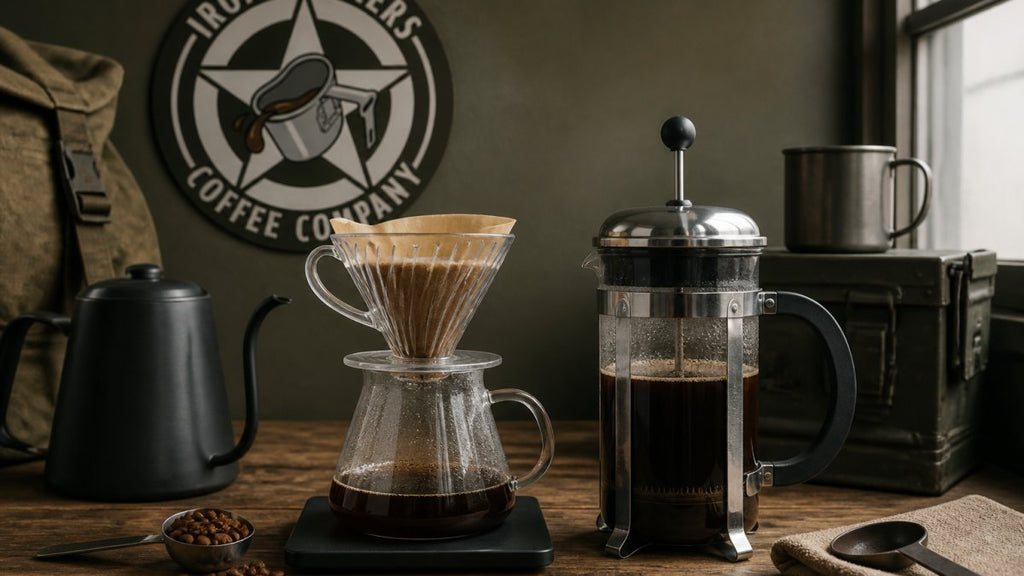
Not every substitute behaves the same across brewers. A filter that shines in a pour-over cone can choke a drip machine or leave sludge in an immersion brewer. Here is how the major methods respond:
- Pour-over cone: Cloth gives you clarity with more body than paper. Metal mesh works but demands a steady, slow pour to keep the bed from channeling. Paper towels are a last resort and shed fibers under a fast pour.
- Drip machine: Metal mesh is the natural fit because the machine controls flow. Cloth can work if it is trimmed to the basket, but a loose weave will let fines through and clog the spray head over time. Never run a paper towel through a drip machine; it collapses under the water column.
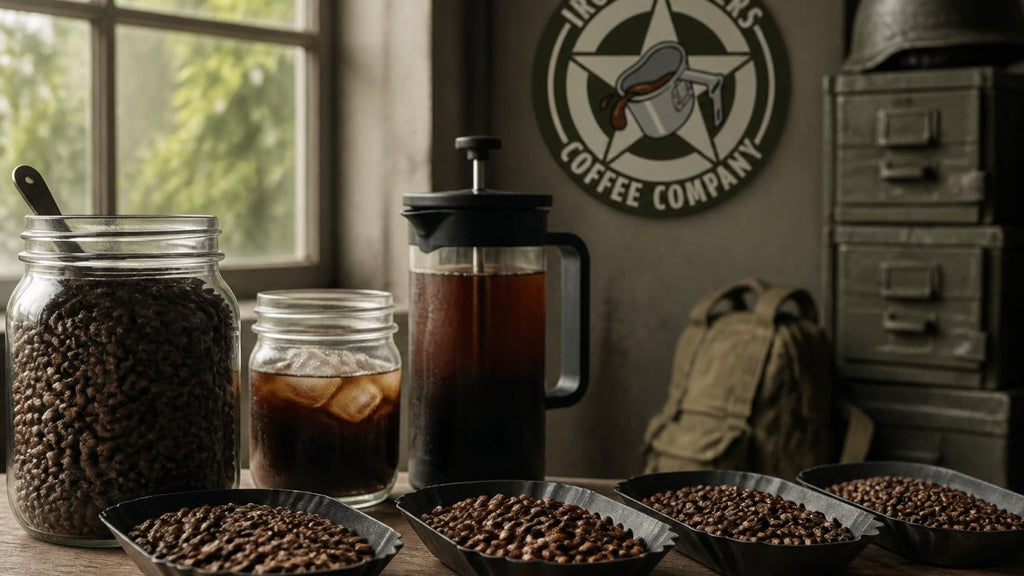
- Immersion (French press, steep-and-strain): A metal mesh sieve is the standard answer. Cloth wrapped over the plunger adds polish if you want less grit. Immersion gives you the most control over time, so it is the easiest method for dialing in strength without paper.
Reading the Cup: TDS and Extraction Yield
Most advice on this topic is anecdotal. You can do better by thinking in the two numbers specialty roasters use: total dissolved solids (TDS) and extraction yield.
A common target range for brewed coffee is roughly 1.15 to 1.45 percent TDS, which corresponds to an extraction yield of about 18 to 22 percent. These are widely cited reference points, not laws. What matters is the direction each filter pushes you:
- Metal mesh lets more oils and micro-fines through, which tends to raise both perceived body and measured TDS at the same grind and ratio. If your cup tastes heavy but muddy, coarsen the grind slightly.
- Cloth sits in the middle. It holds back most fines while letting oils pass, so TDS lands close to paper but mouthfeel reads fuller.
- Paper towels are unpredictable. Fiber shed and inconsistent weave mean your extraction varies batch to batch, which is exactly why they belong in the emergency kit, not the daily rotation.
If you want to measure rather than guess, a refractometer gives you TDS directly, and you can calculate extraction yield from TDS, brew weight, and coffee dose. Most home brewers never bother. But the principle holds: when you remove paper, you remove a variable that was quietly lowering your extraction.
| Method | Grind | Brew Time | Body | Sediment |
|---|---|---|---|---|
| Metal mesh | Medium-coarse | 3-4 min | Full | Moderate |
| Cloth | Medium | 3-4 min | Medium-full | Low |
| Paper towel | Coarse | 3-4 min | Light-medium | High |
| No filter | Coarse | 4-5 min | Heaviest | Highest |
Key Takeaway
Removing paper raises extraction. Coarsen the grind, extend the brew slightly, and add grounds for strength instead of grinding finer. Match the filter to the method, and the cup follows.
Material Safety, Flavor, and Environmental Impact
Material choice affects more than taste. It touches on what leaches into your cup and what ends up in a landfill. Most guides stop at "reusable is greener." That is not good enough when hot water is involved.
Material Safety and Leaching
Hot water is a solvent. Anything it touches, it pulls from. That is why the material you brew through matters as much as the beans.
- Stainless steel mesh: Food-grade stainless is the safest bet. It does not shed fibers, does not hold odors, and does not break down under repeated hot-water exposure. Look for mesh rated for food contact; hardware-store screen is not the same thing.
- Cloth: Cotton and hemp are common choices, but not all cloth is food-safe. Dyed, treated, or synthetic fabrics can release dyes, finishes, or microplastics into hot water. Use undyed, unbleached, food-grade cloth, and retire it when it thins or stains permanently.
- Paper towels: This is where caution matters most. Paper towels are made for spills, not for brewing. Many are bleached, and some carry binders or wet-strength additives that are not intended for extraction. If you must use one in an emergency, choose an unbleached, additive-free towel, rinse it thoroughly under hot water first, and treat it as a one-time fix. The U.S. Food and Drug Administration food contact guidance sets the standard for what counts as food-safe material, so check that any substitute is rated for food contact before it touches your brew.
- Bleached vs. unbleached paper filters: Both are designed for brewing, but unbleached avoids the chlorine-bleaching step. If papery taste or residual processing is a concern, unbleached is the cleaner choice.
A simple rule: if a material was not made to contact food, do not brew through it. The few dollars saved are not worth the risk.
Flavor: What the Filter Actually Does
On flavor, the science is straightforward. Paper fibers bind to oils and tannins, reducing bitterness but also stripping aroma. Metal and cloth let those compounds through, so you taste more of the roast and the acidity.
The practical takeaway: if your coffee tastes flat, the filter may be the reason, not the beans. If it tastes muddy, the filter is letting too much through. Adjust the filter, not just the grind.
Environmental Lifecycle: Beyond "Zero Waste"
The usual claim is that reusable filters win because they are not thrown away. That is true, but incomplete. The real comparison is water and energy versus landfill.
- Paper filters: Single-use, compostable in most cases, and low on water and energy to produce. The cost is the waste stream and the repeated purchase.
- Metal mesh: High upfront material cost and energy to manufacture, but years of service. Cleaning takes seconds under the tap, so water use is modest.
- Cloth: Lower manufacturing footprint than metal, but cleaning is the catch. Rinsing daily and boiling periodically adds up in water and stove energy over the filter's life. A neglected cloth filter gets replaced sooner, which erases the advantage.
- Paper towels: The worst of both worlds. Single-use, often not compostable due to additives, and not designed for the job.
The honest answer: a well-kept metal or cloth filter usually comes out ahead over years of use, but only if you actually maintain it. A reusable filter that sours and gets tossed after a month is not greener than paper.
Best For
Drinkers who want maximum body, oils, and a heavier mouthfeel, and who do not mind a little sediment at the bottom of the cup.
Conclusion: Choosing Your Filter
The filter is the last variable most people adjust, and often the one that changes the cup the most. Metal gives you body and durability. Cloth balances both. Paper and its substitutes trade richness for clarity. Pick the one that matches the cup you actually want.
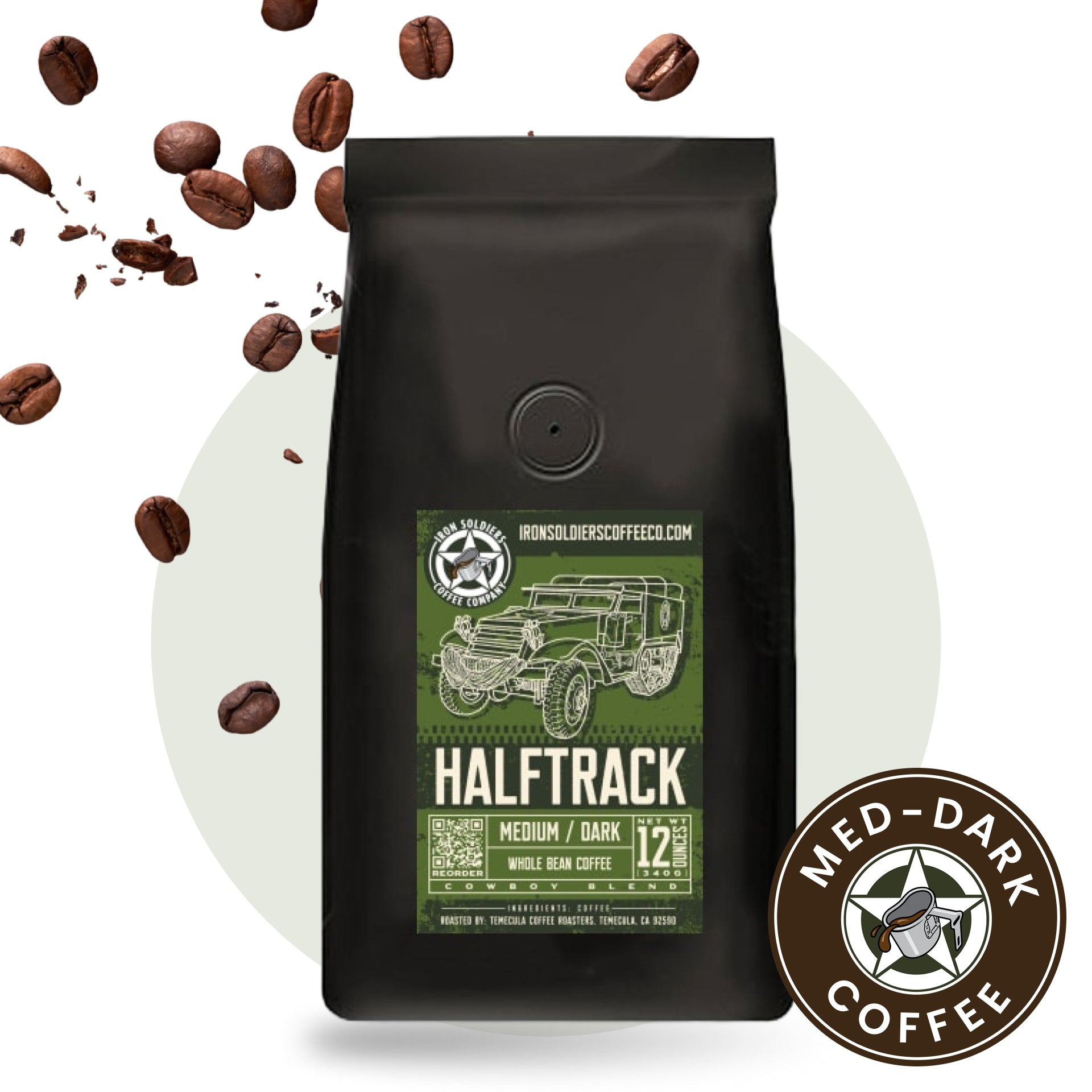
When the gear is sorted, the beans still decide the ceiling. Our range covers blends, flavored roasts, single origins, and mushroom coffee, so there is a bag for every brew method and every filter on this list. Shop All Coffee and taste what a better filter, and better beans, can do.
Frequently Asked Questions
What can I substitute for a paper coffee filter?
You have several options. A stainless steel mesh filter is the most durable and lets coffee oils through for a fuller body. Cloth filters, like cotton or hemp, also work well and are reusable. In a pinch, a clean paper towel or a fine mesh sieve can serve as a temporary fix. Each substitute changes the mouthfeel and clarity of your brew, so try a few to see which suits your taste.
Does a metal mesh filter produce a bolder cup of coffee?
Yes. Metal mesh filters have larger pores than paper, so more coffee oils and micro-fines pass into the cup. This adds body, richness, and a heavier mouthfeel. You may also notice more sediment at the bottom of your mug. If you prefer a cleaner cup, a cloth filter or a finer mesh can reduce some of that residue while still preserving more flavor than paper.
How do I clean and maintain a cloth coffee filter?
Rinse the cloth thoroughly after each use to remove grounds. Every few weeks, boil it in water with a little baking soda to remove oils and stains. Avoid soap, which can leave residue that affects flavor. Let it air dry completely before storing. With proper care, a cloth filter can last for months, making it a reusable and sustainable alternative to paper.
Can I brew strong coffee without paper filters?
Absolutely. Use a slightly finer grind and increase your coffee-to-water ratio. With a metal or cloth filter, you can adjust brew time to extract more flavor. For immersion methods like a French press, steep for four to five minutes. For pour-over, pour slowly and in stages. The lack of paper means more oils and solids reach your cup, so you get a stronger, more full-bodied brew.